Disc of the month May 2026
There are musical and recording projects that make us wonder why they are even undertaken—not because of any flaw or shortcoming, but, on the contrary, because they represent genuine artistic and ethical treasures offered to a world that is no longer capable of receiving and appreciating them, a world now doomed to perdition, ignorance, indifference, and wickedness. It is all well and good to claim that “Beauty will save the world,” because without a world capable of understanding and assimilating it, beauty remains confined to a purely inexpressive realm, cancelled and stripped of any fruitful and nourishing potential for projection.
I do not know—perhaps it is age, perhaps an inability to accept this worldly “representation,” to borrow Schopenhauer’s phrasing, which turns away and acts indifferent when faced with what can help, soothe, and comfort. Yet, it is beyond doubt that before this latest recording, released by Da Vinci Classics—in which Giovanni Acciai, along with the members of Nova Ars Cantandi, has presented the world premiere recording of sacred music pages by Antonio Domenico Nola—one is left bewildered, desolately saddened. For the depth, the absolute expressive and formal beauty of these compositions risk becoming—save for a few faint glimmers still burning in the now-dominating ocean of darkness—as the replicant Roy Batty says in the final scene of Blade Runner, “moments that will be lost in time, like tears in rain.”
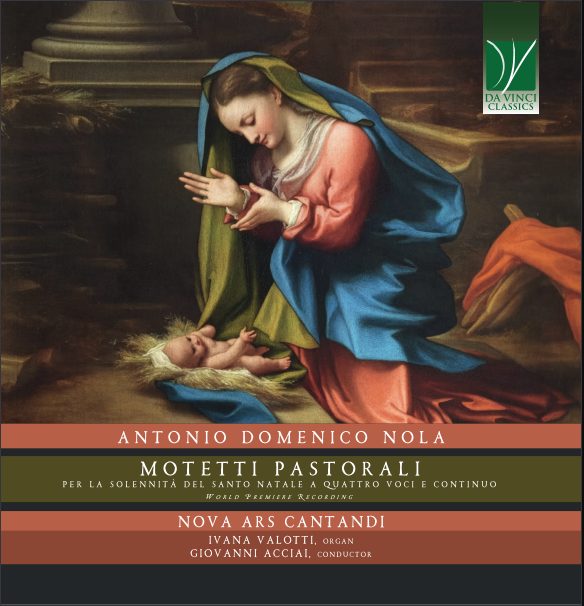
Yet, faced with this despair, as I wander through the ruins of what remains of the great tradition of Western art and culture, I cannot help but admit that I am, after all, a fortunate and privileged person—a being who, suspended in his own temporal and spatial dimension, manages to perceive, to be irradiated and restored by balms that can still be created and dispensed for those few, very few emulators of Zarathustra who tread and leave footprints destined, however, to be trampled and erased. Yes, because anyone who has the opportunity to listen to a recording such as the one I am about to write about—namely, the Motetti Pastorali per la solennità del Santo Natale a quattro voci e continuo by Nola, a largely unknown exponent of the great and prolific seventeenth-century Neapolitan School—can only consider themselves fortunate, provided they belong to that dwindling colony of the privileged who are still capable of absorbing the magic of beauty transformed into sound.
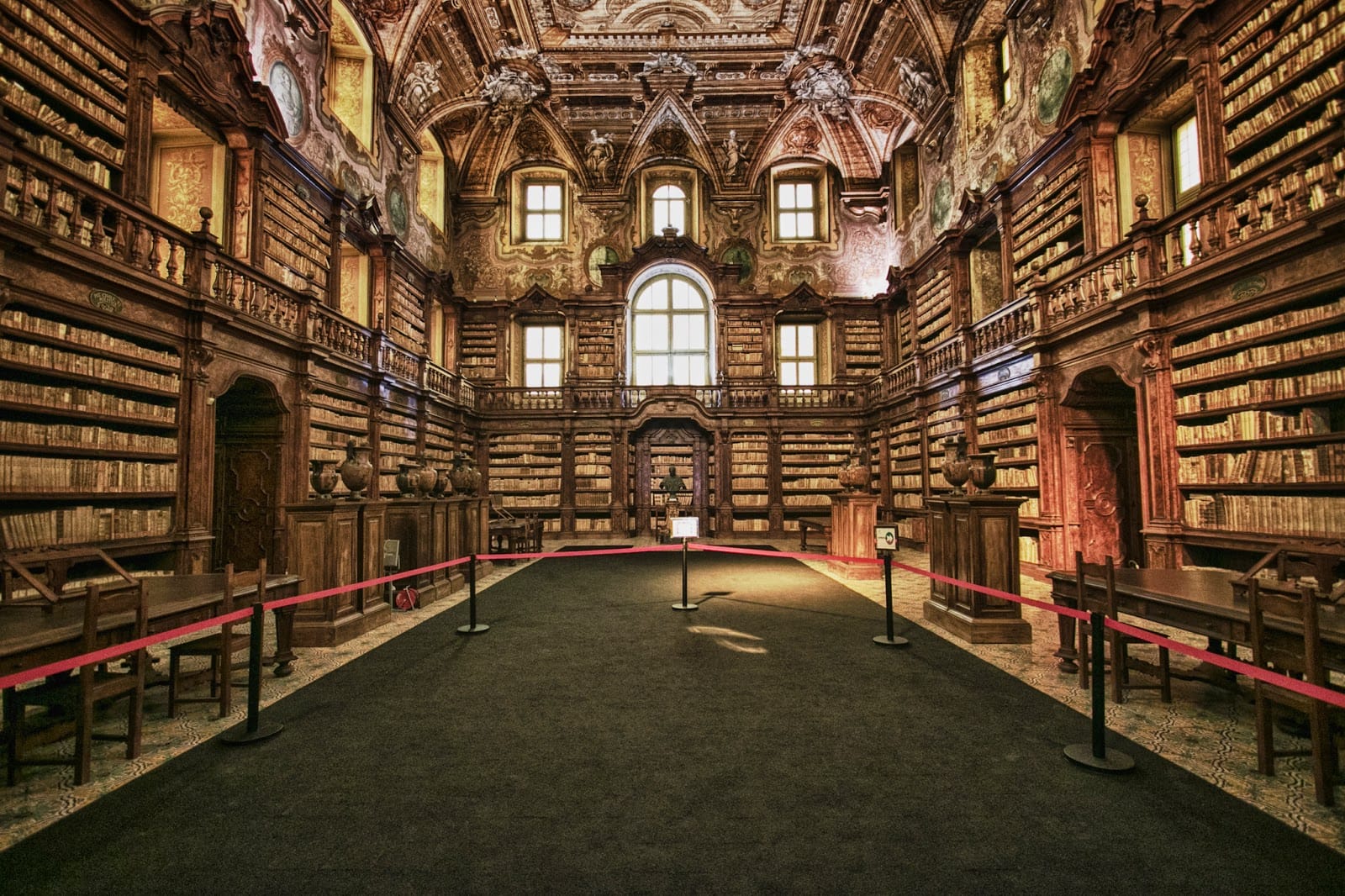
Once again, the architect of this admirable work of recovery and enhancement of an inestimable heritage—which menacingly risks slipping into the oblivion of history and mankind—is Giovanni Acciai. A relentless and clear-sighted scholar of world renown (who is, among other things, Professor Emeritus of Musical Palaeography at the Milan Conservatory), he managed to unearth these motets in the musical archive of the Congregation of the Oratory of the Girolamini in Naples, subsequently transcribing, studying, and analysing them. Finally, through the sensitivity and skill of the four voices of the members of Nova Ars Cantandi and organist Ivana Valotti on the basso continuo, he has committed them to disc.
Setting aside both general despair and specific enlightenment, it is necessary first of all to explain the figure of Antonio Domenico Nola or, at the very least, to establish the few biographical coordinates available to us—a scarcity that has, to this day, confined this composer to the limbo of semi-obscurity. Of a certainty, we know only his birth year, 1642, his birthplace (Nola, precisely), and the names of his parents, Tommaso Nola and Laura Rossi. Likewise, as Giovanni Acciai himself explains in his detailed liner notes to the CD, we know nothing of his musical training, except that he was a pupil of another great exponent of the Neapolitan School, namely Giovanni Salvatore, at the Conservatorio della Pietà dei Turchini, an institution he entered in 1652. There, under the guidance of Salvatore—who directed the school from 1662 to 1673—Antonio Domenico Nola completed his musical education.
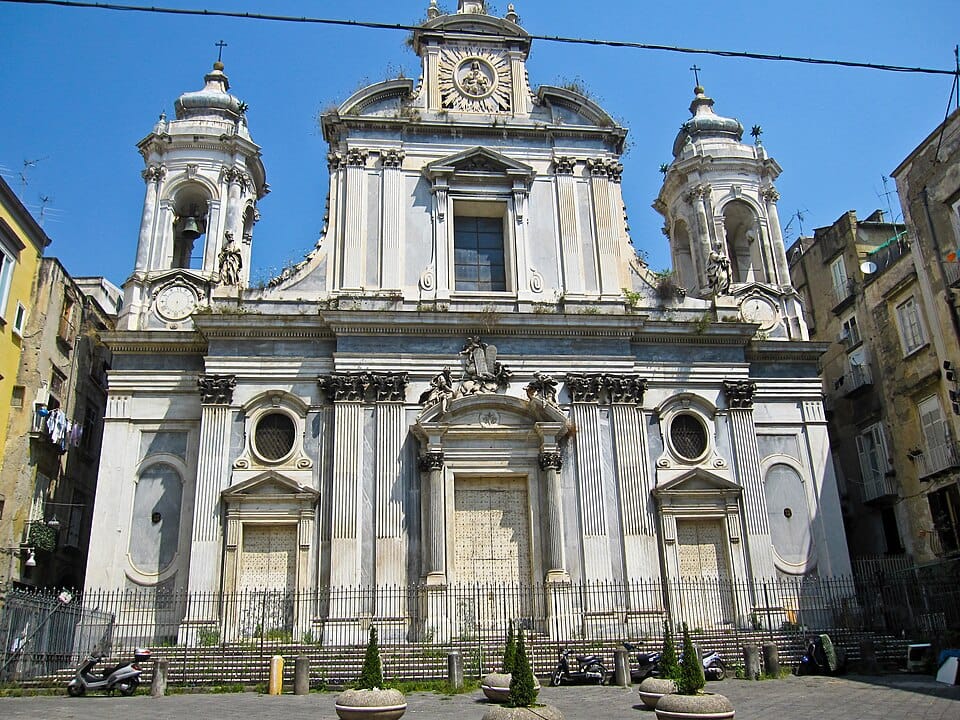
At this juncture, it is worth recalling the fundamental function of sacred music in seventeenth-century Naples, a function that served not only a religious purpose but also, and above all, a social one. At the time, the Parthenopean city—in addition to its veneration of the Virgin Mary and its seven patron saints—was home to a vast number of churches, large and small, and religious institutions. All of these were equipped with a cappella musicale or an organist whose duties extended to those of choir director, ensuring a religious service where the contribution of music, almost exclusively vocal, was never lacking. Such a wealth of sacred and religious buildings consequently demanded a substantial body of sacred pieces to satisfy the requirements of both ordinary and extraordinary rites, as well as the feasts of patron saints and the most solemn occasions of the liturgical calendar. Yet, beyond its sacredness and its purely devotional aspect, it must be understood that music in seventeenth- and eighteenth-century Naples functioned primarily as a cohesive bond. It was capable of engaging diverse social classes and serving as a vehicle for transmitting stories and messages, even if its semantic dimension—owing to the use of the Latin language—effectively barred the most uneducated social strata from understanding the meaning of the texts.
Thus, upon leaving the conservatory, the young and promising Antonio Domenico Nola had no difficulty finding employment—and a prestigious one at that, given that in 1670 he was appointed organist of the Naples Cathedral. More importantly, starting that very same year, Nola regularly entered into service at the Oratorio dei Girolamini of San Filippo Neri. In Naples, the complex of San Filippo Neri—comprising a church and a convent—was established in 1586, when the religious followers of the Tuscan saint settled in the city. They came to be known as "Girolamini" because the first "oratory" had been founded at the church of San Girolamo della Carità in Rome. Within a very short time, this congregation became not only one of the most important and influential in the Parthenopean city, but also a primary outlet for sacred music commissions, which were in high demand at the time.
In his introductory essay, Giovanni Acciai also explains the reasons leading him to argue that our composer, precisely through his close association with the Oratorian environment, decided to become a priest and an active figure within the Congregation of the Oratory, even though documentation confirming his priestly ordination remains missing to this day. During his service to the Oratorian congregation, which lasted over three decades (no further records concerning him exist after 1701)—and the fact that he remains almost entirely unknown today should give us pause—Nola composed a vast number of musical pages. As Acciai points out, some six hundred of his titles have already been catalogued to date. Furthermore, in 1674, he gave life to a highly substantial Raccolta di composizioni per l’esercizio della chiesa dei Filippini (Collection of compositions for use in the church of the Oratorians), containing masses, motets, psalms, hymns, etc., alongside several other works by sixteenth- and seventeenth-century authors [...].
In total, this collection comprised some forty-six volumes, many of which have unfortunately been lost or are yet to be evaluated with due attention. Within this corpus, the Christmas festivities held an absolute prominence and importance, to say the least, channelling a highly considerable portion of musical creations dedicated specifically to this religious celebration. And it is precisely here that the recording project in question fits in, as it features the Motetti pastorali per la solennità del Santo Natale for four voices (namely, Cantus, Altus, Tenor, and Bassus) and basso continuo—a collection that Giovanni Acciai, as a passionate and tireless researcher, unearthed in the musical archive of the Congregation of the Oratory of the Girolamini in Naples.
This collection is composed of forty pieces, divided into seven parts and set to Latin texts drawn principally from the Bible, the Gospel of Luke, and the Christmas liturgy, but also by an anonymous poet, whom Acciai hypothesizes to be Don Antonio Nola himself. To these seven parts, dedicated to Christmas, an eighth part consisting of four pieces is added at the end of the recording, dedicated to the events surrounding the Epiphany. Beyond the instrumental presence of the basso continuo, with Ivana Valotti on the organ, the very substance and essence of this masterpiece are rooted in the word, in the text, in the semantic power that merges with the essential expressiveness, continually breathing life into an appropriate dramatic framework. Here lies the first important observation, precisely regarding this dramatic dimension. For this dramatic quality—beyond the fact that we are dealing with a work structured in the form of a Latin oratorio—was required at the time by precise cultural and social demands. In a city like Naples during the second half of the seventeenth century, where most of the population, particularly from the humbler classes, was entirely or nearly illiterate, comprehension of the Latin used during religious services was reserved solely for the most educated individuals belonging to the nobility and the clergy. Meanwhile, the other worshippers participating in church rites, unable to understand the meaning of the words, could only follow the progression of the musical pieces through the timbral power expressed by the words themselves. This power formed a sort of wire through which flowed the "electric" impulse provided by the dramatic intensity of a narrative that was to many mysterious and incomprehensible, yet simultaneously fascinating.
Granted, those who knew neither Latin nor even Italian, communicating with one another solely through the Neapolitan dialect, could also rely on the pictorial cycles that adorned and frescoed the churches of the era. These cycles served as a framework, narrating through figures, objects, lines, and colours what the music itself would then majestically pour forth beneath the vaults.
Therefore, for us children of a contemporary age, entirely detached from such social and anthropological connotations, it may be difficult to understand how this expressiveness, this dramatic quality—the very same that gripped the cultured aristocrat and the uneducated artisan sitting side by side during the great tragedies of Sophocles and Aeschylus in ancient Athens—could serve as a formidable bond, ensuring that an audience composed of both the learned and the illiterate was equally engaged, steeped in an illuminating catharsis.
If we glance at the tracklist of the recording in question, we realize that of the forty-four tracks comprising the collection, the one boasting the longest duration, the fundamental Natus est Iesus, barely exceeds three minutes. This means that the construction of the entire compositional structure relies on segments of very short duration—a brevity counterbalanced by an extreme density present both in the solo passages (true connecting elements in the manner of recitatives) and in the formally more complex and articulated pieces for three or four voices singing either homorhythmically or polyphonically. For this brevity and density to be effective, they required a rhythmic framework that Nola always admirably succeeded in breathing into them, thereby creating a seamless narrative and musical concatenation.
Another aspect to bear in mind, for the reasons previously mentioned, is how the sacred music of the time, based almost exclusively on the contribution of singing, could be meaningful even to those who did not know Latin. Nola’s choice, like that of the other representatives of the Neapolitan School, rested on the expressive power phonically imparted by the words, which were thus capable of conveying a plethora of nuances, representing a sort of “story within a story” to highlight, from moment to moment, the emotional palette linked to that specific musical passage. After all, even the uneducated commoner, through an oral tradition that was still vital when the scourge of illiteracy was far from eradicated, knew in broad terms what was being told by the texts set to music. With the help of timbral nuances—in a parallel that we can align with the concept of Affektenlehre—they were thus able to re-cognize what was already familiar. As a result, the footsteps of the simple, humble listener could ideally retrace the higher, more refined lines of the vocal texture, to the point of evoking a kind of implosive theatricality—a gestural and character-driven representation arising solely from the force of the sung word, supported only by the organ's rendition of the basso continuo, particularly in those passages where it imitated the sound of the shepherds' bagpipes.
Such a blend of expressive qualities, let it be clear, could only come about through a composer capable of shaping contrapuntal material with supreme mastery—as Antonio Domenico Nola precisely demonstrates. His greatness appears all the more surprising given the near-total anonymity in which his name and work have languished for centuries after his death, the very year of which remains unknown to us. Acciai does well, in his liner notes, to highlight our composer's ability to distribute the parts of his Motets within the polyphonic structure so as to enhance the specific timbral roles assigned to individual voices. The result renders the melodic line consistently homogeneous and clear, surprising the listener with its elegance and incisiveness. Yet, this elegance and incisiveness were no mere worldly allurements, given that Antonio Domenico Nola penned every note in the name of a divine mystery to which he dedicated his creative endeavours. Indeed, on every sacred score that has come down to us, an expression is inscribed that seems, in fact, to unintentionally emulate what the great Kantor did in his manuscripts, reading verbatim: ad majorem Dei gloriam (“for the greater glory of God”).
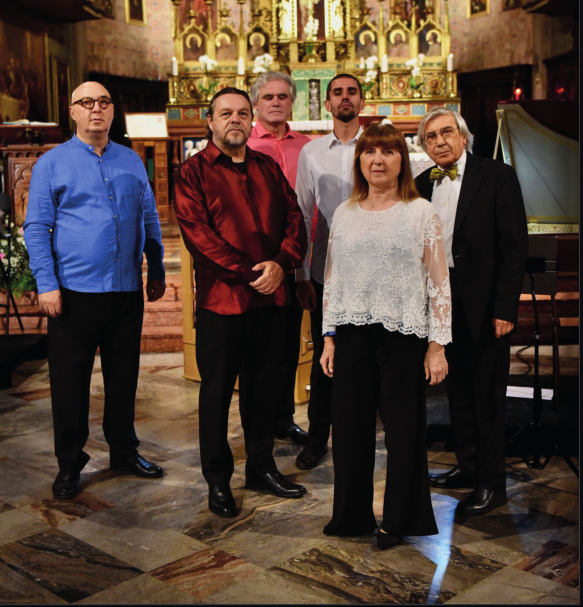
Once again, with this extraordinary recording—the fruit of passionate research and meticulous musicological reconstruction—Giovanni Acciai, supported by the impeccable artistic calibre of Ivana Valotti and Nova Ars Cantandi (it is simply right to mention the names of its members: Alessandro Carmignani, cantus; Enrico Torre, altus; Gianluca Ferrarini, tenor; Marcello Vergetto, bassus), proves he deserves the epithet of "reincarnator." In this sense, his scholarly erudition and interpretive skill succeed in bringing back to life not only lost musicians and scores, but above all the dimension of their animus—the beating heart of artistic and spiritual expressions that the ruthless law of time, compounded by the actions of men of little or no sensitivity and awareness, risked erasing forever. And what of the other performers? If Ivana Valotti at the basso continuo is an exemplary timbral seismograph, capable of instilling and nurturing the emotional foundations upon which the voices then interweave, the four members of the ensemble now boast technical and expressive qualities that must be taken as an international benchmark. A special note of merit must be ascribed to Alessandro Carmignani, as his cantus part frequently forces him to navigate the treacherous and rugged terrain of the stratospheric register. Thus, contrary to what the replicant Batty asserted in Ridley Scott's cinematic masterpiece, thanks to their extraordinary work and, specifically, to this recording, one can safely affirm that “these [musical] moments will not be lost in time.”
MusicVoice’s Album of the Month for May, without ifs or buts.
The sound recording—which, as is almost always the case for these projects curated by Giovanni Acciai, took place in the magnificent Palatine Basilica of Santa Barbara in Mantua—is the work of Jean-Marie Quint. Once again, the work is of the very highest calibre, even from a technical standpoint. While the dynamics are not explosive, they prove perfectly balanced between transient speed and the naturalness of both the vocal and organ delivery. Great prominence has been given to the soundstage parameter: the four voices and the organ (the latter positioned laterally) are perfectly integrated within the acoustic space at an appropriate depth. This sonic reconstruction beautifully evokes the environment in which they are located, allowing the sound to expand in both width and height without ever losing focus. Furthermore, the tonal balance is flawless, characterized by an absolute clarity that sculpts the four voices and their respective registers; the detail is nothing short of tangible, offering a convincingly three-dimensional projection of all the performers.
Andrea Bedetti
Antonio Domenico Nola – Motetti Pastorali per la solennità del Santo Natale a quattro voci e continuo
Nova Ars Cantandi – Ivana Valotti (organ) – Giovanni Acciai (conductor)
CD Da Vinci Classics C01175
Artistic rating 5/5
Technical rating 5/5