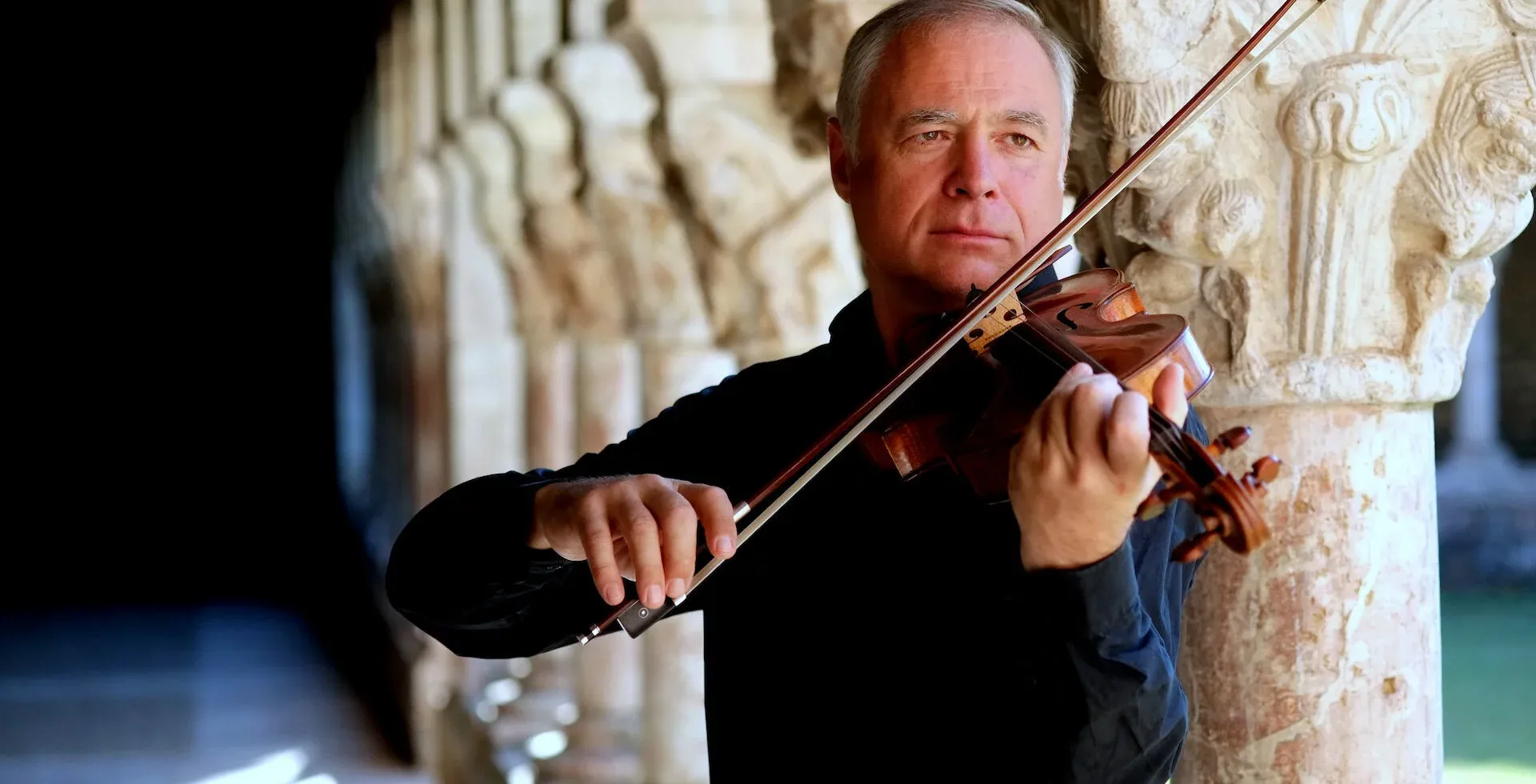
There are musical instruments which, as the history of music teaches us, have had to undergo the apprenticeship of a slow yet steady emancipation before being accorded the attention and consideration they deserve. Among those instruments which, as solo voices, have had to emancipate themselves over time, the viola undoubtedly occupies a prominent place. For centuries it was relegated to the middle ground of the instrumental ensemble, entrusted solely with an inner voice more inclined to blend than to emerge, without even being able to lay claim to the status of *primum inter pares*. Only between the second half of the nineteenth century and the early decades of the twentieth did it progressively attain an autonomy of its own, thanks not only to composers but also to performers capable of expanding its repertoire through the invaluable practice of transcription, which in the case of the viola acquired a particular significance. It is precisely this story—which, in fairy-tale terms, might be likened to that of the ugly duckling transformed into a magnificent swan—that provides the guiding thread of *Viola Fascination*, the recently released CD on Da Vinci Classics, featuring Czech violist Vladimír Bukač together with his compatriot Adam Skoumal at the piano. Together they have devised a programme comprising thirteen pieces by ten composers, ranging from Paganini to Skoumal himself and encompassing such major figures of the past as Schumann, Tchaikovsky, Glazunov, Shostakovich, Mussorgsky, Prokofiev, Rachmaninoff and Glinka, with a clear preference, therefore, for representatives of the Russian school.
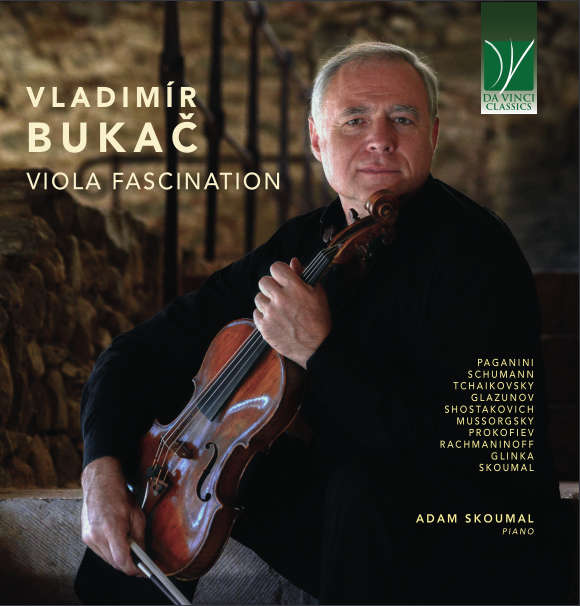
Do not be misled, however: this is far more than a simple anthology of well-known—or lesser-known—pieces adapted for the viola. The recording project stems from the rediscovery of scores published in Russia between the 1950s and the 1980s, many of them closely associated with the work of Vadim Borisovsky, a pivotal figure in the Soviet viola school and the author of more than two hundred transcriptions and arrangements for viola and viola d’amore. Alongside Borisovsky hovers—as could hardly be otherwise in a programme devoted to the viola—the transcriptive legacy of William Primrose, while Skoumal’s two concluding compositions project the journey towards the present day. The result is a programme that may appear eclectic, even markedly Russophile, yet is underpinned by a clear artistic rationale: to demonstrate how the viola has succeeded in appropriating musical languages born elsewhere without ever relinquishing its own distinctive timbral identity.
This premise is declared from the very outset with Paganini’s La Campanella in Primrose’s transcription. At first glance it might almost seem provocative, yet in reality it is anything but, for transferring one of the supreme emblems of violinistic transcendence to the viola becomes a means of testing just how far the instrument can venture beyond the territory traditionally regarded as its own. Bukač, in my view, never attempts to disguise the viola’s true nature in pursuit of the violin’s brilliance. Instead, he preserves its dark, richly textured sonority even in the highest register, negotiating wide leaps, rapid figurations and treacherous intonation with a virtuosity that never degenerates into empty display. Beyond his remarkable agility, the Czech violist achieves an impressive continuity of tone across the instrument’s registers: even when the musical line ascends, the sound retains a full-bodied core and an unmistakably violistic identity.
A veritable “minefield” such as Schumann’s *Adagio und Allegro*, Op. 70, provided an even clearer measure of Bukač’s stature as an interpreter. This chamber work, originally written for horn and piano, with alternative parts for violin and cello provided by Schumann himself, finds a remarkably congenial voice in Borisovsky’s transcription for viola. In the *Adagio*, Bukač steers clear both of sentimentality and of a nobility of phrasing that might otherwise lapse into academic composure: his bow sustains broad spans, vibrato is employed as an expressive resource rather than as a permanent coating applied to the sound, while subtle dynamic gradations shape the phrase from within. In the *Allegro*, by contrast, his ability to generate energy without stiffening the articulation comes to the fore. It is here, too, that Skoumal’s importance becomes fully apparent: not an accompanist but a genuine interlocutor, capable of lending due weight to Schumann’s rhythmic dimension without overwhelming the viola, and of responding naturally to its accelerations and moments of relaxation.
Glazunov’s *Élégie*, Op. 44, offers a different vantage point, not least because it is a work originally conceived for the viola. Bukač’s cantabile possesses what might be described as a “narrative” quality: rather than proceeding through a succession of beautiful phrases for their own sake, it establishes a sense of direction, carefully grading both the intensity and the density of the sound. His middle and lower registers prove particularly evocative, full-bodied without ever becoming opaque; in the more overtly lyrical passages, the Czech violist resists the temptation to over-expand tempos and portamentos. The result is an inward-looking elegy in which the work’s late-Romantic character is conveyed without self-indulgence.
Among the pieces included in the programme, further confirmation comes from Rachmaninoff’s *Melody*, Op. 3 No. 3, where the challenge lies not in technical display, but in the ability to breathe life into a melodic line which, deprived of the colouristic variety afforded by a large orchestral palette, might all too easily become uniform. Bukač, on the contrary, sustains it through subtle differentiation of his attacks and, above all, through a command of tone that allows the viola to expand naturally, without ever being forced. Significantly, it is precisely in these more lyrical pieces that one realises how much his virtuosity also resides in his control of bow weight, the quality of his *mezza voce*, and the seamless continuity of his legato—all technical qualities deeply rooted in the Slavic school of viola playing.
Of an altogether different character is *Mercutio* from Prokofiev’s *Romeo and Juliet*, once again in Borisovsky’s version. Whereas the elegiac dimension had prevailed in the preceding pieces, here the viola is transformed into a fully-fledged theatrical character. The gesture becomes swift, biting and ironic—we are, after all, dealing with Prokofiev. Bukač heightens the contrasts and sudden shifts of character without allowing them to lapse into caricature, while Skoumal’s piano lends the piece a nervous, almost choreographic mobility. This is one of the moments in which the overall purpose of the project emerges most clearly: the instrument that had seemed almost predestined for introspection reveals, in a veritable *coup de théâtre*, an equally convincing capacity for sarcasm, incisiveness and aggression.
In my view, particular credit should be given to the final two works on the programme, which necessarily shift the disc’s centre of gravity, since Skoumal appears in the dual role of composer and performer. *Shalik – An Arabic Dance*, inspired by the impression left by a Lebanese melody and subsequently adapted for various instrumental forces, and the *Variations on Gypsy Melodies* both testify to the composer’s fascination with Middle Eastern and Gypsy musical materials. In *Shalik*, the virtuoso element is combined with a pronounced rhythmic sensuality and with figurations that allow Bukač to deploy more vivid colours and remarkably agile articulation. The *Variations*, by contrast, provide a kind of crowning moment to the recital: their form allows lyricism, brilliance, accelerations and shifts of character to alternate, continually testing the rapport between the two musicians. It is here, in particular, that one clearly perceives how their collaboration is based not on the time-worn hierarchy of soloist and accompanist, but on a genuinely chamber-musical conception of the relationship between the two instruments.
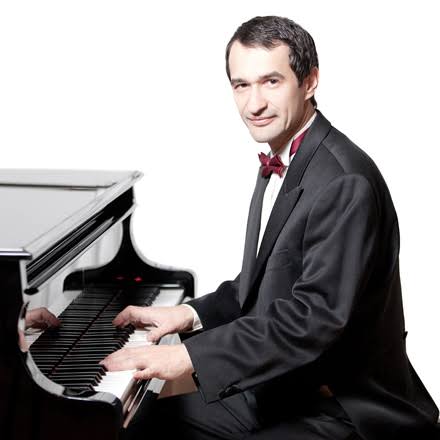
If one were to explain the conceptual effectiveness of *Viola Fascination*, it would lie precisely in the fact that the project does not attempt to transform the viola into something it is not; quite the opposite, it demonstrates just how much repertoire the instrument can assimilate while continuing to speak in its own voice. Bukač possesses the technical resources to confront both Paganini’s vertiginous demands and the lyricism of Glazunov and Rachmaninoff, but, more importantly, he commands a genuine “culture of sound” that enables him to differentiate their respective idioms with remarkable clarity. Skoumal, for his part, stands alongside him with chamber-musical sensitivity, precision and individuality, while his own compositions provide the project with its contemporary culmination. Thus, behind the appealing guise of a virtuoso recital, this recording offers a far more compelling reflection: on transcription as the means through which the modern viola has, paradoxically, constructed an essential part of its own identity.
As regards the sound engineering, entrusted to Dirk Homann, the recording displays an appreciable dynamic range and gives no impression of invasive compression: the *pianissimi* retain a tangible presence, while the more energetic passages are allowed to expand with considerable freedom. In terms of the soundstage, the viola is precisely focused and sufficiently close to convey both the texture of the bow and the instrument’s woody resonance, yet without that hypertrophy of detail which can distort its natural dimensions and perspective. The piano, meanwhile, has appropriate weight in the lower register and a clear, well-defined upper range without ever becoming unpleasantly “metallic”. Moreover, within the spatial reconstruction, the Steinway is not artificially pushed into the background in order to favour the soloist but retains a convincing physical presence. The tonal balance convincingly respects the registers and individual characteristics of the instruments—the two violas used by Bukač, a 1720 Santini Lavazza and a 1775 Giovanni Battista Guadagnini, together with the Steinway & Sons Model D—while the level of detail effectively conveys both their material presence and a convincing sense of three-dimensionality.
Andrea Bedetti
Various Composers – Viola Fascination
Vladimír Bukač (viola) – Adam Skoumal (piano)
Da Vinci Classics CD C01208
Artistic rating 5/5
Technical rating 4/5