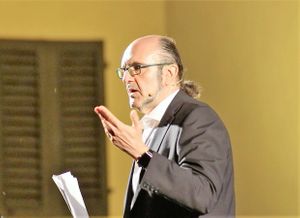
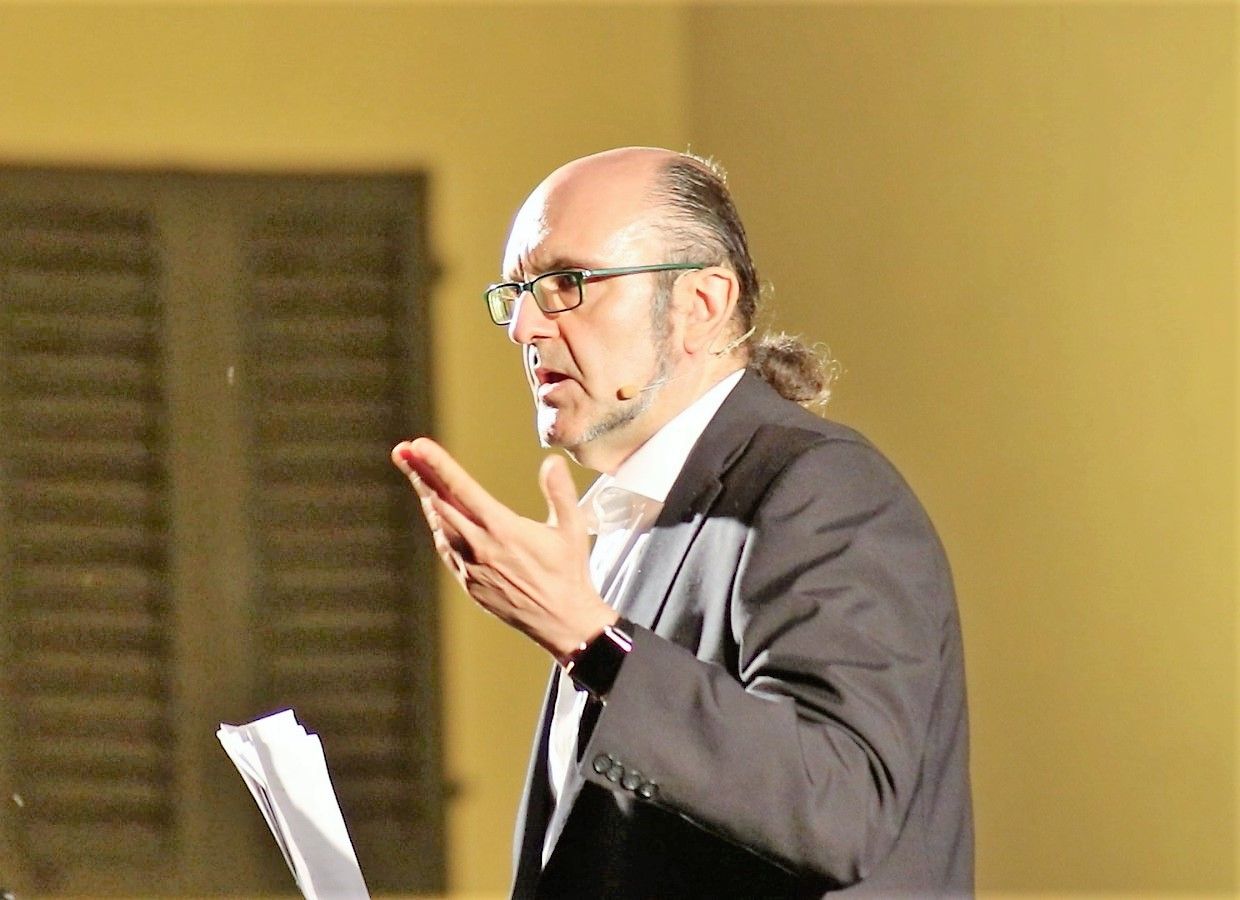
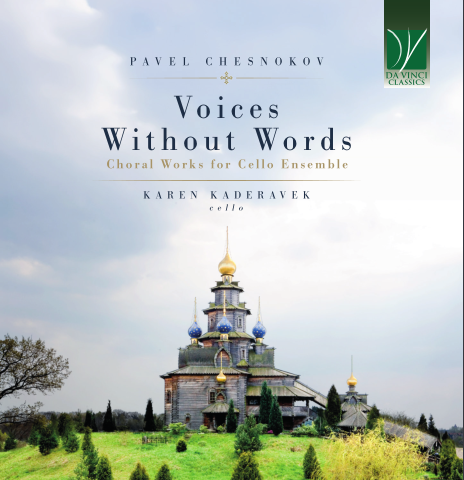
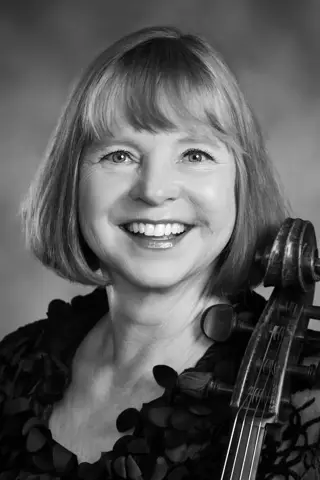
When I was offered the opportunity to review this new release from Da Vinci Classics, I immediately realized that I was dealing with a decidedly original project. After all, it is not every day that one encounters a recording of music originally conceived for a choir, performed entirely on a single cello by Canadian-American cellist Karen Kaderavek, who uses multitrack recording to create the effect of an instrumental ensemble. At first glance, such an undertaking might have appeared to be an experiment driven primarily by curiosity about the timbral possibilities offered by this technical process. In Voices Without Words, however, Karen Kaderavek has sought to address a far more substantial question: how much of the text, the collective breathing, and the spiritual function of a vocal composition can survive when the words disappear and all the voices assume the same instrumental identity? The programme, devoted entirely to the Russian composer Pavel Chesnokov and comprising twenty sacred and secular compositions, proves particularly compelling precisely because it does not attempt to circumvent this contradiction, but instead makes it the very foundation of the listening experience.
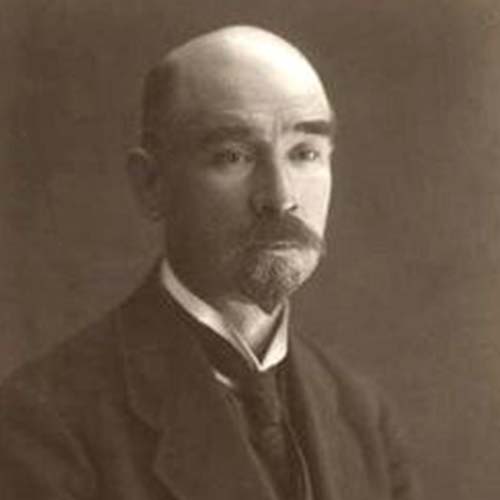
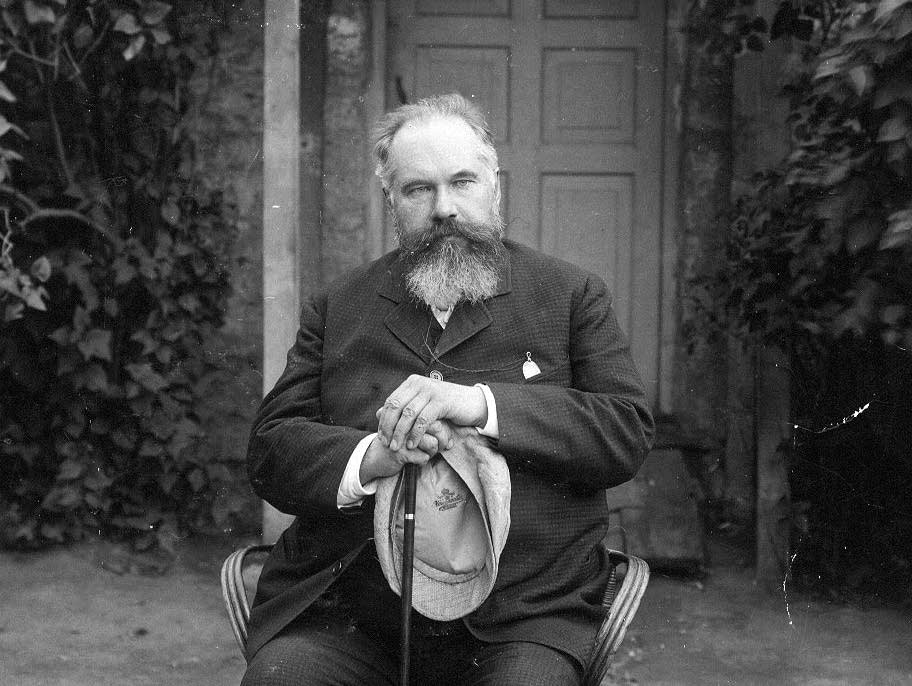
Born in 1877 in Voskresensky, present-day Istre, near Moscow, Chesnokov was one of the leading figures in the revival of Russian Orthodox choral music. Trained at the Moscow Synodal School, he studied with Sergei Taneyev and subsequently with Mikhail Ippolitov-Ivanov and Sergei Vasilenko. His musical language brought together liturgical chant, contrapuntal discipline, and late-Romantic harmony. Following the Revolution of 1917, restrictions on religious practice inevitably affected his professional activities, leading him to turn increasingly towards secular music. As Karen Kaderavek herself reminds us in the liner notes accompanying the recording, the demolition of Moscow's Cathedral of Christ the Saviour in 1931 prompted Chesnokov to abandon composition altogether.
The Canadian-American artist's idea, therefore, was not to assemble an actual ensemble (the term “cello ensemble” appearing on the inlay should consequently be understood solely as referring to the resulting instrumental sonority), but rather to perform all the parts herself and subsequently superimpose them in the recording studio. Thus, whereas a real choir is characterized by the multiplicity of individual vocal emissions, consonants, and the breathing of singers striving to achieve a common sense of unity, the cohesion attained in this recording project stems from the musical gestures of a single performer. What, then, emerges from the listening experience? In my opinion, the result is a compact, homogeneous sonic texture that expands from the lowest to the highest registers without fundamentally changing its character. At the same time, however, the contrast between the various sections is diminished, particularly where the original composition differentiates its musical layers through the distinctive qualities of the human voices. This does not mean, however, that the intention was to create an illusionistic reproduction of a choir, but rather to reinterpret its structure through the physical properties of the bow and its interaction with the strings.
Furthermore, the choice of the cello was by no means arbitrary, since its wide range, capacity to sustain notes, and ability to produce a seamless legato made it possible to approach the expressive qualities of vocal phrasing. At the same time, however, Karen Kaderavek was fully aware of the potential danger of turning each individual part into an independently expressive melodic line, at the expense of vertical intonation and harmonic precision. For this reason, in the booklet accompanying the recording, she recalls the three fundamental requirements that Chesnokov established for choral sonority: ensemble, intonation, and nuance, together with his recommendation to exercise restraint in the use of vibrato. The moderation with which the latter is employed, combined with the meticulous coordination of the individual parts, makes it possible to distinguish and appreciate harmonies that might otherwise have become blurred by the similarity of their timbres. Admittedly, in the denser passages of the middle register, some of the transparency that a choir can achieve through the articulation of words is occasionally lost. Nevertheless, the decision not to exaggerate the expressiveness of individual lines fortunately prevents the interpretation from lapsing into excessive sentimentality.
Among the twenty pieces that make up the programme, ten particularly striking examples fully illustrate the points just discussed, beginning with the opening track, In Days of Battle, Op. 45 No. 2, which immediately establishes an atmosphere of collective supplication. The text, written against the backdrop of the First World War, invokes protection against invasion, famine, and suffering. It goes without saying that, deprived of the semantic power of the words, the piece, as transcribed for cello, cannot preserve an immediately recognizable historical reference. Nevertheless, the chordal progressions and dynamic tensions successfully retain its solemnity and emotional impact. In The Eternal Council, Op. 40 No. 2, by contrast, what stands out is the interplay between melodic continuity and harmonic support: the upper registers emerge without ever becoming truly detached from the lower ones, reflecting a conception of sound that privileges the blending of voices over their individual prominence. And it is precisely in compositions of this kind that the transcription demonstrates its raison d'être, since it does not merely “copy” the voices, but allows us to examine, almost from within, the structural relationships that bind them together.
The two Cherubic Hymns included in the recording, Op. 42 No. 9 and Op. 7 No. 1, provide particularly revealing examples. In the former, the restrained character and softness of the chords create an atmosphere of contemplative suspension; in the latter, despite a similar ritual framework, one perceives a different articulation of the musical discourse, with a more pronounced alternation between sustained harmonic support and the movement of the individual parts. Our cellist does not seek spectacular effects: she maintains a carefully controlled interpretative approach, characterized by generally rounded attacks and a legato that allows the resonance of the intervals to unfold naturally. Yet there is no denying that the absence of the liturgical text makes itself felt. Whereas in choral singing the words determine the succession of accents and transform harmony into a prayer actually uttered, here the listener perceives above all the intrinsic beauty of the musical construction. I would not go so far as to suggest that the undertaking is inherently compromised by its limitations, but this is simultaneously the most revealing discovery and the fundamental limitation of the entire recording project.
I Wail and Lament, Op. 30 No. 4, offers one of the most significant moments of the recording. The meditation on death, originally associated with a text by Syrian theologian St. John of Damascus, finds in the cello's dark sonority an instrument naturally suited to expressing lamentation. The restraint of the phrasing is particularly effective: rather than emphasizing every sorrowful inflection, the Canadian-American performer allows the weight of the intervals and the increasing density of the harmonies to convey a sense of grief. Even more demanding is Let My Prayer Arise, Op. 24 No. 6, one of the longest pieces in the collection: its duration tests the performer's ability to shape extended expressive arcs, differentiate recurring passages, and sustain musical tension without the support of verbal declamation. The result is especially convincing when the unfolding of the phrases is controlled through subtle changes in intensity rather than through an indiscriminate use of vibrato.
The secular dimension of the repertoire prevents the recording from remaining confined to an exclusively devotional atmosphere. Oh, If the Mother-Volga, set to verses by Aleksei Tolstoy, introduces a narrative dimension: the desire to reverse the river's course becomes a metaphor for regret and longing for the past. The Little Cudgel, a song of the Volga barge haulers harmonized by Chesnokov, draws its energy from rhythmic calls and repetition, evoking the collective physical exertion of the workers. The underlying pulse is clearly articulated, but the absence of the emphatically enunciated syllables somewhat diminishes the communal character of the song. By contrast, Daybreak Glimmers, set to verses by Konstantin Grebensky, provides an interlude of tranquillity: the individual lines emerge from and recede into the overall texture, evoking a motionless landscape reflected in the stillness of the water.
The Great Doxology, Op. 44 No. 9, which brings the recording to a close, encapsulates both the strengths and the challenges of the entire project. The alternation between solemn episodes and moments of meditative introspection demands a wide dynamic range and a carefully defined hierarchy of registers. The concluding section gains considerable weight through the progressive expansion of the sonic mass. Yet, as the texture becomes denser, the multitrack technique tends to merge into a single homogeneous sound what, in actual choral performance, would constitute a dialectical interplay between distinct vocal groups.
The release of this recording also represents an important contribution to the rediscovery of Chesnokov's music: the booklet identifies I Wail and Lament, Oh, If the Mother-Volga, and In the Field a Birch Tree Was Standing as world premiere recordings, while noting that no previous commercial recording of In Winter is available. Yet the documentary significance of the release does not fully encompass the scope of the project. Karen Kaderavek, drawing on her extensive experience in chamber music and the early music repertoire, understands that polyphony is not merely the simultaneous unfolding of melodic lines: it is a process of mutual listening. The fact that this reciprocal interaction is entrusted to a single performer undoubtedly constitutes the most fruitful paradox of the entire recording. Voices Without Words cannot replace the experience of listening to a Russian Orthodox choir: it deprives Chesnokov's music of the words that form an essential part of its liturgical and poetic identity. At the same time, however, it offers an unusual perspective on its harmonic textures, melodic breathing, and the tension between the individual and the collective. The project is most convincing when it embraces its own nature as a transfiguration, without claiming to be a reconstruction. It is precisely in this conscious distance from the original that it finds its artistic necessity and beauty.
In light of everything discussed so far, it is evident how crucial the sound recording was to the success of this undertaking. Recording engineering was handled by Philip Beauchesne, while mastering was entrusted to JP Villeneuve. Given the particular technical nature of the project, my recommendation is to listen to this recording first and foremost through headphones, not least because the editing has wisely avoided attempting to simulate the monumental acoustics of a church, a decision entirely consistent with this chamber-music interpretation. The dynamics are adequate, energetic, and responsive, as can be appreciated from the good definition of the attacks. The reconstruction of the soundstage suggests that the microphone placement was fairly close, considering that the instrument—or rather, the instruments created through multitracking—lacks a certain degree of spatial depth, again in keeping with a chamber-music approach. Nevertheless, the sound does not suffer from any lack of width or height, something that becomes particularly apparent when listening through loudspeakers. There is nothing to criticize regarding the two remaining parameters. The tonal balance avoids flattening the distinction between the lower-middle and upper registers, thus allowing the various “voices” produced through multitracking to remain clearly perceptible. Likewise, the level of detail is pleasantly tangible, with a sufficient sense of background silence surrounding and underpinning the cello's sound. The result is a listening experience that, especially through headphones, remains entirely free from fatigue.
Andrea Bedetti
Pavel Chesnokov – Voices Without Words. Choral Works for Cello Ensemble
Karen Kaderavek (cello)
Da Vinci Classics CD C01244
Artistic rating 4/5
Technical rating 4/5