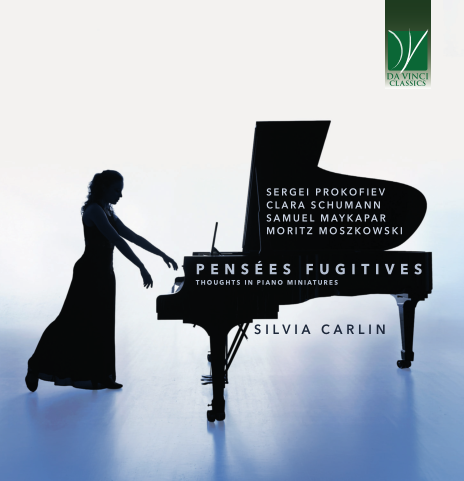
In today’s recording landscape, it is rare to come across programs that deliberately renounce the impact of large-scale forms to construct, instead, a journey founded on the pianistic miniature. It is rarer still for such a choice to go beyond a mere anthological approach, developing rather into a coherent historical and aesthetic itinerary capable of weaving connections between composers from different eras and traditions. The recording project by the Feltre-born pianist Silvia Carlin certainly belongs to this category. Titled Pensées Fugitives and released by Da Vinci Classics, the young performer does not simply juxtapose pieces linked by their titles or brevity; rather, she reconstructs a genealogy of the "short form" driven by a precise interpretive vision.
Clearly, the overarching title of this album draws inspiration from Sergei Prokofiev’s famous collection Visions fugitives, Op. 22—a true masterpiece of twentieth-century piano literature. Around this central pillar gravitate Clara Schumann’s Pièces fugitives, Op. 15, the two collections of Pensées fugitives, Op. 11 and Op. 23, by the Russian Samuil Maykapar (better known as a pedagogue than a composer), and Moritz Moszkowski’s Trois Pensées fugitives, Op. 66. This yields a highly unusual repertoire, in which only the names of Prokofiev and Wieck belong firmly to the great concert canon, while the other composers—Maykapar in particular—remain on the margins of today's programming, despite the undeniable interest of their piano output.
The choice made by the young Venetian pianist, therefore, possesses a value that goes beyond a mere taste for rarity; it is a program that invites reflection on the miniature as a privileged laboratory for musical invention. While the large sonata form tends to base its balance on development and thematic dialectics, the short piece concentrates all its strength within the immediacy of intuition, constituting an autonomous organism often built around a single sonic image, a particular pianistic gesture, or a specific psychological atmosphere. Brevity, then, does not equate to the idea of a "creative impoverishment," but rather to a different conception of form, in which synthesis becomes the primary expressive tool. This perspective also allows one to grasp the originality of the track sequence, given that the program does not proceed chronologically, nor according to a traditional alternation of characters. Instead, it constructs an itinerary in which the concept of the "fleeting thought" assumes distinct meanings depending on the language of the composers involved. In Clara Schumann, it still aligns with the Romantic heritage of the Albumblatt (album leaf); in Moszkowski, it becomes an elegant exercise in pianistic invention; in Maykapar, it takes on a surprisingly modern, introspective dimension; in Prokofiev, finally, it transforms into a succession of visions that seem to anticipate the fragmented expressiveness so typical of the twentieth century.
I will state from the outset an aspect of the assessment to be given to this recording: it is significant that Silvia Carlin has not emphasized this structural framework through interpretive gimmicks or conceptual strain. The program already possesses its own internal logic, and the performer has intelligently chosen to let it emerge through the continuity of the musical discourse. She avoids the trap—all too common in many contemporary thematic projects—of overloading the repertoire with meanings alien to the works themselves. Here, instead, the common thread arises directly and spontaneously from the music. From this emerges another far-from-minor quality offered by the young performer: the ability to conceive the album as a unified organism rather than a mere collection of performances. Many recorded recitals are executed excellently but appear to lack any genuine structural necessity; Pensées Fugitives, on the contrary, reveals a musical thought that precedes the performance and shrewdly guides its interpretive choices.
It goes without saying that the interpretive centrepiece of the album is inevitably Sergei Prokofiev’s Visions fugitives, Op. 22—one of the most elusive piano collections of the entire twentieth century. Seemingly constructed as a succession of autonomous fragments, it actually demands a highly delicate balance between the independence of the individual miniatures and the coherence of the overall journey. This is precisely one of the main achievements realized by Silvia Carlin, who avoids any caricatured emphasis of the sarcastic component that so often dominates readings of Prokofiev. The harshness of the language is never exaggerated, but rather brought within a broader perspective where irony, lyricism, restlessness, and sudden flashes of light coexist. The result is a Prokofiev less aggressive than certain interpretive traditions have imposed, but arguably closer to the extraordinary psychological ambivalence of the collection.
The most compelling impression stems from the quality of the sound. The touch appears consistently controlled, crisp without becoming percussive, while the articulation brings to light the prismatic nature of Prokofiev's writing. Each figure retains its own timbral individuality without compromising the continuity of the musical discourse. The pedalling, too, is used with particular restraint, avoiding any excessive blurring and helping to maintain that transparency which constitutes one of the strengths of the entire recording. The management of dynamics itself respects both the composer's indications and the internal proportions of the collection, allowing the expressive evolution of the twenty miniatures to emerge naturally.
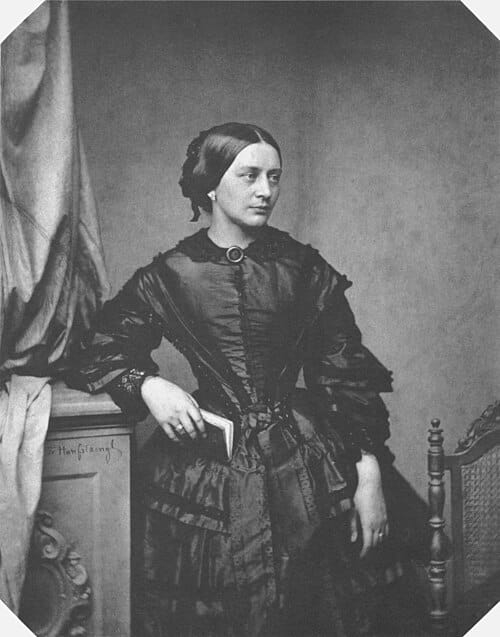
No less compelling is the approach to Clara Schumann’s Quatre pièces fugitives, Op. 15—pieces that in recent years are finally conquering a more significant space in the concert repertoire, thanks also to the progressive overcoming of that historiographical reading which for decades confined the composer to the role of a mere interpreter of Robert Schumann’s work and his devoted companion (Brahmsian temptations permitting). Silvia Carlin has approached these four pieces avoiding, thank goodness, any form of sentimentalism. To be sure, the melodic line is consistently emphasized, but without altering the solidity of the harmonic and contrapuntal construction. The phrasing maintains a natural elasticity, capable of letting the melody breathe without transforming it into a continuous, mannered rubato. This balance is anything but easy to achieve, because Clara Schumann’s piano writing thrives precisely on the continuous tension between lyrical impulse and structural rigor. The concluding Scherzo is particularly successful, tackled with an almost choreographic lightness; here, digital agility never becomes mere external brilliance, but restores, on the contrary, that sense of elegant mobility which constitutes one of the piece's most original elements. Here too, a conception of virtuosity understood as an expressive medium rather than a technical display emerges. The Venetian artist's reading thus confirms her sense of phrasing, her care for the melodic line, and her ability to highlight the romantic temperament of the composition without weighing down its language.
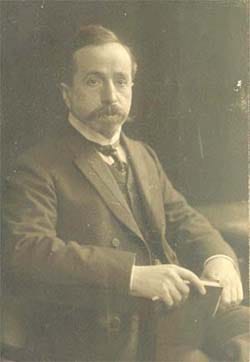
While Prokofiev represents, ça va sans dire, the inevitable benchmark of the program, the true surprise of the album is arguably the presence of Samuil Maykapar. Born in Kherson, Ukraine, in 1867 and trained at the Saint Petersburg Conservatory under the guidance of Anatoly Lyadov and Nikolai Rimsky-Korsakov, Maykapar belonged to that generation of Russian musicians who experienced the transition between late-Romanticism and the early twentieth century without adhering either to the radical experimentation of the avant-garde or to the nationalism of the so-called "The Five." A pianist of remarkably high standing, a teacher, and a theorist of piano pedagogy, Maykapar dedicated much of his career to teaching at the Petrograd Conservatory, leaving behind important pedagogical writings. Today, his name is primarily linked to Biriulki, Op. 28, a collection intended for students that continues to be used in Russian piano schools. This educational renown, however, has almost obscured a much broader output, which includes sonatas, preludes, etudes, and numerous piano cycles where late-Romantic elegance coexists with a surprising attentiveness to the psychological miniature.
From this perspective, the Venetian pianist's interest in the two collections of Pensées fugitives, Op. 11 and Op. 23—which belong precisely to this side of his output—becomes readily apparent. While sharing with Prokofiev an interest in the short form, they move in a profoundly different direction. Indeed, we do not find the almost aphoristic fragmentation of Visions fugitives, but rather a language still fully rooted in the Russian Romantic tradition, in which each miniature seems to represent an autonomous reflection, gathered within an extremely refined formal balance. Silvia Carlin’s choice thus also assumes a musicological value, since reintroducing Maykapar is not simply about recovering a forgotten composer, but about restoring an important piece to its rightful place in the history of the late-nineteenth and early-twentieth-century piano miniature. Now, from an interpretive standpoint, the pianist has, in my view, perfectly captured this intimate, collected dimension, with her mastery of the keyboard remaining consistently subordinate to the construction of the musical discourse. Furthermore, the phrasing avoids any emphasis and successfully restores that calm intensity which constitutes one of the most fascinating qualities of Maykapar's writing. What strikes the listener above all is the clarity of the sound—a sort of timbral crystallinity that brings the melodic lines into particular relief without impoverishing the harmonic fabric. In this regard, the Allegretto from Op. 11 is perhaps the most convincing example, yet the entire reading reveals a constant sense of proportion in both the first and the second collections.
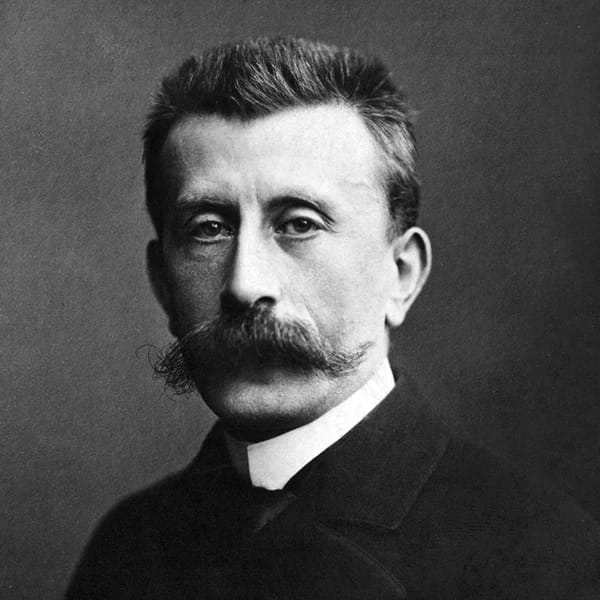
While Maykapar represents the most significant discovery of the program, Moritz Moszkowski provides the natural meeting point between pianistic brilliance and the salon taste of the late-Romantic era. That the music of this Polish composer has long suffered from a critical prejudice reducing it to mere virtuosic repertoire—overlooking its fine writing and clever melodic invention—is by now common knowledge. Fortunately, in recent years, the objective and calibrated rediscovery of his works has helped restore the proper prominence to a composer who, at the turn of the twentieth century, enjoyed a European reputation no less significant than that of many colleagues far more frequently performed today.
The Trois Pensées fugitives, Op. 66, belong to that body of work in which technical brilliance is never an end in itself but, as previously mentioned, arises directly from the construction of the musical discourse. The most frequent error lies precisely in emphasizing its spectacular dimension, transforming the natural fluidity of the writing into a display of digital prowess—something Silvia Carlin wisely avoids in her reading. Her mastery of the keyboard remains steadfast even in the most demanding passages, but what convinces me most is the clarity of the musical architecture. Indeed, each episode retains its own specific weight within the phrase, while the virtuosity is brought back to the function Moszkowski intended for it: not a decorative element, but a natural expansion of the melodic idea. Mind you, this kind of interpretive approach requires a remarkable sense of proportion and a complete command of formal structure—qualities that emerge with particular clarity throughout Op. 66. This allows the technical element to be transparent, almost invisible, leaving the music to occupy the centre of attention.
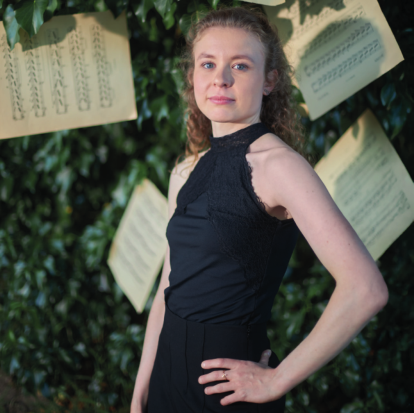
In light of all these reflections, an element emerges that perhaps constitutes the most personal hallmark of Silvia Carlin’s interpretation: the constant pursuit of balance. There is no yielding to mannerism, nor any desire to impose a heavily subjective reading upon the works; instead, every choice seems to arise from listening to the score and respecting the stylistic peculiarities of each composer. At first glance, such an approach might appear marked by a certain restraint; in reality, it reveals an uncommon interpretive maturity, deliberately renouncing immediate effect to privilege the coherence of the musical discourse. It is precisely this stylistic continuity that enables a dialogue between such different composers, ensuring that Prokofiev is not "romanticized," and Clara Schumann is not weighed down by a sentimentalism alien to her poetics. Furthermore, Maykapar is not presented as a mere archaeological curiosity, and Moszkowski, finally, is not reduced to a brilliant keyboard entertainer. On the contrary, each retains their own linguistic individuality, yet within a unified journey that makes the common thread of the project perfectly perceptible. In this sense—it is well worth emphasizing—Pensées Fugitives fits into that increasingly interesting and reassuring trend, at least for someone with hair as nearly white as mine, which sees young performers combine executive quality with a genuine musicological reflection on the construction of their programs.
From a technical perspective, the excellence of this project further confirms this approach. The sound recording, captured in Bayreuth by Jochen Schobert and mastered by Gabriele Zanetti, undoubtedly enhances the naturalness and timbral transparency of the Steingraeber & Söhne Concert Grand Piano E used by Silvia Carlin, rendering a soundstage where the instrument feels present but never artificially magnified. The dynamics are delivered with balance, speed, and adequate energy, while the detail allows one to appreciate her control of touch and care for articulation without sacrificing the natural resonance of the piano, thanks to a genuinely three-dimensional, tangible presence. Moreover, the tonal balance manifests no flaws or undue overlapping between the mid-bass and treble registers.
Andrea Bedetti
Various Composers – Pensées Fugitives
Silvia Carlin (piano)
CD Da Vinci Classics C01182
Artistic rating 4,5/5
Technical rating 4,5/5