In the Italian musical landscape of the late nineteenth and early twentieth centuries, dominated by its long-established operatic tradition, the Paduan composer Guido Alberto Fano (1875–1961) occupies a significant yet largely overlooked position. A composer, pianist and teacher, he studied under Cesare Pollini and Giuseppe Martucci, the latter regarding him as his favourite pupil. It is therefore particularly welcome that the members of the Ensemble Mark Rothko and pianist Massimiliano Ferrati, joined by trumpeter Andrea Ferrati, have recorded two of his major chamber works for the Brilliant Classics label: the Piano Quintet in C major (1917) and the String Quartet in A minor (1942). Separated by twenty-five years, these two scores reveal both continuity and transformation in a musical language that never became merely derivative of its models.
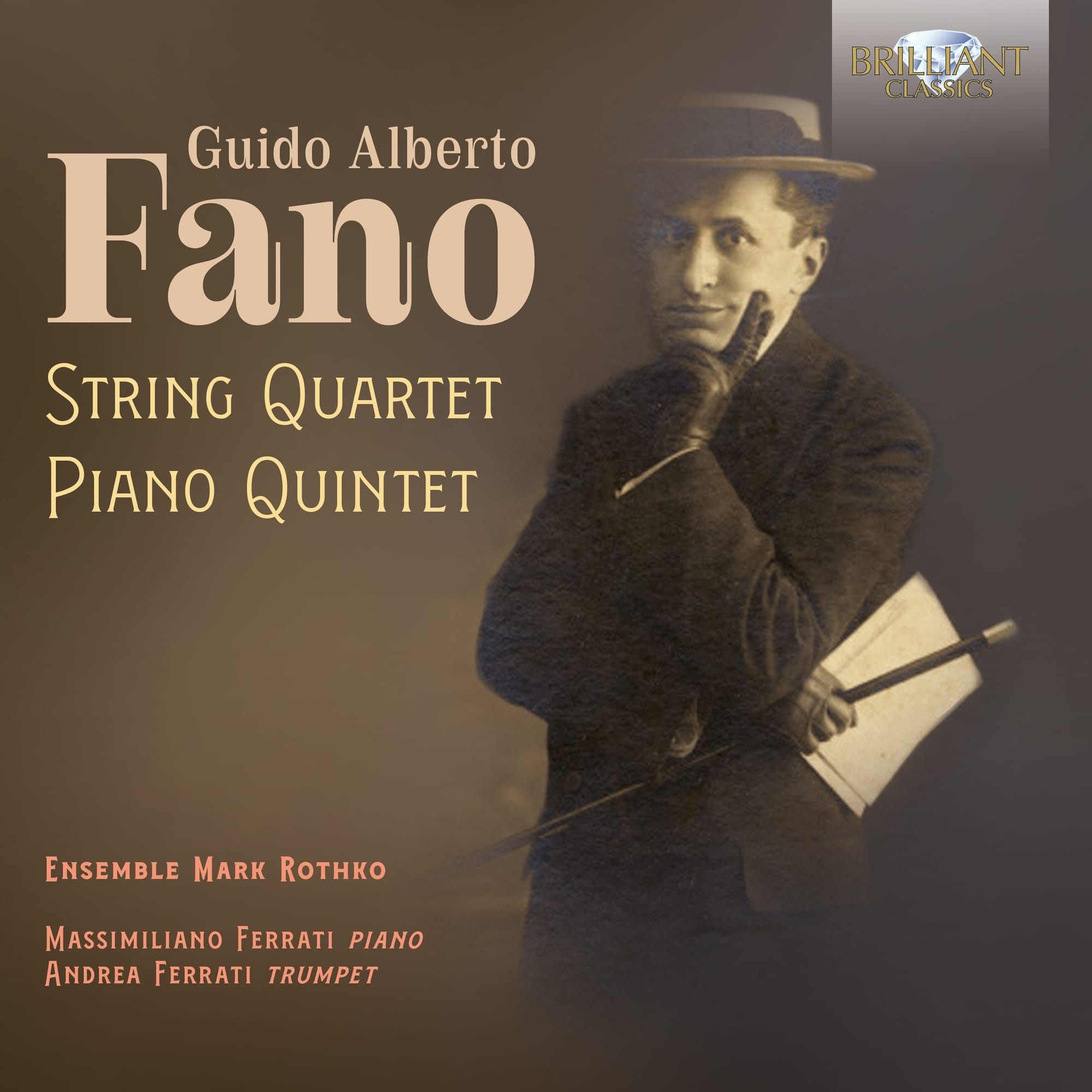
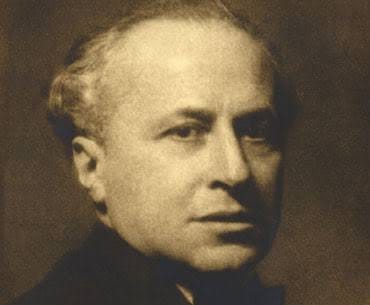
To gain a clearer understanding of this Venetian composer, it is essential to recognise that Fano's musical formation brought together Brahms's structural rigour, Wagner's harmonic expansiveness and, later, French influences and the restless spirit of twentieth-century modernism. Yet this is far from being a mere "catalogue of influences": the distinctive density of his musical textures, the dynamic energy of his modulations and a recurring spiritual aspiration reveal an independent artistic personality, albeit one that remained distant from the radical innovations of the avant-garde during the opening decades of the twentieth century.
The Piano Quintet was composed during the difficult years of Fano’s directorship of the Palermo Conservatory, against the backdrop of the First World War. The epigraph that introduces the work, “I awoke once more to art and life / And there was pain again / In Eternity, hope and light”, reveals its emotional intensity without, however, turning it into a piece of programme music. In the Allegro molto moderato, sonata form provides the framework for a densely woven dialogue between piano and strings: echoes of Martucci and Brahms coexist with an underlying chromatic tension that animates the musical discourse from within. The Scherzo, Vivacissimo, abounds in figurations and contrapuntal exchanges, alternating an almost playful exuberance with sudden lyrical interludes. In the Adagio, con intimo e profondo sentimento, the instrumental voices intertwine in a texture of almost orchestral breadth, while the melodic writing tends towards contemplation rather than emotional outpouring.
The Finale contains the work’s most remarkable gesture: above the interwoven textures of strings and piano, a muted trumpet intones a chorale, like a voice emerging from another dimension. The effect, all the more striking because it is reserved for this particular episode, invites comparison with Honegger’s Second Symphony, composed more than twenty years later. Above all, however, it illuminates one of the most distinctive aspects of Fano’s musical personality: his attempt to give musical expression to a sense of transcendence, without resorting to rhetoric.
The String Quartet of 1942 belongs to a radically different phase of Fano’s creative life. In 1938, he had been dismissed from his teaching position at the Milan Conservatory as a consequence of the Fascist racial laws. There is no need to interpret every note in biographical terms to recognise, across its five movements, a more concentrated and introspective style of writing. The Allegro moderato combines meditation with closely woven imitative counterpoint, while the Presto, non troppo channels this energy into rhythmic incisiveness. The very brief Andante serves as a prelude to the Elevazione, a fugue based on a subject taken from a treatise by the French composer and pedagogue André Gédalge: a movement in which contrapuntal discipline acquires an almost ritualistic intensity. The concluding Allegro vivace restores momentum and restlessness without entirely dispelling the contemplative tension of the preceding movements.
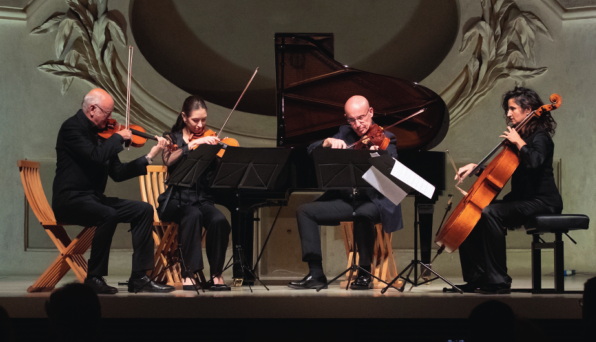
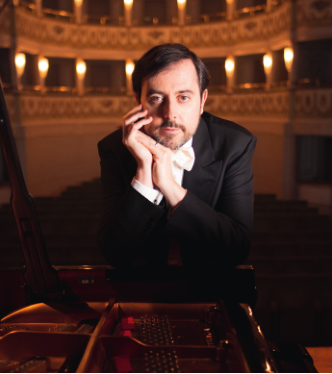
The Ensemble Mark Rothko, comprising violinists Carlo Lazari and Giada Visentin, violist Benjamin Bernstein and cellist Marianna Sinagra, brings out the individuality of the instrumental voices and the character of the polyphonic textures, adopting an interpretative approach that prioritises structural clarity. In the Quintet, Massimiliano Ferrati’s piano engages fully in the musical dialogue without overwhelming the strings, while Andrea Ferrati’s contribution on the trumpet highlights the striking timbral contrast intended by the composer. Recorded in Crema in October 2025, this release is particularly valuable for the assumptions it challenges: namely, the notion that Italian instrumental music of the twentieth century was somehow inferior or merely derivative. In this particular case, although Guido Alberto Fano was no revolutionary, he nevertheless succeeded in transforming tradition into a personal field of artistic exploration and creative restlessness, as these two chamber works clearly demonstrate.
The recording, engineered by Gabriele Zanetti, faithfully conveys the distinctive sonic qualities of Fano’s music. The dynamic response is sufficiently energetic and agile, complemented by an appropriate degree of timbral naturalness. In terms of soundstage reproduction, the spatial presentation allows the performers to be clearly focused on a convincing depth, without compromising the width or height of the sonic image. Tonal balance and detail retrieval are equally free from significant shortcomings: the former maintains a convincing distinction between the lower-midrange and upper registers, while the latter offers a pleasing sense of texture and substance, together with a suitably dark, quiet background surrounding the instruments. The result is a consistently comfortable and fatigue-free listening experience.
Andrea Bedetti
Guido Alberto Fano – String Quartet - Piano Quintet
Ensemble Mark Rothko – Massimiliano Ferrati (piano) – Andrea Ferrati (trumpet)
Brilliant Classics CD 97757
Artistic rating 4,5/5
Technical rating 4/5