I do not know what recording program the South Korean pianist Eunhee Baek has planned for her project dedicated to the works of Franz Liszt—a project that has just begun with this first volume released by Da Vinci Classics. However, pairing the three Apparitions of 1834 with the third book of the Années de pèlerinage on this opening album means spanning over forty years of the Hungarian pianist and composer's creative life, moving from the impetuosity of youth to the profound meditation of his final years. Undoubtedly, it is a programmatic idea as simple as it is effective, one that avoids a facile anthology of famous pieces to build instead a coherent itinerary, wherein the transformation of Liszt’s musical language appears as the natural development of a single, underlying poetic drive.

Thus, the Seoul-born pianist—who has long been engaged in a systematic exploration of Franz Liszt’s piano repertoire—clearly sought to approach this journey with a project revealing a precise cultural awareness even before a pianistic one. This trait is further emphasized by the liner notes, written by Jean-Yves Clément, which stress the theme of the journey “from the cradle to the grave,” identifying the composer’s biographical and spiritual path as the thread running through the program. Rather than following this reading to the letter, however, it is worth observing how the music itself suggests a striking continuity between the visionary Liszt of the Apparitions and the rarefied Liszt of the third book of the Années de pèlerinage.
Let us begin with the Apparitions, which still belong to the Romantic age of fantasy and improvisation, yet at the same time already contain that exploration of color and dissolution of form that would characterize late Liszt. Eunhee Baek intelligently catches precisely this aspect, avoiding turning these pieces into an exercise in mere executive brilliance. Her tone production is always controlled, the phrasing breathes naturally, and the rubato never turns into expressive caprice. The impression is that of a pianist more interested in constructing atmosphere than in immediate effect, which fully aligns with the author's original intentions.
Indeed, the final Apparition, the Fantaisie sur une valse de Schubert, confirms this approach. Virtuosity is present, of course, but it is never ostentatious, while the writing retains lightness and transparency even in the most elaborate passages, just as the formal structure remains constantly legible. This is by no means a given, as Liszt often risks being interpreted as a succession of spectacular episodes; here, instead, each episode seems to arise from the previous one with remarkable narrative fluidity.

However, the centre of gravity of the recording is obviously represented by the Troisième Année de pèlerinage. Here, the young pianist from Seoul demonstrates an even more convincing interpretative maturity, starting with the litmus test of this collection, Jeux d’eaux à la Villa d’Este, a piece in which she avoids any impressionistic self-indulgence. The liquid sonorities, the luminosity of the figurations, and the timbral richness are always subordinated to the architecture of the piece, which emerges clearly without losing that contemplative dimension that forms its core. Furthermore, the balance between clarity of detail and breadth of structure is likely one of the finest achievements of the entire album.
The reading of Sunt lacrymae rerum appears even more significant. Here, Eunhee Baek’s pianism deliberately eschews all Romantic emphasis, favouring a restrained, almost ascetic tension. The harmonic density is rendered through a highly refined control of resonances and weight, without ever overburdening the musical discourse. It is precisely this ability to let the score speak, rather than imposing an excessive subjectivity upon it, that imparts such expressive power to her interpretation. The conclusion, entrusted to Sursum Corda, closes the journey in a coherent manner. The piece takes on a solemn character devoid of rhetoric, in which the sense of spiritual elevation arises from the gradual expansion of the musical discourse rather than from dynamic emphasis: under this aspect as well, an interpretative signature marked by restraint, control, and clarity of thought clearly emerges.

From a strictly pianistic standpoint, what is particularly striking about the South Korean pianist is the consistency of her touch, the quality of her tonal palette, and a pedalling that is always functional to harmonic definition. Her technique appears completely at the service of the musical idea, without ever demanding attention for its own sake. This is not the titanic, sweeping Liszt of a certain twentieth-century tradition, but an internalized, meditative Liszt—attentive to chiaroscuro and subtle perspectives rather than grand theatrical contrasts. The greatest virtue of this debut recording lies precisely in having identified a unifying thread across works written more than forty years apart. Rather than contrasting the young virtuoso with the old mystic, Eunhee Baek suggests that both periods belong to a single creative journey, in which sonic imagination remains the constant engine of musical invention. It is a coherent, cultured, and stylistically guarded reading, destined to attract the attention of listeners who prefer a Liszt of reflection and depth over one of virtuosic display.
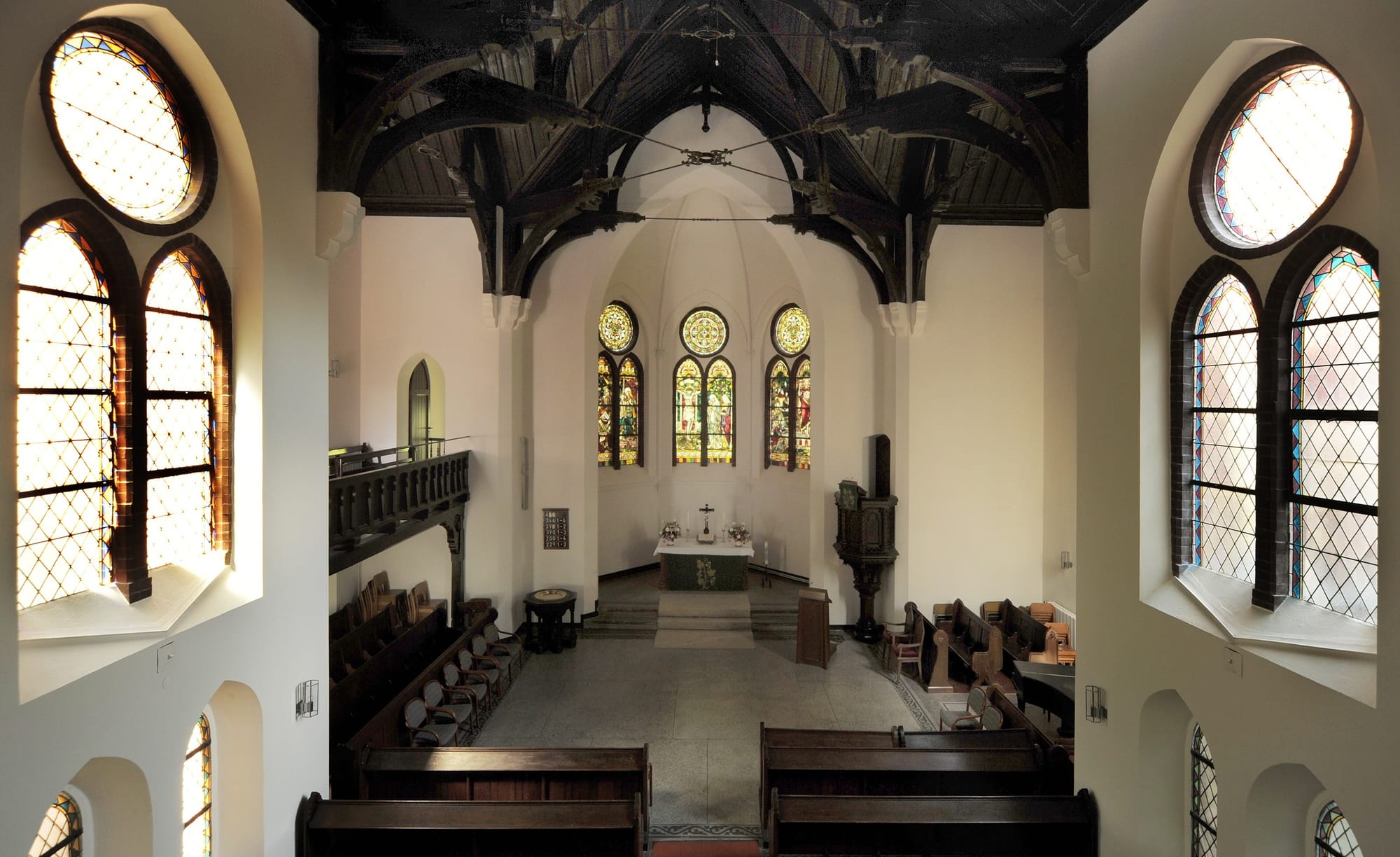
The recording, made at the Andreaskirche in Berlin-Wannsee by Yunus Tuncali, successfully highlights the distinctive acoustic qualities of the Shigeru Kawai SK-EX grand piano used by the South Korean pianist. Dynamics are fast, clean, and endowed with the energy necessary to fully showcase the timbral colours required for Liszt’s scores. The soundstage parameter favours a close-up reconstruction—yet one that is neither unnatural nor incorrect—with the sound capable of extending beyond the pair of loudspeakers in both height and width. Tonal balance does not disappoint in terms of register clarity, which are always well differentiated and sharply focused, as is the micro-detail, supported by a more than sufficient noise floor background ("blackness") that three-dimensionally envelopes the instrument.
Andrea Bedetti
Franz Liszt – Piano Music Vol. 1
Eunhee Baek (piano)
CD Da Vinci Classics C01194
Artistic rating 4,5/5
Technical rating 4/5