There are compositions which, despite originating from a world that has irretrievably vanished, continue to engage us with such intensity that they call into question our very way of listening. It is beyond doubt that the twelve Toccate from Girolamo Frescobaldi’s First Book fall into this category—not because their modernity should be sought in implausible anticipations of later musical idioms, but because they confront us with a fundamental question: what does it mean to listen to music when the categories through which we habitually organize our sonic experience are no longer sufficient to comprehend it?
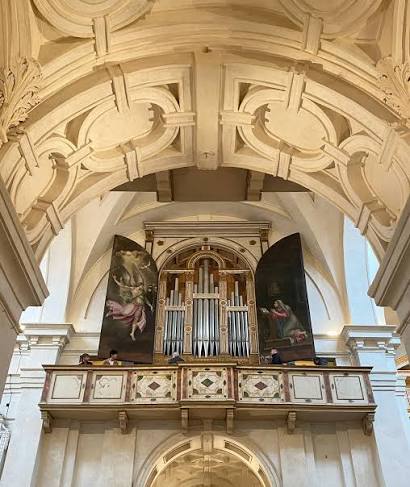
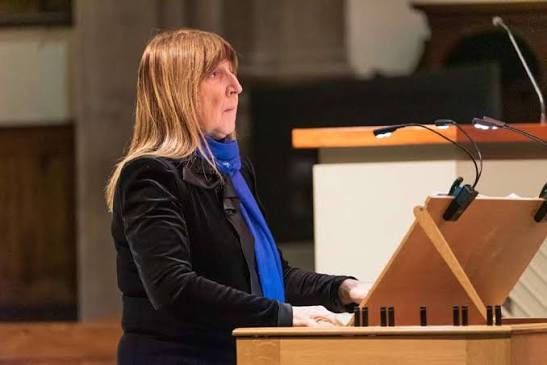
It is precisely from this question that we can approach the latest recording project by Ivana Valotti, one of Italy’s most authoritative interpreters of Renaissance and Baroque organ repertoire. For this recording, she has approached Frescobaldi’s late-Renaissance masterpiece through the expressive resources of an instrument of exceptional historical significance: the organ built in 1565 by Graziadio Antegnati for the Palatine Basilica of Santa Barbara in Mantua. Released by Da Vinci Classics, this recording project carries implications far more profound than the mere pursuit of timbral authenticity, since it directly addresses the relationship between notation and improvisation, between composition and interpretation, and between historical memory and musical communication. To appreciate the significance of this undertaking, we must first free ourselves from a particularly persistent misconception: the tendency to regard early music as an aesthetic world definitively confined to the past, a heritage to be preserved and admired, but not necessarily experienced as something alive. Such an attitude inevitably risks turning the works of earlier centuries into museum pieces, depriving them of precisely the vitality that originally brought them into being.
Frescobaldi’s music was not conceived to be contemplated centuries later as a relic of a distant age but was written to exert a direct influence on those who would hear it: to surprise, persuade, move and, at times, disorient them, through a musical language in which the organisation of sounds was inseparable from their capacity to arouse emotions. Naturally, speaking of emotions in relation to the early seventeenth century requires a degree of caution. The affetti of the musical culture of the period cannot simply be equated with the individual psychological states that Romanticism would subsequently place at the centre of artistic expression. Rather, they belong to a conception in which human passions possess a recognisable rhetorical identity, a shared configuration, and the potential to be represented through gestures, figures, tensions and contrasts. The composer, therefore, does not merely pour his innermost feelings into a composition, but constructs a discourse capable of awakening particular emotional responses in the listener, according to a conception of art profoundly rooted in eloquence. And this is precisely one of the keys to understanding Frescobaldi, since his music actively seeks to appropriate the expressive powers of verbal language: to articulate, interrupt, emphasise, suspend, resume, contradict, prepare a conclusion and, at times, defer it. His is a syntax of gesture, and musical time is not merely a regular succession of durations, but a dimension continually reshaped by the expressive urgency of the discourse.
Born in Ferrara in 1583 and having died in Rome in 1643, Frescobaldi thus belongs to the generation that witnessed the transformation of many of the aesthetic principles underpinning Renaissance musical culture. His language emerges from the legacy of sixteenth-century counterpoint yet subjects it to a process of reworking in which individuality of invention, formal freedom, harmonic tension and the pursuit of an immediate communication of the affetti acquire increasing importance. In this light, to describe his music as simply Renaissance would be reductive, for we find ourselves at a particularly fertile point of transition, where the polyphonic culture of the Renaissance encounters the new expressive demands of the early Baroque.
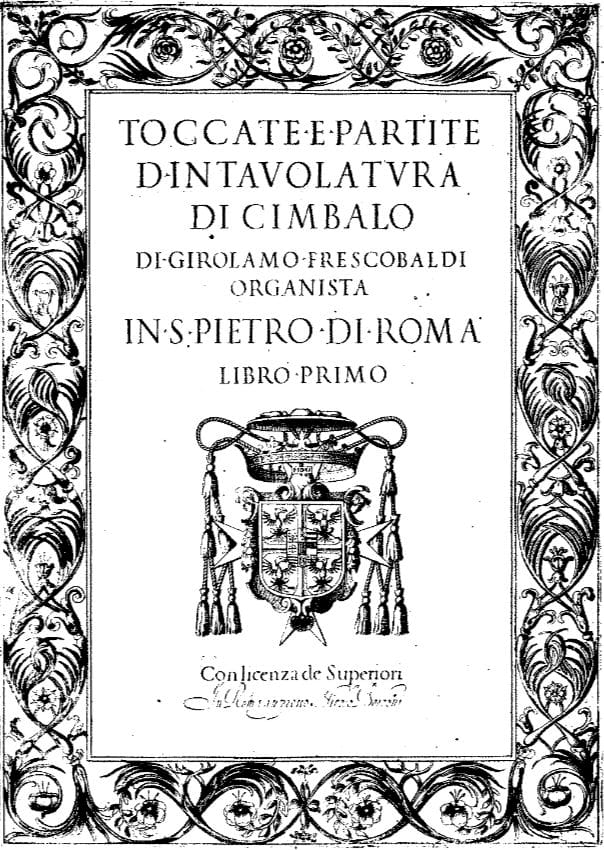
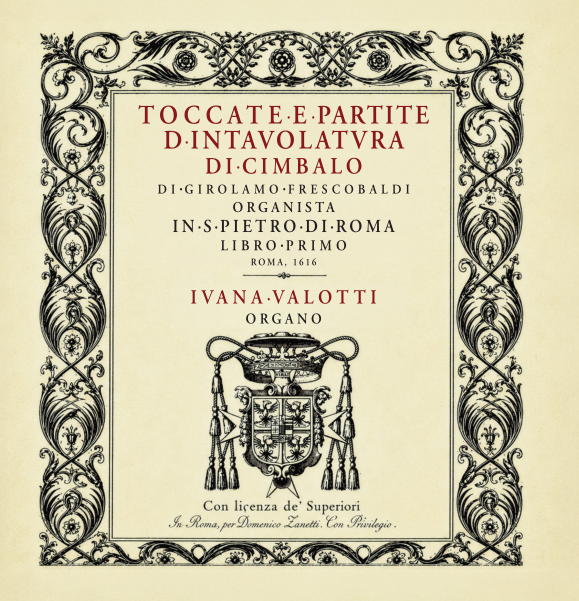
When the Primo libro di Toccate e Partite d’intavolatura di cimbalo appeared in Rome in 1615, Frescobaldi had already developed an extraordinarily distinctive compositional personality. The collection, dedicated to Ferdinando Gonzaga, Duke of Mantua, subsequently underwent several editions and revisions, testifying to its importance within European keyboard culture. What is most striking, however, is the awareness, expressed in the instructions addressed to performers, that this manner of composing and playing demands interpretative principles different from those based on strict metrical regularity. It is no coincidence that, in his Avvertimenti al lettore (Instructions to the Reader), Frescobaldi stipulates that this style of playing should not remain rigidly bound to the beat. His reference to the modern madrigal is fundamental: just as a singer modifies the flow of the musical discourse according to the meaning of the words and the character of the affetti, so the instrumentalist must be able to adapt the tempo to the expressive demands of the composition.
From this, we may conclude that rhythmic freedom is not merely an ornamental addition, a privilege granted to a particularly inspired performer, or a device intended to make an otherwise predictable passage more interesting; rather, it is a constitutive element of the musical conception itself. Musical time must breathe if the discourse is to acquire meaning: it must expand when expression demands it, contract when tension calls for greater energy and pause when a dissonance or a particular rhetorical figure requires special attention. The analogy with verbal language helps clarify this principle even for those without specialised musical training: no genuinely persuasive orator would deliver a speech at an unvarying pace, with identical emphasis and intensity from beginning to end. Pauses, hesitations, accelerations and inflections are not deviations from meaning; on the contrary, they help shape it. Frescobaldi’s toccata is governed by precisely the same logic.
To understand it, however, we must reconsider another habit characteristic of contemporary listeners, shaped largely by their familiarity with the tonal music of the eighteenth and nineteenth centuries. We are accustomed to recognising in the development of a composition a relatively coherent progression, in which thematic materials are presented, elaborated, contrasted and ultimately brought towards a conclusion perceived as necessary. In the early seventeenth-century toccata, by contrast, there is not always a dominant theme around which everything else is organised. The musical discourse may take unexpected directions, break off, suddenly change character, abandon one procedure and introduce another. This means, and it is a fundamental point, that the coherence of the work does not necessarily lie in thematic unity, but in its ability to sustain a succession of expressive events. This is a substantial difference, since it alters the relationship between expectation and surprise. Consequently, the musical culture in which Frescobaldi developed attached particular importance to variety, transformation and the continual renewal of invention. Surprise does not interrupt the discourse; rather, it may constitute one of its very objectives.
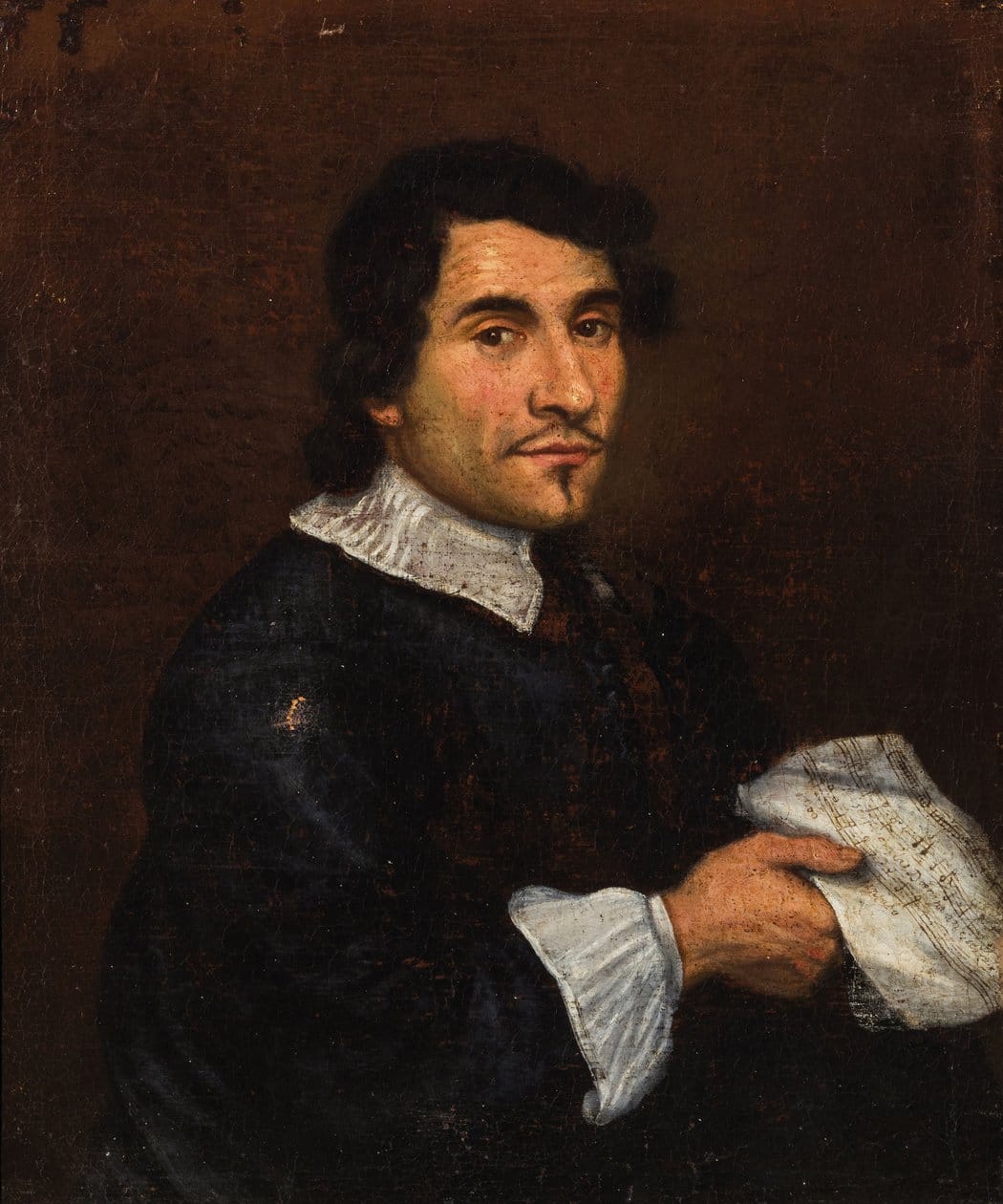
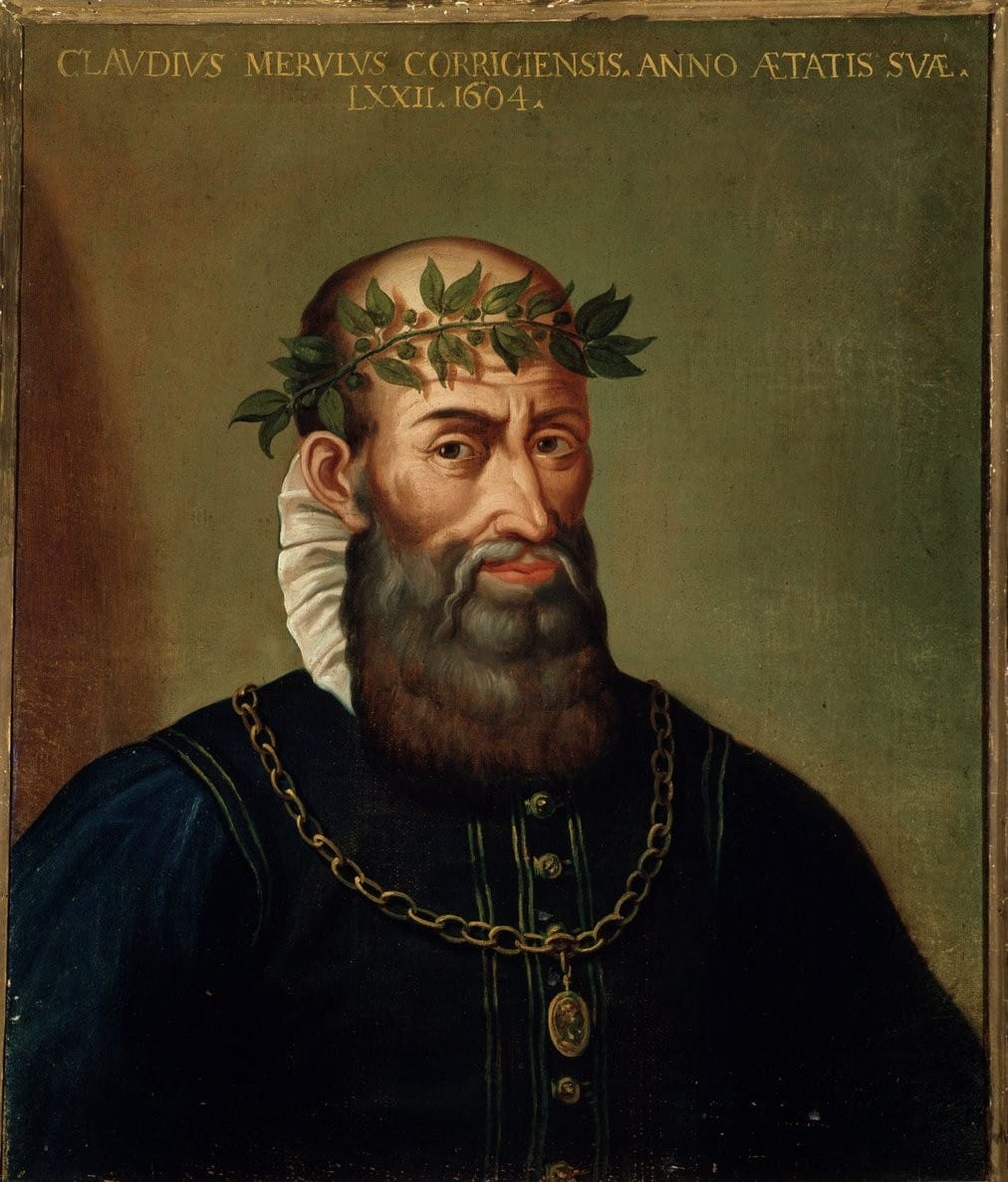
From this perspective, the concept of meraviglia (wonder), central to the aesthetic sensibility of the sixteenth and seventeenth centuries, acquires a significance that extends far beyond mere admiration for technical virtuosity. For those living at the transition between the Renaissance and the Baroque, to experience wonder meant encountering something that momentarily exceeded their expectations, compelling perception to reorganise itself. An unexpected dissonance, a particularly daring chromatic passage, a sudden change in rhythmic movement or a pause placed at an expressively decisive moment could all become instruments of this transformation of listening. Seen in this light, Frescobaldi’s Toccatas are far more than a succession of virtuosic exercises, although technical difficulty undoubtedly plays a considerable role in them. Virtuosity is not an end in itself, but an integral component of instrumental eloquence, one of the means through which the composer creates contrasts, generates tension and lends energy to the musical discourse. The connection with the earlier keyboard tradition is unmistakable. Claudio Merulo, whose conception of the toccata was founded on the alternation of free sections and imitative procedures, represents an indispensable precursor. In Frescobaldi, however, this inheritance is transformed through greater expressive fragmentation and a freedom that extends to the very relationship between musical gesture and duration. The Ferrarese composer thus takes the toccata into a realm in which the written score seems continually to evoke the spontaneity of improvisation.
At this point, however, we must distinguish the appearance of spontaneity from the compositional craftsmanship that actually produces it. The impression of music emerging in the very moment of performance, following the impulse of invention, is the result of an extraordinarily refined compositional awareness. Freedom does not imply an absence of control; on the contrary, it presupposes a mastery of musical language sufficiently profound to allow for a multiplicity of solutions. It is precisely this ambivalence between notation and improvisation that presents one of the most fascinating challenges for the modern interpreter. Musical notation preserves pitches, relative durations and contrapuntal organisation, but it cannot fully convey the performance conventions and that particular quality of musical gesture which belonged to the practices of the period.
This last consideration leads us directly to Ivana Valotti’s recording project. Her decision to perform the twelve Toccatas from the First Book on the Antegnati organ of Santa Barbara represents far more than a simple change of timbre compared with the more customary harpsichord interpretations. It establishes a different relationship between the shaping of a phrase and the duration of sound, between melodic design and its projection into space, and between the performer’s gesture and the acoustic response of the instrument. The original title of the collection, with its explicit reference to harpsichord tablature, might, on a superficial reading, suggest an exclusively harpsichord-oriented destination. However, subsequent editions that also acknowledge the organ, together with the flexibility of keyboard performance practice during the period, encourage a less restrictive understanding of the matter. The harpsichord and the organ share a substantial part of their repertoire and performance traditions, despite possessing profoundly different sonic characteristics. On the harpsichord, sound is produced by the plucking of a string and once generated, undergoes a natural decay. On the organ, by contrast, a note can be sustained for as long as the key remains depressed. This difference radically alters the way a musical phrase is perceived. Yet this very capacity to sustain and shape the sound also entails considerable interpretative risks, since writing rich in diminutions, rapid passages and rhetorical articulations can lose its clarity unless the performer exercises the utmost care in managing the relationship between legato and separation, sustain and release, continuity and breathing. It is therefore not enough simply to transfer a keyboard composition to the organ manuals. Its performance must be reconsidered in the light of the instrument’s particular characteristics, without compromising the stylistic nature of the music.
This is precisely the point at which Ivana Valotti’s interpretative approach appears to me most stimulating and, at the same time, most open to critical scrutiny: finding a balance between the characterisation of the affetti and the continuity of the musical discourse. Frescobaldi’s Toccatas are constructed through a succession of relatively autonomous episodes, each possessing its own distinctive rhythmic, contrapuntal and expressive character. Yet such freedom does not imply that each episode should be perceived as an entirely isolated entity. Timbral variety must therefore find its counterpart in the quality of phrasing, the handling of musical durations and the ability to establish meaningful relationships between musical events, all elements that must constantly be borne in mind when shaping an interpretation. In this respect, Ivana Valotti’s training and professional experience lend particular authority to her performance, through which she once again engages with one of the most significant composers in the history of the emancipation of instrumental music.
From this perspective, the twelve Toccatas of the First Book constitute an extraordinarily revealing laboratory. The opening of the collection immediately raises the question of the exordium, that is, the ability to establish a connection with the listener. In the rhetorical culture of the period, the beginning of a discourse is never a neutral moment: it must capture attention and prepare the listener for what is to follow. Valotti’s decision to emphasise, as she explains in the accompanying booklet, the brilliance of the Ripieno in some of the more markedly chordal openings reflects precisely the intention to give these moments particular sonic prominence. The interpretative significance of this choice therefore lies in recognising the chord as a rhetorical gesture, an opening up of musical space and a genuine act of taking the floor. The Ripieno is thus employed not merely to increase the fullness of the sound, but to give the opening an immediately recognisable expressive identity.
In the first four Toccatas, the alternation of free episodes, figurative passages and sections of more strictly contrapuntal writing offers considerable scope for articulation. Ivana Valotti’s declared exploration of different timbral combinations responds to the need to distinguish the various characters without sacrificing the unity of the musical invention. The value of this approach lies above all in its intention to make intelligible a structure that, on a superficial hearing, might appear excessively fragmented. Yet it is precisely here that a possible misunderstanding must be avoided: clarity does not necessarily mean emphasising every contrast. In Frescobaldi, an essential part of the expressive power also arises from ambiguity, from the possibility that one episode may seem to emerge spontaneously from the preceding one or, conversely, introduce an entirely unexpected direction. The most effective interpretation, therefore, is not one that systematically underlines every change, but one that recognises its function within the work as a whole.
The Fifth and Sixth Toccatas offer an opportunity to explore more deeply the relationship between cantabile expression, harmonic tension and sonic density. This distinction should not, however, be understood as an opposition between melodic episodes and purely technical passages, since in Frescobaldi’s musical language, a singing quality does not necessarily depend on the presence of an easily memorable melody. More profoundly, it is a quality of articulation, an ability to impart direction and meaning to every succession of notes. In the Sixth Toccata in particular, the emphasis placed on chordal openings through the use of the Ripieno constitutes a significant element of Valotti’s stated interpretative conception, since the value of such a choice lies in its ability to bring the harmonic structures into sharper relief, allowing sonic density itself to become an integral component of rhetorical tension.
The transition to the Seventh Toccata and the subsequent compositions further broadens the range of expressive possibilities. The variety of musical characters should not, however, obscure the fact that the collection emerged within a culture in which modal conventions, contrapuntal organisation and established keyboard performance practices contributed to a system of musical relationships different from that of fully developed tonality. Thus, even when we employ modern key designations for the sake of descriptive convenience, we must remember that such labels cannot fully encompass the nature of Frescobaldi’s musical language. Harmonic direction, the treatment of cadences and the relationships between different intervallic configurations still belong to a historical period in which the continuity between modal thinking and emerging tonal tendencies cannot be reduced to rigidly separated and distinct categories.
The Eighth, Ninth and Tenth Toccatas, for their part, provide further opportunities to consider the relationship between the articulation of musical discourse and timbral differentiation. The importance of this relationship lies above all in the possibility of avoiding an approach to listening based uniformly on fullness of sound. We must recognise that a historical organ should not be appreciated solely for its ability to produce monumental sonorities, since an essential part of its appeal resides in the clarity of the relationships between individual voices, the precision of attacks, the expressive quality of suspensions and the ability to make even the slightest modifications in the musical texture perceptible.
Finally, in the last two Toccatas, attention may turn to the role of cantabile expression and the significance of the concluding gestures. Valotti’s reference to the more intimate sonorities of the Principale, particularly suited to meditative passages, chromatic writing and plaintive inflections, suggests an interpretative conception in which expressive intensity is not automatically equated with sheer volume of sound. This choice embodies a particularly important interpretative principle, since in Frescobaldi’s music expressive power can manifest itself through the smallest gesture, a suspension or a particular intervallic relationship. The organ has the capacity to lend these moments a special prominence that depends not on the accumulation of stops, but on the quality of the sound and its duration.
In light of what we have heard, it would certainly be inappropriate to interpret the succession of the twelve compositions as a single dramatic journey unfolding according to a narrative progression, since, as Ivana Valotti’s interpretation has clearly demonstrated, each toccata possesses its own autonomy and its own organisation of musical events. Nevertheless, listening to the collection in its entirety allows us to perceive the continuity of an underlying poetic vision, a kind of profound identity that manifests itself through the diversity of compositional solutions. Symbolically, the organ becomes a theatrical stage, and the twelve pieces are like twelve characters moving and acting upon it.
Moreover, Valotti’s interpretation has revealed how the toccata is a form particularly suited to emphasising the unrepeatable nature of performance, upon which the listening philosophy of the period was founded. Indeed, its formal freedom, the presence of relatively autonomous episodes and its close relationship with improvisation make the toccata a musical language in which the immediacy of the sounding event acquires decisive importance. In short, from a sonic perspective, the toccata represents the hic et nunc par excellence of early music.
Thus, when all is said and done, our assessment of the artistic conception underlying this recording can be based precisely on the fact that the project proves convincing in the coherence between the choice of instrument, the knowledge of historical sources and the aim of enhancing the variety of the affetti. We are dealing with an artistic undertaking that addresses one of the central challenges of Frescobaldi interpretation: restoring vitality to a musical language rooted in a culture of improvisation and eloquence that is no longer immediately familiar to us today. What is particularly striking about Ivana Valotti’s performance is her ability to maintain a sense of proportion within this diversity, preventing the timbral characterisation of individual affetti from becoming an excessive emphasis on separate episodes. Frescobaldi’s freedom tolerates neither rigidity nor arbitrariness: it demands a command of musical continuity capable of making what springs from a profound understanding of the written score appear spontaneous. And this is precisely what Valotti has succeeded in achieving.
It follows that this recording acquires a cultural significance that goes well beyond the undoubtedly important aim of showcasing a historical organ, since it invites us to consider interpretation as a meeting point between different temporal dimensions: the period in which the compositions were conceived, that of the instrument through which they are performed, and that of the listener to whom they are addressed today. These three dimensions do not coincide, and it would be misguided to attempt to unify them artificially. While the Antegnati organ predates the publication of the First Book by half a century, Girolamo Frescobaldi belongs to a generation already confronting significant transformations in musical language compared with the world in which the instrument was built. Finally, both the contemporary performer and listener belong to a musical culture that is, in turn, infinitely more distant. Yet it is precisely this layering of time and space that makes the encounter particularly meaningful. We are not witnessing the reconstruction of an original historical event, but rather the possibility of establishing a dialogue between different historical testimonies, united by the continuity of a musical tradition.
The sound recording, engineered by Jean-Marie Quint, is of excellent quality, distinguished above all by a powerful, responsive dynamic range and a remarkable sense of naturalness. The soundstage places the organ at an appropriate depth, allowing it to be precisely located within the performance space, which is itself effectively projected into the listening environment. This sense of depth does not compromise the height or breadth of the sound; rather, it allows the sound to radiate freely, conveying the actual dimensions of the space in which the musical event took place. The tonal balance is particularly impressive for the clear separation between the lower-mid and upper registers, enabling the listener to appreciate the beauty and effectiveness of the timbral contrasts characteristic of Frescobaldi’s music. Finally, the level of detail possesses an exquisitely tangible quality, skilfully conveying the instrument’s three-dimensional presence and physical substance in a way that draws the listener into the musical experience.
Andrea Bedetti
Girolamo Frescobaldi – Toccate e Partite d’intavolatura di cimbalo. Libro primo
Ivana Valotti (organ)
Da Vinci Classics C01241
Artistic rating 5/5
Technical rating 4,5/5