In the late nineteenth-century Italian musical landscape, heavily and almost absolutely dominated by the liturgies and the ill-fated splendours of opera, the figure of Giovanni Sgambati stands out with the incontrovertible, quiet yet incisive authority typical of the great pioneers. Indeed, far from donning the clothes of the iconoclastic revolutionary or the flamboyant insurgent (an anthropological effect resulting from the recent Risorgimento "adventure"), the Roman musician chose the far more arduous and inconspicuous role of the "patient builder" within the artistic laboratory of the Third Rome—a city that found itself in the improvised, never quite fitting guise of a nation's capital, after having represented for centuries the secular power and, considerably less so, the spiritual power of the Papal States. A "patient builder," as Giuliano Marco Mattioli effectively defines him in the CD's liner notes, who can also be recognized (and admired) thanks to this brand-new release by Da Vinci Classics. This album features the young Roman pianist Michele Tozzetti presenting several works by his fellow countryman: namely, the Nocturnes, Op. 20, the Pièces lyriques, Op. 23, the Mélodie de Gluck, and the Mélodies poétiques, Op. 36.
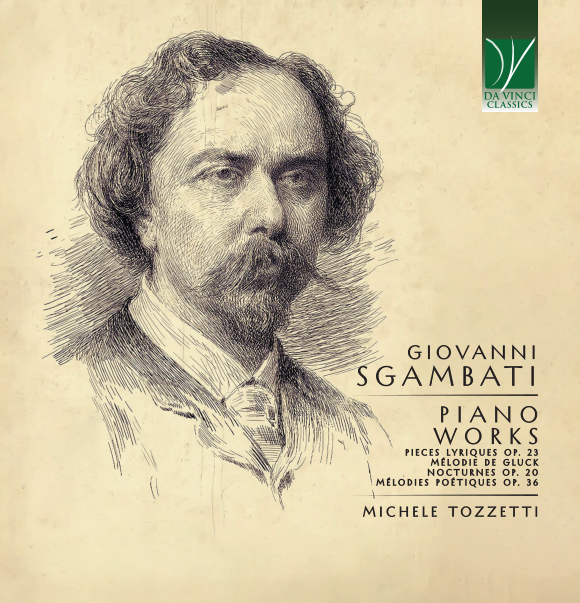
However, since Giovanni Sgambati still belongs to that legion of musicians whose names are known but whose work remains unexplored, it is essential to provide some useful context. This helps to better understand both the album in question and the significance of his stature as a composer and artist—a legacy dedicated to the historical task of defining and legitimizing an "autonomous space" for instrumental music. Crucially, the Roman artist did not view this endeavour as a mere academic exercise or a luxury reserved for scholarly circles; rather, he saw it as a civic language, a disciplined daily practice capable of restoring a European dimension to Italy.
To be sure, being born to a Roman father and an English mother helped him grow up in an environment shaped by a dual cultural belonging. This double root never remained a superficial, cosmopolitan veneer; instead, it translated into a guiding principle for his entire artistic journey, serving as an ideal vector for circulating repertoires, performance practices, and institutional models from across the Alps. Exceptionally precocious in his training as a pianist—a rare feat in the Italy of that era, which was still focused and fossilized on vocal gymnastics—Sgambati soon entered Franz Liszt’s circle right in Rome. Through this connection, he expanded both his pianistic foundation and his repertoire, integrating the compositions of Bach, Beethoven, and Schumann. Thus, learning and performing the Chromatic Fantasia and Fugue or Schumann masterpieces like Carnaval and Kreisleriana meant more than just presenting alternative interpretive models to theatrical vocalism to contemporary ears and minds; above all, it meant assimilating a true grammar of musical form.
To this, one must add his epiphany on the Wagnerian path, which came about during a trip to Germany in Liszt's retinue. This journey led Sgambati to attend the dress rehearsal of Das Rheingold in Munich in 1869—a propedeutic and divinely anaphylactic shock capable of projecting his sensibility toward horizons that our country could not yet remotely imagine.
Yet, to fully grasp the significance of Sgambati's cultural endeavour—and, in parallel, that of figures like Giuseppe Martucci in Naples and Marco Enrico Bossi in Bologna—one must ruthlessly analyse the state of isolation in which Italian instrumental music found itself during the second half of the nineteenth century. It is a well-established fact that post-unification Italy suffered from a conspicuous theatrical hypertrophy. Opera was not merely the dominant musical genre; it was, par excellence, the country's cultural industry, the hub of bourgeois and aristocratic socialization, and the very filter through which national identity was forged. By the law of weights and counterweights, it appears all too clear that this aesthetic and economic monopoly had ultimately withered the great instrumental tradition that Italy had nonetheless led in previous centuries (one need only think of Corelli, Vivaldi, Scarlatti, and Boccherini). Public concert halls were virtually non-existent, orchestras were precarious ensembles contracted primarily for opera seasons, and conservatory education was geared almost exclusively toward training singers, opera composers, and theatrical orchestral players. Faced with this desolate, Eliotesque landscape, the attempted revival of chamber and symphonic music in Italy took on the traits of a genuine cultural battle, where "enlightened" aristocratic salons and the halls of philharmonic societies became authentic aesthetic "trenches."
Moreover, listening to instrumental music demanded a new type of focus and a different contract with the listener: no longer the dramatic catharsis of the theatre, but rather an understanding of the formal logic of thematic development, polyphony, and architectural rigor. This movement, of which Sgambati represented the Roman soul, did not aim to destroy opera, but to fill a dangerous cultural void, reconnecting Italy to the great historical and formal processes of Austro-German music in particular and European music in general. Thus, chamber music became the chosen vehicle for this refounding: a flexible genre that did not require the massive financial resources of the theatres, yet allowed the public's ear to be educated in the great instrumental canon from across the Alps. Sgambati did not confine this vocation to the sphere of private aspiration. As Mattioli notes once again in the CD booklet, the Roman musician, alongside Ettore Pinelli, inaugurated the first public instrumental courses in the premises on Via di Ripetta in Rome. Furthermore, in 1870, a state decree placed these courses under the aegis of the Accademia di Santa Cecilia, sowing the seed for the future Liceo Musicale (which officially opened in 1877). In parallel, his activity as a conductor and musical promoter became closely intertwined with the Accademia Filarmonica Romana and the burgeoning Società Orchestrale.
In this regard, the 1870 concert in which Sgambati conducted Beethoven’s Seventh Symphony—performed then for the very first time in Rome, exactly fifty-eight years after its composition!—was nothing short of memorable and deeply significant. Furthermore, the meeting between Sgambati and Wagner, which took place in the late autumn of 1876 in Rome, proved fundamental. On that occasion, the great Leipzig master had the opportunity to hear his Roman colleague perform on the piano at Palazzo Caffarelli. Impressed by the Roman musician's talent, Wagner warmly recommended him in a letter to the publisher Ludwig Strecker, head of the prestigious Schott publishing house in Mainz, urging the publication of his scores. On the front of musical cultural policy, Sgambati was highly active in reviving the Società romana del Quintetto. This was achieved in 1881, and from 1892 onward, the ensemble became the musical protagonist of the concerts at the Quirinal Palace, officially assuming the title of the "Quintetto della Corte di Sua Maestà la Regina" (The Quintet of the Court of Her Majesty the Queen) the following year. This fact clearly demonstrates how chamber music had become, in Umbertine Rome, a cultural status symbol—a sign of stylistic elegance and of belonging to the European intellectual avant-garde.
These few but indispensable references bring to light an incontrovertible fact, confirmed in recent decades by musicological research: the figure and work of Giovanni Sgambati were not an exception, a sort of anomaly in the perfectly oiled gears of the engine driving the music of the time—namely, opera. Instead, they stand as a testament to how figures like the Roman composer, Martucci, and Bossi, among others—well before the future work of the members of the so-called "Generazione dell'Ottanta" (Generation of the 1880s)—succeeded in uncoupling the atmosphere and projection of fin-de-siècle musical art in Italy from the hegemony dictated by musical theatre. In doing so, they realigned (or, at the very least, sought to realign) our country with the level of the main European nations, which were already fully engaged in and consecrated to the exploration of an eminently instrumental language.
And here we reconnect to the context of the album in question, beginning with the six Pièces lyriques, Op. 23, whose French title represents in itself a clear departure from the contemporary Italian pianistic tradition, which was largely maximized for the domestic consumption and dissemination of opera. In short, we are not dealing here with traditional "salon pieces" served in the afternoon alongside tea and biscuits, nor with pages that have anything to do with imaginative strains, narrative constructs (the operatic curse once again), or program-based "romantic pruderies." If I may draw a literary parallel, Sgambati's compositional codification is already close—partly for chronological reasons—to the Scapigliatura aesthetics that were then making waves in the north of the country, between Piedmont and Lombardy. This movement offered a poetics and a narrative power capable of breaking away from our homegrown Romanticism—so sweetened, polite, and conventional—in order to delve into the meanders of the human psyche (great literature was already paving the way for the imminent psychoanalytic cult). In doing so, it settled accounts with what, once again, was happening across the Alps, where pens and quills were describing the horrid, the "other," the deviant, and the disturbing that dwell within mankind (read Igino Ugo Tarchetti's Fosca and then we'll talk...).
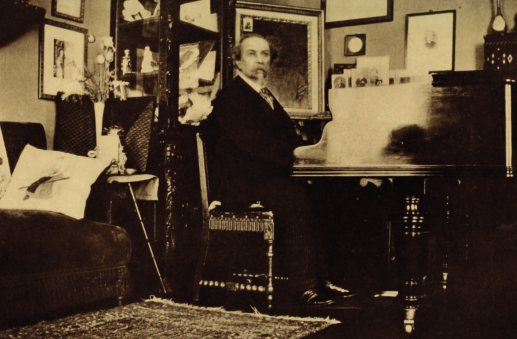
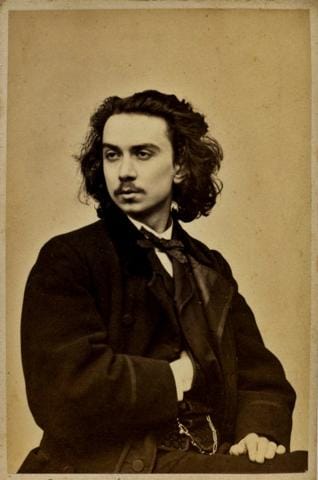
Therefore, I do not feel I am overstating it if I equate Sgambati—who even in his photographs looks the part—to a representative of the magnificent Scapigliatura, capable of investigating, rummaging through, and palpating a less conventional, less predictable dimension of piano sound through these Pièces lyriques, mindful of Liszt’s lesson. First and foremost, what strikes the listener is the elegance of the compositional style. After all, there are different ways to express and represent things, and the Roman musician has no need to use Thor’s hammer to destroy and then rebuild; a stiletto to scratch and a burin to engrave are quite enough for him as he methodically dissects whatever his creative vein suggests. Elegant, to give just two examples, is the opening Romance, built upon a fleeting, nostalgic theme that punctually reappears twice after intertwining with branching segments. Then there is the lower register in Vox populi, used like a sounding lead (bear in mind what Ravel would later do in Scarbo) to bring to life a heartfelt peroration, which must nonetheless be grasped in its architectural structure, in its progressive elevation brought about by the shift to the medium-high register.
Yet Sgambati, from the height of his technical expertise (Liszt must have been good for something...), also proves to be a master chaser, capable of creating stained-glass windows of sound on the keyboard—a musical version of Guillaume de Marcillat, fixing light within the apparent immobility of forms. This is fully demonstrated by the Mélodie de Gluck (from Orfeo ed Euridice), his famous transcription of Gluck's Mélodie (published by Schott in 1881), which rightfully belongs to the great nineteenth-century tradition of the piano paraphrase understood as a critical act and a gesture of historical memory. Sgambati draws from the celebrated Dance of the Blessed Spirits from Orfeo ed Euridice, a piece embraced as a true emblem of classical purity by a nineteenth century enamoured with the past. One must listen to the light propagating from the timbral candour enhanced by the transcription—the purity of a form that detaches itself from mere matter to rise to a genuinely metaphysical dimension.
Sgambati the "European" could obviously not fail to look to Chopin (with all due respect to John Field) and the genre of the Nocturne. He did so through the three Nocturnes, Op. 20, which, however, are by no means slavishly subservient to Chopin’s nature. Instead, they are traversed by a feverish state where the nocturnal darkness is streaked with sudden auroras. By this, I do not mean to imply that the Nocturne in Sgambati's imagination is merely a pretext for creating something alternative; rather, the electric current running beneath these three pieces—and this applies above all to the concluding Andante espressivo—speaks volumes about how the Roman composer sought to embrace this pianistic genre from within, melding it to his own needs and according to the dictates of an era that was no longer that of Chopin.
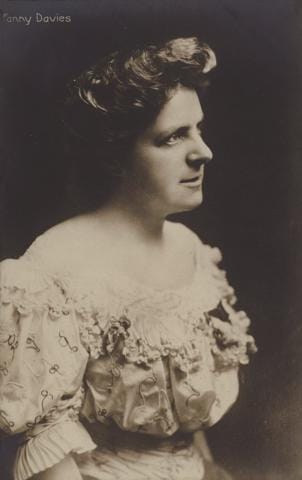
The program presented by Michele Tozzetti concludes with the twelve Mélodies poétiques, Op. 36, dedicated to the remarkable British pianist Fanny Davies, who trained in Leipzig under Carl Reinecke and in Frankfurt under Clara Schumann. This is a cycle of genuine pianistic fragments whose titles can admittedly induce an eye-roll today, such as Canzonetta d’aprile, Preghiera turbata, Dolci confidenze, Anima appassionata, Profonda pena, and dulcis in fundo, Cantico di speranza. In short, exactly the kind of thing one could find at the time either in the salon romances of the formidable Tosti, or in the pianistic attempts of Verismo composers like Leoncavallo and Cilea. In my modest opinion, this Op. 36 does not represent Sgambati at his best; to be sure, we are not dealing with tons of cloying honey here, yet the constraint imposed by the fragment and by the specific imagery conjured by each individual page’s title leads to an inevitable throttling of the author’s creative vein. Let it be clear: mastery and an appropriate, skilful use of technical elements are not lacking, but there is no doubt that here we re-enter a cliché of a decidedly salon-like flavour, and not in the highest sense of the term.
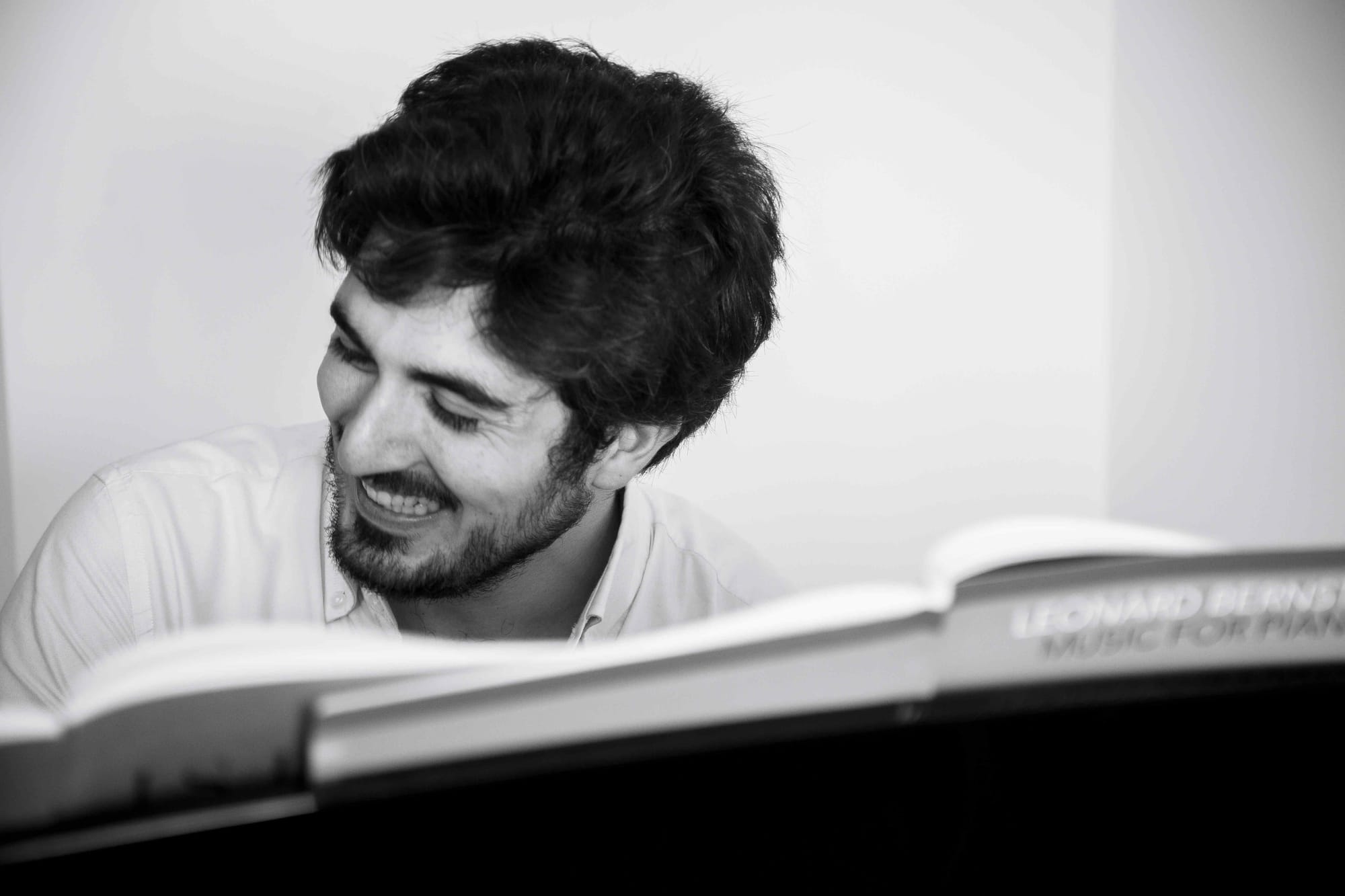
That aside, the undeniable merit of this production lies in its success in restoring Sgambati’s keyboard artistry to its proper light: a laboratory in which the great history of the European piano—from Bach to Liszt, by way of Schumann and Chopin—is filtered by the Roman composer through an entirely different sensibility, one shaped by an open, cosmopolitan, and curious forma mentis, and backed by a truly flawless compositional technique. The validity of the project is further enhanced by Michele Tozzetti’s interpretation. Tozzetti is already a veteran of recording productions, so to speak; if my count does not deceive me, this album dedicated to Sgambati marks the sixth of his pianistic career (including a recording, also released by Da Vinci Classics, in which he presented the unjustly neglected piano works of the Danish Romantic composer Niels Gade).
Tozzetti succeeded in restoring the validity of Sgambati's compositional structure through an interpretation that leaves nothing to chance. This is not to say that any of its esprit was lost, but rather that his performance masterfully highlighted those aspects through which the Roman musician's figure and work are finally modernized and focused within the cultural and social dynamics of his era. Put simply, the young Roman pianist’s reading brings to the surface the pure architectural dimension, the proportion that is always precise and consolidated upon the altar of form, and the capacity to present Sgambati's pianism in comparison with what was being done across the Alps. He allows us to understand Sgambati's "modernism," his desire for a creative dialogue with schools and movements that had already been processing the richness and complexity of instrumental music for decades. (In this regard, perhaps instead of the Mélodies poétiques, and precisely to better complete this European scope, I would have preferred to hear the Suite in B minor, Op. 21—but that is merely a personal whim that is worth less than zero...).
The sound recording, engineered by Claudio Zampa, leaves no room for criticism or negative remarks, as it perfectly captured the sound released by the fascinating 1890 Bechstein that Michele Tozzetti used for the recording. The dynamics are full-bodied, capable of rendering the instrument's generous timbral quality (especially in the mid-low register), coupled with a sufficient transient speed and an appreciable naturalness. The soundstage places the Bechstein at the center of the scene, with a discreet depth, allowing the sound to radiate in height and width well beyond the speakers. There is nothing to object to regarding the tonal balance, which fully respects both the mid-low and the high registers. Finally, the detail presents the instrument duly focused, allowing the listener to perceive its three-dimensionality.
Andrea Bedetti
Giovanni Sgambati – Piano Works
Michele Tozzetti (piano)
CD Da Vinci Classics C01168
Artistic rating 4,5/5
Technical rating 4/5