I must admit that when Da Vinci Classics submitted this recording project to me, my first reaction was one of surprise. This was not so much due to the music itself—piano pieces performed by the talented (and here I immediately expose myself) Olgiate-born pianist Fiammetta Corvi—but rather due to the cultural context that inspired the project (namely the animated cinema of Hayao Miyazaki and that of director Takeshi Kitano). More precisely, it concerns the music of Japanese composer Joe Hisaishi, a cult figure in his homeland precisely because of the soundtracks (and more) he has been able to create over the decades.
Bearing in mind that I am still a deeply curious person (given the current state of affairs, I believe it is no longer beauty that can save the world, but curiosity), I did not back down and accepted the challenge. In fact, it was a twofold challenge: first, because I had only ever had the chance to listen to this composer through cinema, since he also composed soundtracks for Takeshi Kitano’s films; and second, because I am not a great admirer of animated cinema (which I avoided even as a child), let alone that of the Land of the Rising Sun. At the same time, however, I am convinced that a review or a musical analysis should not be based on a direct, pre-existing familiarity with the subject, but rather on an experience, more or less engaged, built up over time. It is this experience that subsequently allows one to approach and process fields or domains that may initially seem unfamiliar or seldom frequented, as is the case with the composer in question. After all, a critic—regardless of the artistic expression they engage with and debate—is not omniscient, but rather someone who places their own sensitivity, even before their (presumed) expertise, at the service of trying to understand, so that they may then try to help others understand as well. In short, the "critic" is merely a link in the chain, and certainly not an entity superior to the artist, as the good Oscar Wilde had mockingly and ostentatiously theorized.
Now, whether it was due to chance (in which I place very little faith) or to what Jung posited through his theory of synchronicity (to which I am far more inclined), some time ago, as an all-round cinema enthusiast, I happened to watch a four-part documentary dedicated to Hayao Miyazaki. He is the most internationally renowned exponent of Japanese animation who, in 1985, founded the legendary "Studio Ghibli" alongside his colleague and mentor Isao Takahata. Thanks to this documentary, titled Miyazaki: 10 Years of Magic and directed by Kaku Arakawa, I had the opportunity to discover an enchanting world—a parallel universe created by a visionary and truly unique figure. Through it, I came to realize that animated cinema in Japan is not a simple genre, as we might conceive it in the West, but rather a sort of "cult"—not a religion, but very close to it—through which Japan's millennia-old cultural tradition blends with the most advanced animation techniques. After all, the Japanese esprit is unique and nothing short of admirable in its capacity to unite its own past with continuous, relentless innovation.
An interesting aspect, taking as a starting point what the aforementioned documentary conveys and clarifies, is precisely that which concerns the music specifically composed to "accompany" animated cinema in Japan. If I used quotation marks for that verb, it is because in reality—as can be inferred from reading the album's liner notes—in Japanese mass culture, animation and music are two distinct entities that merge to give life to an artistic result that places them on the exact same footing, with the same communicative intensity. Therefore, the music is by no means subordinate to the animated narrative, meaning one cannot speak of mere accompaniment, as happens instead in the Western tradition. In the West, animated cartoons—such as Walt Disney productions, to use a classic example—view the musical component as a soundtrack in the strictest sense (for further insights, I advise the interested reader to look through the dense booklet included with the disc).
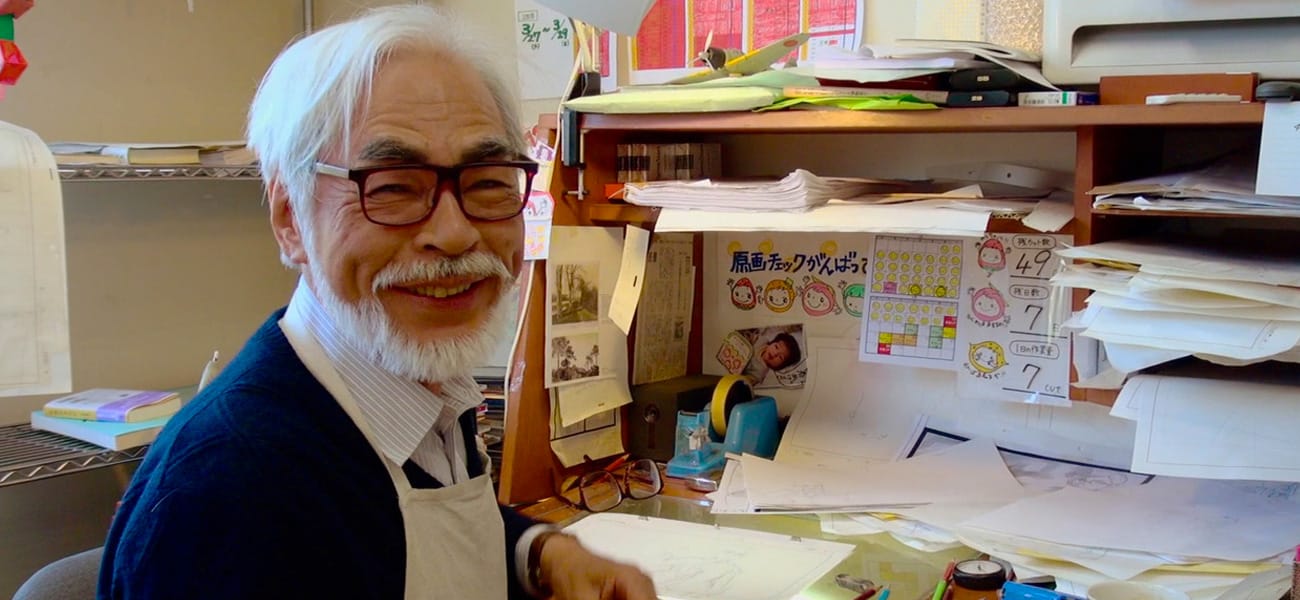
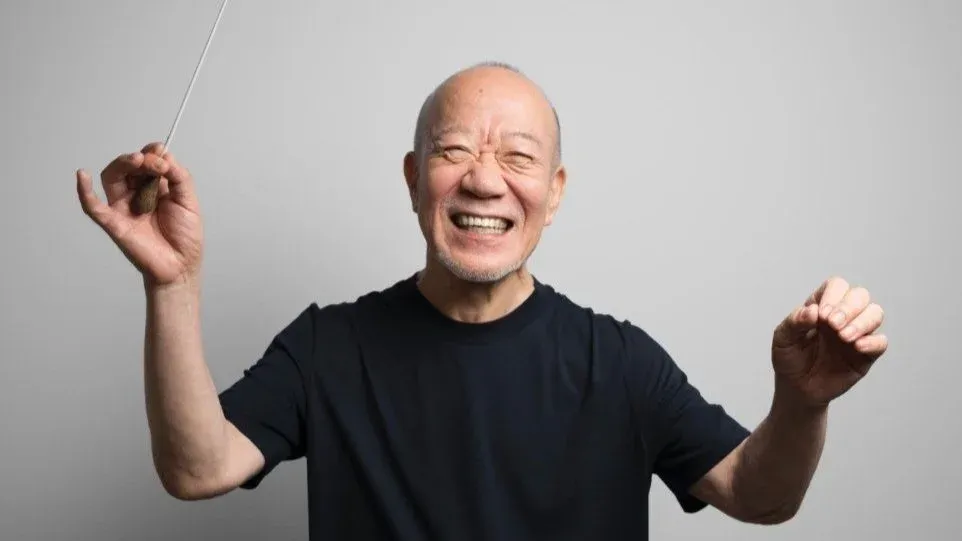
Coming then to Joe Hisaishi and his musical output, we encounter a musician who has raised the sound paired with animation—though not exclusively in this genre—to absolute artistic heights, as is indeed confirmed by watching Kaku Arakawa’s documentary. After all, Hisaishi's name and a significant part of his work are inextricably linked to those of Hayao Miyazaki. At the same time, however, one must not overlook the fact that Joe Hisaishi—whose real name is Mamoru Fujisawa—operates across diverse fields, from classical art music to conducting, alongside his collaboration with another master of Japanese cinema, Takeshi Kitano (whose cinematic conception is as far removed from Miyazaki's as the solar system is from the Orion constellation), as I previously mentioned, in addition to being an esteemed pianist in his own right.
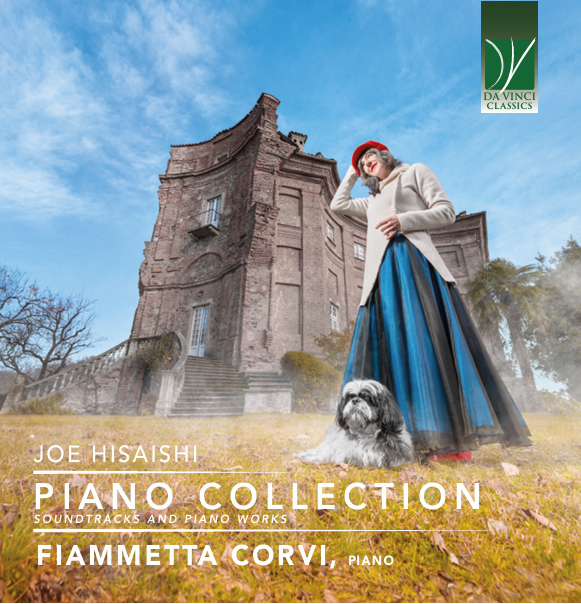
And this brings us to the Da Vinci Classics recording and the pieces selected by Fiammetta Corvi. As the CD's subtitle indicates, the pianist chose to include in the tracklist both themes taken from the Japanese composer's soundtracks and arranged for piano, as well as pieces specifically arranged for this instrument, for a total of twenty-two tracks, with a clear numerical dominance in favour of film music. Beyond the Hisaishi devoted to cinema music, I was curious to hear him through the tracks included on the disc that were not composed for the silver screen—namely Oriental Wind, Silence, The Departure, and Asian Dream Song (the latter two often performed as a diptych). I listened to them first, before moving on immediately after to the other pieces dedicated to Miyazaki’s animated cinema and the films of Takeshi Kitano.

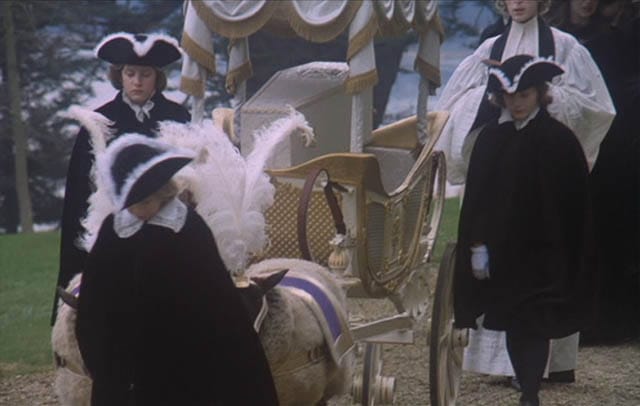
Regarding the latter, the musical contribution from one of his finest films could not be missed: namely Hana-bi (Fireworks), which won the Golden Lion at the 54th Venice International Film Festival—a film that highlights the Japanese filmmaker's most distinctive trait: his ability to alternate, often abruptly, between moments of extreme violence and those of extreme tenderness. The other piece is a theme crafted for the film Kikujiro, presented at the 52nd Cannes Film Festival (with both pieces arranged for the piano by Yuji Matsuyama). Turning instead to the animated cinema, my attention naturally focused first and foremost on the last two tracks of the playlist, dedicated to Miyazaki's 1984 animated film Nausicaä of the Valley of the Wind, which represents the very first collaboration between the director and manga artist and our composer. I shall begin with these final two tracks, respectively titled Opening and Nausicaä Requiem. For obvious reasons tied to cinema, I was deeply struck by the second track and its opening quotation, which faithfully reproduces the first notes of Handel's world-famous Sarabande. Given the title, this immediately brought to mind the heart-wrenching funeral scene of Barry Lyndon’s young son—who dies after falling from the horse his father had gifted him—in Stanley Kubrick’s cinematic masterpiece of the same name. Following the quotation, Hisaishi takes the motivic cell and transforms, alters, deconstructs, and reconstructs it, applying it to the themes of the anime based on the manga of the same title, rendering it closer—by virtue of a subtle, ironic verve—to Gounod’s equally famous Marche funèbre d'une marionnette (Funeral March of a Marionette).
Even the two pieces written for Kitano’s films, despite the minimalism imposed by the piano arrangement, convinced me of one fact: namely, that Hisaishi’s music—at least from what I have heard—proves to be more incisive and effective when it has a declared purpose, that is, when it is applied to an extra-musical context, as occurs with cinematic artistic support. This is because the "non-cinematic" tracks reveal a composer who undoubtedly knows how to master and mold musical language but who, much like our own Allevi and Einaudi, aims to evoke, project, and "make the listener imagine" through melodic doses that could induce diabetic states due to a sugary sweetness which, at times, is only partially tempered by darker timbral shifts. This conviction was further reinforced when listening to the other tracks on the playlist and comparing them with the synopses of the anime for which they were conceived. One almost gets the impression (dared to be uttered by someone who is not an insider to this specific genre) that the symbiosis between image and sound is so deeply rooted as to turn them into Siamese twins, each living solely for the sake of the other.
I believe that such a symbiosis can also be identified and applied between our composer’s music (at least in its pianistic vision) and Fiammetta Corvi, the performer of this recording. Why do I speak of symbiosis? For the simple reason that Joe Hisaishi’s music demands from its performer not only proper technical preparation and an expressive capacity to highlight its distinctive traits—which, I repeat, I find most compelling in the côté inherent to the silver screen—but, in my view, it must also possess another quality: a sort of "candour," an innocence to be translated onto the sonic plane. And this, mind you, does not only apply to the music crafted for Hayao Miyazaki’s animated films—that is, a genre that ideally matches this "purity" of intent, which is then reflected in the soundtracks that sonically illustrate the film's narrative and emotional unfolding—but also to those of Kitano himself, where the hallmarks of violence and psychic alteration involving characters and situations are certainly not lacking. Yet, anyone familiar with this filmmaker’s movies knows perfectly well that behind the despair, the alienation, and the wrathful explosions that burst through his filmmaking, there lies a hidden need for innocence, candour, and cleanliness—qualities that represent goals growing ever more distant and distorted within the folds of contemporary society.

Hence, the music of this composer, especially in its pianistic application, requires from the performer a way of being a “fanciullino” (the little child) that almost verges on the concept of Pascolian memory—an ability to render a sound exceedingly "transparent," a sound that has its own breaths, its own silences, and their interplay, creating a sort of refuge, a self-referential bubble in which to find shelter, if not hope. And, undoubtedly, returning to Fiammetta Corvi—who appears in her photos always in the company of dogs and cats (and I, being a staunch animalist, understand what that means)—she has poured a great, immense deal of candour into her reading of these pieces, making a pianism sparkle that is capable of explaining the unfolding of the proposed narrative planes through sounds.
I pay close attention to this "candour" precisely because, by virtue of it, one can better express the transparency radiated by the Japanese composer's music. Let it be clear: this music is not the emanator of intellectual depth or a transcendent aesthetic; rather, it is capable of representing a "soothing element," as well as an explanatory one in its function relative to the cinema to which it is applied. This is why Fiammetta Corvi, with this recording, has proven to be fully compatible and attuned to what Hisaishi’s music demands. It is as if the Olgiate-born artist's pianism were the entrance door to step into the Japanese composer's way of seeing life through sounds; a composer who—to remain within the sphere of architectural allegories—in turn, with his music, provides a balcony from which to look out and discover new worlds and new perspectives.
There is nothing to fault in the sound engineering by Paolo Guerini, which displays a very clean and natural dynamic, reinforced by sufficient transient speed. The soundstage reconstructs the piano at the centre of the acoustic space, with the instrument positioned somewhat close to the listener, yet without ever feeling unnatural. The tonal balance appears flawless in its reproduction of the registers, which remain always recognizable and well-defined, just as the detail is marked by a pleasant tactility.
Andrea Bedetti
Joe Hisaishi – Piano Collection. Soundtracks and Original Works
Fiammetta Corvi (piano)
CD Da Vinci Classics C01167
Artistic rating 4/5
Technical rating 4/5