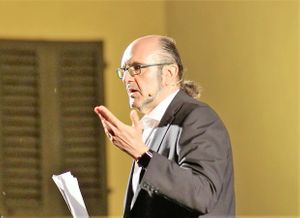
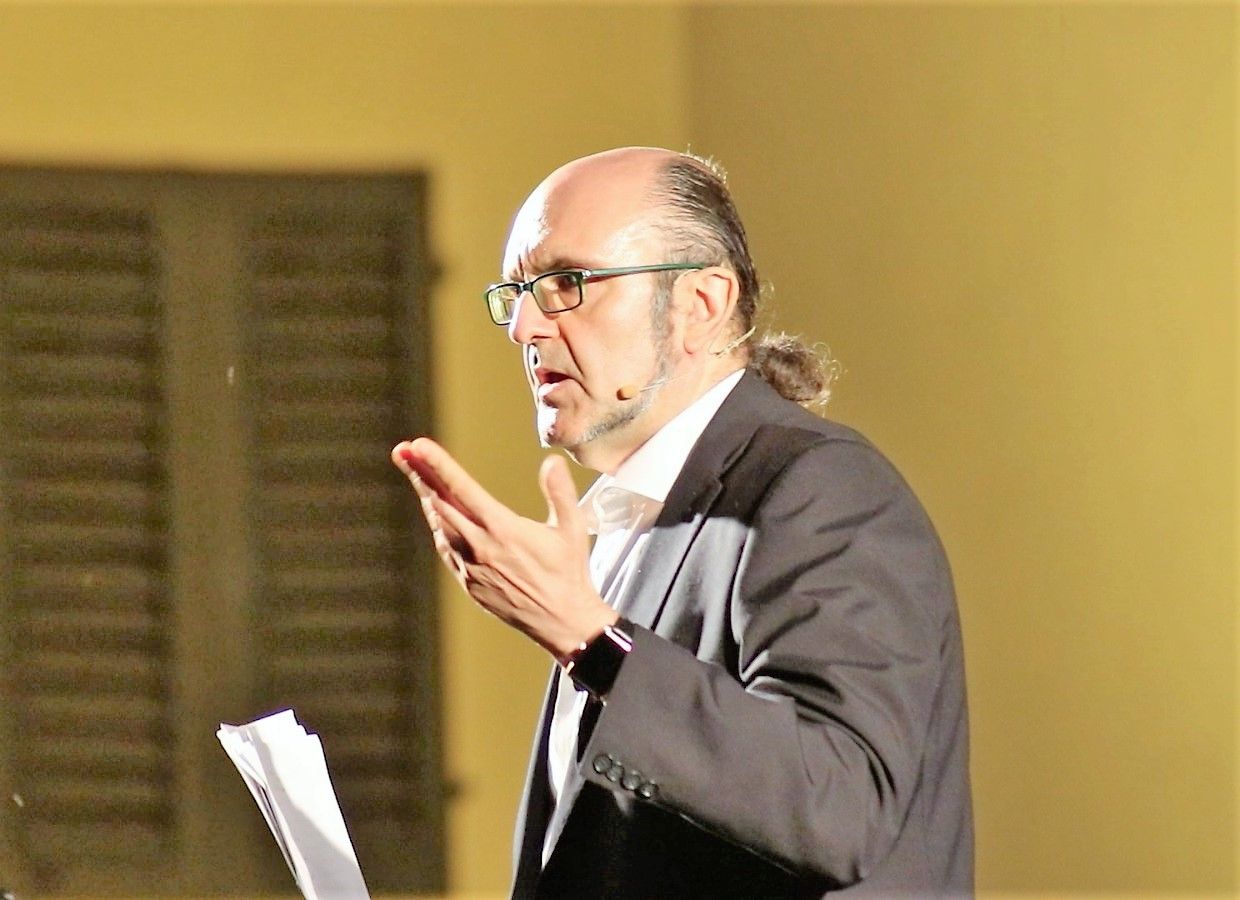
An interview with the acclaimed Swiss conductor following the release of the Da Vinci Classics CD dedicated to the fragments of Antonio Vivaldi’s opera "La costanza trionfante degl'amori e de gl'odii". His insights reveal the fundamental importance of shaping an instrumental ensemble capable of elevating any score through meticulous work rooted in friendship and mutual respect
Maestro Fasolis, given your extensive discography dedicated to the instrumental and vocal works of Antonio Vivaldi, you are now returning to his operatic output with the recording of La costanza trionfante degl’amori e de gl’odii (read the review here). This opera dates back to 1715, a period when the "Red Priest" practically had the musical world of Europe at his feet. Compared to the other operas you have previously recorded (Orlando furioso, Dorilla in Tempe, Il Farnace, Ottone in Villa, La Senna Festeggiante), in what ways does La costanza trionfante differ?
This recording brings together a few surviving arias from a work that enjoyed tremendous success at the time, but of which so much has been lost. One tenor aria ("Non sempre folgora") is included in our CD for the "Vivaldi Edition" featuring Topi Lehtipuu. Therefore, this is a "concert" program that cannot be compared to other complete operas by the Red Priest. Its language is, on one hand, relatively simple and clear, but on the other, it is constantly evolving, seeking to deeply engage the listener with the text and its underlying emotions.
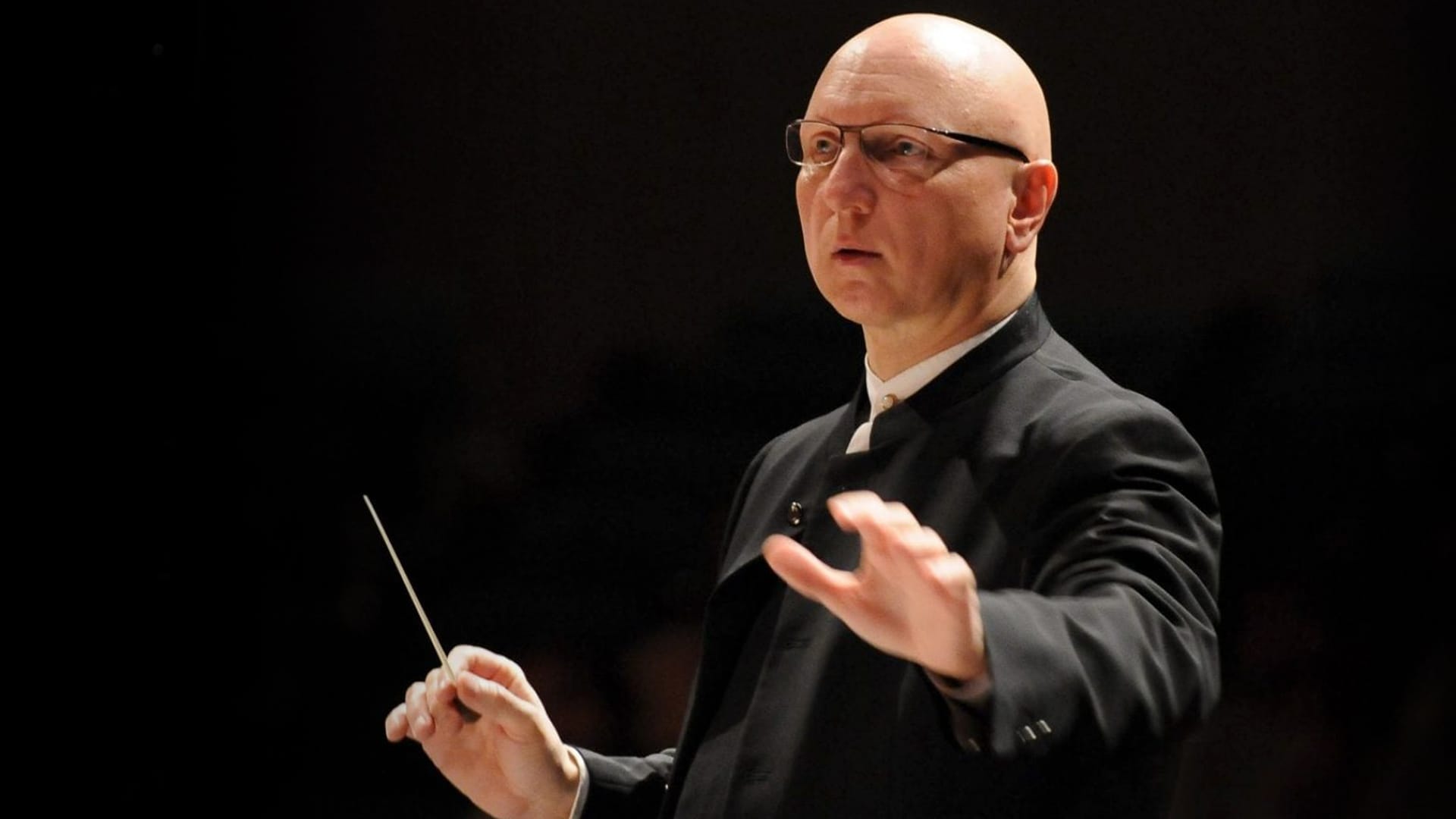
As specified right from the album cover, this edition of the opera features twenty-one fragments and arias. While it doesn't form a complete version of the work, it at least provides an overall, general idea of its context—its "genetic mapping," so to speak. In light of this, if you were to make a sort of merit-based ranking, where would you place La costanza trionfante within Vivaldi's operatic corpus?
As I mentioned, we do not have a complete opera in our hands, but the libretto allows us to understand the immense interest this title could and still can generate. Vivaldi’s most beloved and frequently revived opera was Il Farnace, but in this CD, thanks to two magnificent performers, we can see how Vivaldi seeks to reach the heart of the listener-spectator through rational means—achieving the maximum result with the minimum amount of means. This is music written for vocal and instrumental artists who knew the language inside out and did not need an abundance of performance indications. This is the beauty of Baroque music: it must be read, understood, and performed by transforming those few indications into a more complete result, where the performers also become "co-composers" of the final outcome. Therefore, there is no ranking for what is, globally speaking, a thoroughly commendable dedication.
Listening to your reading of this opera, as well as your recordings of the Red Priest's other works, what stands out—as I note in my critical analysis—is the ability to "electrify" the rhythmic sense to such an extent that it shapes the harmonic structure and the melodic dimension of the work "in your own image." This brings me to my next question: is it Vivaldi’s music itself that stimulates this pressing desire to convey an "electric" idea of its creative framework, or do you believe that in order to elevate it to its fullest, one must inject it with well-timed jolts of adrenaline? (Incidentally, this is precisely what the admirable voices of Romina Basso and Ann Hallenberg manage to make so clearly perceptible).
Baroque music—which we should more accurately call music of the "seconda pratica", since in Vivaldi’s day the concept of "baroque" was extremely negative—is based on the basso continuo. This is a rhythmic-harmonic framework generated by the figured bass which, once stabilized, offers the upper voices the option to express lines that are reactive and conversational with the bass itself. This results in an enormous richness and ensure things are never tedious. Rather than electricity, I would speak of energy. We certainly need to keep the listener’s interest alive, and this can only happen by alternating different perceptions and by stirring often contrasting emotions.
Let us return to the concept of the fragment and its utility in trying to understand the whole to which it belongs. If we were to draw a parallel between the philological and hermeneutic principles regarding, for instance, the philosophical thought of Heraclitus, and the approach developed to bring to life this (incomplete) reconstruction of La costanza trionfante, is fragmentation in itself a perfectly autonomous element—a world that lives on its own—or does it require a concatenation of multiple elements for the work to live and communicate? I cannot help but think of what has been done with the incomplete masterpieces of Monteverdi, at least those that have come down to us...
In this CD, we can only speak of a concert program featuring two great soloists and an experienced, inspired orchestral ensemble supporting them. In order to have La costanza trionfante degl’amori e de gl’odii on CD and on stage, one would have to use the libretto as a starting point and write the missing recitatives and arias. Such operations have been carried out many times. Colleagues, both excellent and less capable, do this regularly by grafting texts onto other arias with similar metrics and composing recitatives, selling the whole thing as a major rediscovery of lost operas (even when musicology had already indicated the titles and locations of the available original source materials for decades). Personally, I prefer to avoid this kind of operation as long as I still have original materials—whether complete or not—that I can bring to life.
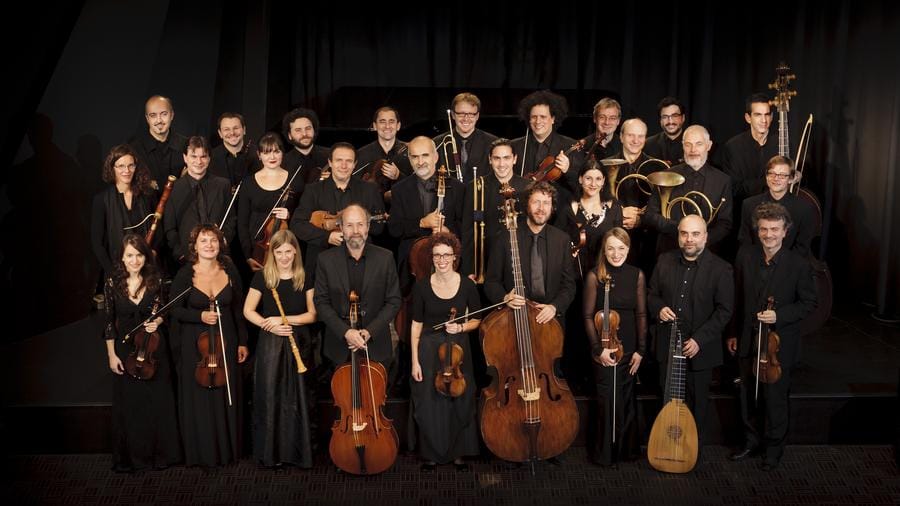
Your work with the ensemble I Barocchisti, dedicated to Baroque music, demonstrates—contrary to some of today's rather uninspiring examples—that the relationship between a conductor and an orchestral ensemble is born, develops, and strengthens over a very long and, at times, tortuous yet exhilarating journey. What you are achieving with your ensemble, devoted to historically informed performances, reminds me—to remain within Swiss borders—of what Ernest Ansermet achieved in his day, naturally with entirely different purposes and methods, with the members of the Orchestre de la Suisse Romande. In order to build such a relationship, what must the conductor give, and what must the orchestral players offer in return?
I started working at the Swiss Broadcasting Corporation in 1985 as a sound technician, documentarian, pianist, organist, harpsichordist, and composer, just to stay close to the position I was interested in as soon as it became vacant. Then, in 1993, I was appointed director of the Radio Choir—a position akin to a Kapellmeister, which was, incidentally, a secular "chapel" that was well-funded and determined to introduce so much beautiful music to the world through radio, television, and commercial recordings. This was backed by the strength of a public service broadcaster funded by the license fee, making it autonomous from the laws of the music "business" and free to explore many paths and diverse repertoires. It was an artistic endeavour, but also a deeply artisanal one. In that position, I auditioned and selected all the collaborators for the Choir first and, after a few years, all the members of the Baroque orchestra. It was a privileged situation, guided by the enlightened artistic direction of the knowledgeable director of the cultural network, Carlo Piccardi, and the irrepressible enthusiasm of producer Giuseppe Clericetti. In this musical "Eden," free from any compromise regarding art, I was able to nurture a "family" and a group of friends where absolute admiration and mutual respect prevail. The conductor, conceived as a primus inter pares, suggests the direction in which to head, and convinced colleagues bring the common result to fruition. This is an extremely rare situation in the world, and I fear it is unrepeatable.
Do you think your recording journey with Vivaldi's operatic output will continue? Perhaps by tackling less travelled and predictable titles, or will your upcoming projects involve other composers to whom you feel particularly drawn?
To tell the truth, for the past few years I have been drastically reducing my activity because I believe that if the "old guard" doesn't step aside, it becomes increasingly difficult for the youth to emerge. This goes against the grain in a world where there are extraordinary 80- and 90-year-old music directors whose tenacity, as well as competence, I greatly admire. Therefore, there are no new projects, but the archives of the Swiss Broadcasting Corporation hold many recordings, just like this one, that deserve to find a commercial release, and for this I am deeply grateful to the founder, president, and director of Da Vinci Classics, Edmondo Filippini. In a world full of fakes, imitations, and artificiality, music created by human beings and shared with everyone represents the highest value. My heartfelt thanks to all people of goodwill.
Andrea Bedetti