Whenever Busoni’s work is approached from a critical or speculative standpoint, one must never forget that, before anything else, we are dealing with one of the greatest — and fundamentally misunderstood by the wider public — musicians who managed to confront, filter, and decode the artistic passage from the nineteenth to the twentieth century. We must inevitably also reckon with a man of culture whose intellectual stature stands as one of the highest, noblest, and most indispensable testimonies of his age. In his grandeur, the Empoli‑born composer is nothing short of an **all‑encompassing** figure: his musical output not only marked a moment of transition and transformation in the very language of sound with which we will forever have to reckon, but also functions as a prodigious magnifying lens for better understanding a historical period whose formative artistic ferment continues to fascinate and engage.
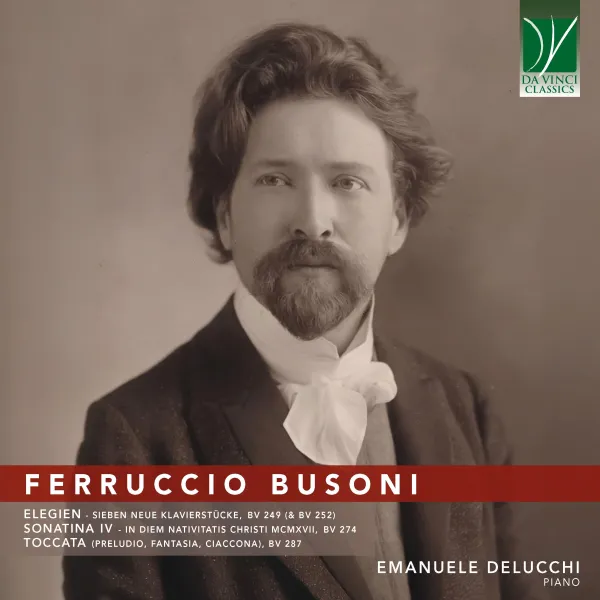
Engaging with Busoni the musician means, primarily—but not only—also confronting an instrument such as the piano and the very role of the pianist: his function, his mission, his immersion as an artist in the coils of the time that envelops him. That is why I have always found it more fitting to say that the Empoli genius did not so much write music as reflect it and think it, living and undergoing the drama of the form to be given to that reflection, to that active speculation, through which Busoni always sought to make his inner world manifest while it was forced to reckon with the outer one. This relationship of Innerlichkeit/Äußerlichkeit (another point to bear in mind is that, over time, Busoni engaged with the world more through the German language than through Italian, since he rightly considered it more precise and more philosophical, as his music itself was) is exemplarily presented in a very recent Da Vinci Classics release in which the La Spezia‑born pianist Emanuele Delucchi has recorded three Busonian piano pages, which to an expert eye constitute a project of strong conceptual coherence, namely Elegien. Sieben neue Klavierstücke, BV 249; Sonatina IV — In diem nativitatis Christi MCMXVII, BV 274; and Toccata, BV 287. Their scope therefore does not answer an anthological logic but a clearly defined constructive and explanatory design: to convey, through three fundamental nodes, the profile of Busoni’s maturity as a space of tension between memory and the refunding of language, between a past that remains didactically and musically “obsessive” and a present that proves ever elusive, hard to capture and channel into a dimension capable of challenging the time destined to “throw itself” into the future in a Heideggerian sense.
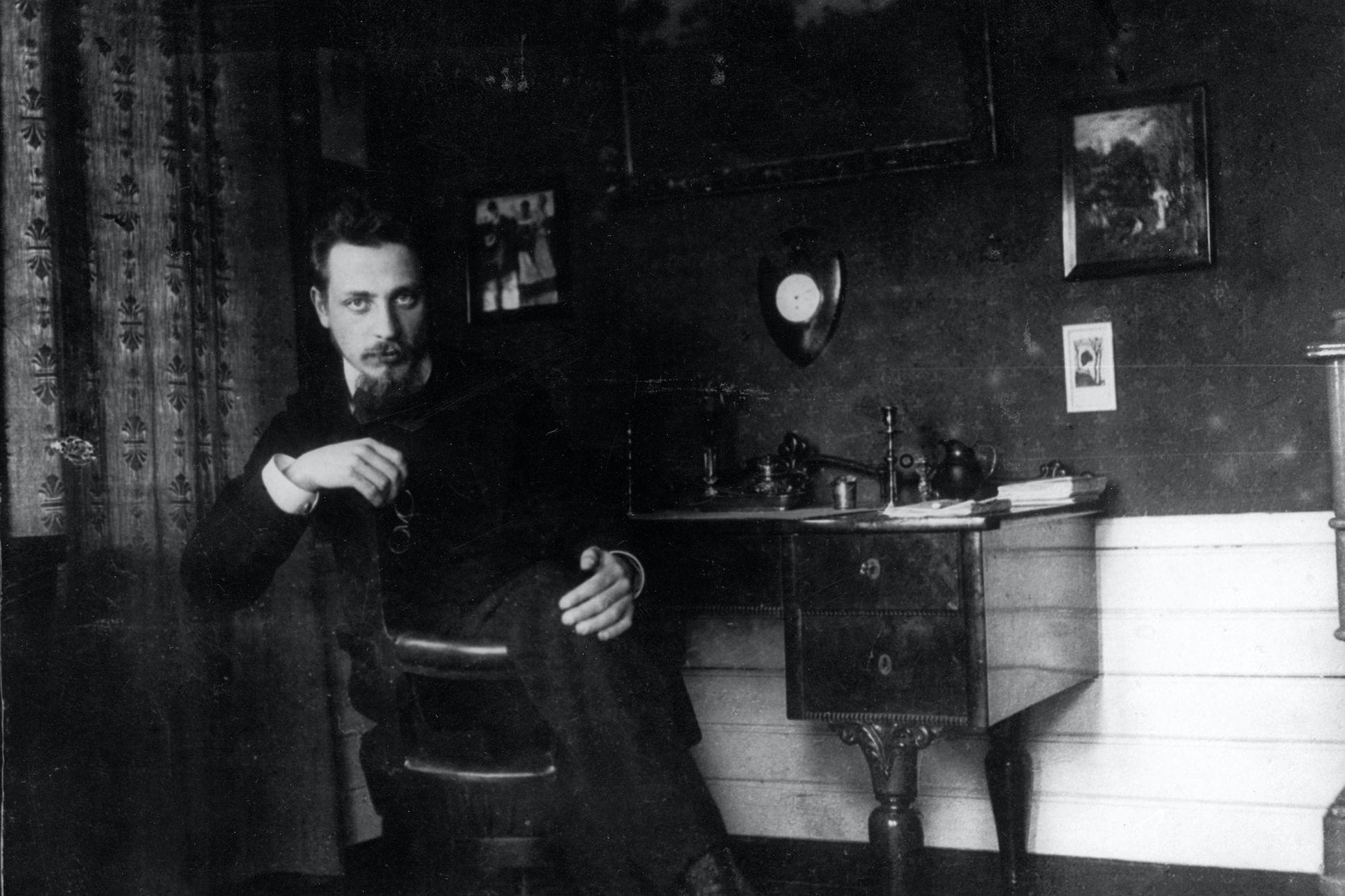
This becomes evident from the very genesis and from the artistic and cultural peculiarities offered by the Elegien, whose “sonic” drafting lies alongside and overlaps with Rainer Maria Rilke’s Neue Gedichte, published in the same year the Elegien were created, namely 1907. This should not surprise us, since the aesthetic vision above all—and the poetic vision of the great Austrian poet—took on the same arduous and exhilarating task of changing expressive perspectives on the one hand and hermeneutic ones on the other: making art in the name of the new, the different, the other through an inexorable maceration of the material idea to be formed with words, sounds, and colours. In a sense, both Rilke and Busoni were terrorized by Turgenev’s famous prophecy: “What a strange story this is: what is old is already dead, and what is young has yet to be born,” and they sought answers that could embrace the putrefaction of the old and the conception of the new.
Indeed, precisely the “new” — the one that radiates from the first of the seven Elegien, that Nach der Wendung which Delucchi presents with an enigmatic control of sound that rightly privileges the quality of resonance over thematic articulation — is immediately apparent: suspended arpeggios bounce on an ambiguous polarity between major and minor, emerging as acoustic phenomena in constant transformation, a sharp testimony to that “inner melody” Busoni himself speaks of, understood not as a mere autonomous cantabile line but as the “Bachian” result of a layered polyphonic equilibrium. And if the “new” is also the exaltation of a state of tension, born of the opposition between the pole of stability and that of metamorphosis, then the second Elegie — emblematically and perhaps sardonically titled “All’Italia!”, which very much evokes Leopardi’s Canti yet here represents a disillusioned figure, someone who thinks of a country that does not understand him because he is too “forward” (the young) compared with what is “behind” (the old) — must be read differently. Reading the performance indication for this Elegie, “In modo napolitano”, one should not interpret it as an homage to an idealized, nostalgic Mediterranean quintessence. Rather, à la napolitaine functions here as a mere device, a technical artifice that allows the Empoli‑born composer to exploit dynamic control and pedalling, concentrated in the piece’s central tarantella, which is, thankfully, stripped of any folkloric scent so that, through Busoni’s established magnifying lens, it is transformed into a genuinely unstable motor device — almost obsessive, hallucinatory, distorted — in which the rhythmic sense (rhythm is not subordinate to something; rhythm simply is) progressively loses its hackneyed structuring role and ascends to pure kinetic energy. Thus, the performer’s task is to bring out the unease implicit in the writing of this piece, the very tension of the new — and Delucchi achieves this perfectly.
Then there is the chapter concerning the reactivation of the past (the old), but the sacred past, the imperishable one, the one with which one must always reckon, the one that inevitably leads to the polyphonic, to the contrapuntal, to the aura of the Kantor, so to speak; and here we understand well why Busoni still appears a difficult, indigestible composer to audiences and listeners accustomed to discographic and concert clichés devoted to the usual names, because the Empoli composer’s assimilative compositional process always operates through the equation “listening > thinking” rather than through the more obvious and banal “listening > ∞” — that is, a listening that becomes sterilely pyrotechnic, flighty, desperately hunting for images to attach to sound, in short, to borrow Count Mascetti’s phrase, a “supercazzola.” Busoni forces a lucid and brilliant abstraction, historically grounded; therefore, to know how to listen to him one must first, in a Zarathustrian way, learn to listen. Thus, an excellent exercise in learning to do this can be found in the “Lutheran” Meine Seele bangt und hofft zu Dir, which represents one of the high points of this disc. In this third Elegy Busoni asks the performer to lucidly highlight the problem of harmonic stratification while at the same time avoiding flattening the chorale into a purely static dimension — something Delucchi does very well — and likewise to bring out the progression of the Lutheran material, which is effectively treated as a process of timbral clarification, that is, by deliberately “cooling” the triads so that they acquire a kind of lugubrious significance. Moreover, the chromatic tension that precedes the appearance of the chorale is rendered with extremely controlled phrasing, in which every agogic inflection is correctly calibrated in relation to the overall architecture. If the chromaticism of this Elegy revolves around tension, the one manifested in the next piece, Turandots Frauengemach, is magically distilled from the famous theme of the English ballad Greensleeves, which Delucchi returns with crystalline phrasing. The fourth Elegy, Die Nächtlichen. Walzer, is one of those typical examples of a dodecaphonic eruption even before the advent of serial language itself. Here a great deal of formal clarity is required to prepare the ground for the waltz (an allegory of the disintegration of memory), whose deformation, sustained by a brilliant rhythmic gestation, must be rendered through a perfect curvature of the arc precisely to emphasize its detachment from past typologies, and Delucchi shows us that he has understood this expository mechanism through a pianism that probes the internal logic and outlines the micro‑motivic structures that govern its development.
With Erscheinung. Notturno we face Busoni at his most “philosophical” and problematic in the way his speculative transposition becomes sound; the German lemma can carry several meanings: it ranges from the physical aspect of a person to a natural phenomenon, that is, an observable event or a manifestation of nature, or to the sense of a physical or metaphysical apparition, up to the deepest sense that refers to Kantian philosophy, to be understood as “phenomenon,” the object that appears to our senses and to our mind. Here too the principle is devoted to a disintegration of sonic matter, but conducted on a more discursive plane, where dissonant eruptions are skilfully spread over a fabric that offers no obstacles and sometimes even appears soothing — a gently descending path that at times sinks into the penumbra, stretches in which this Erscheinung may arise, sometimes dark, sometimes smiling or derisive. Finally, an exercise of style, a kind of freeze‑drying of sonic material, since the seventh Elegy represents an effective condensation of a symphonic page by Busoni himself, the Berceuse élégiaque of 1909, which Delucchi presents with a calibrated use of dynamics capable of creating a play of continual timbral cross‑references and which, harmonically, aligns with the Schoenbergian idea of employing a chord built from stacked fourths.
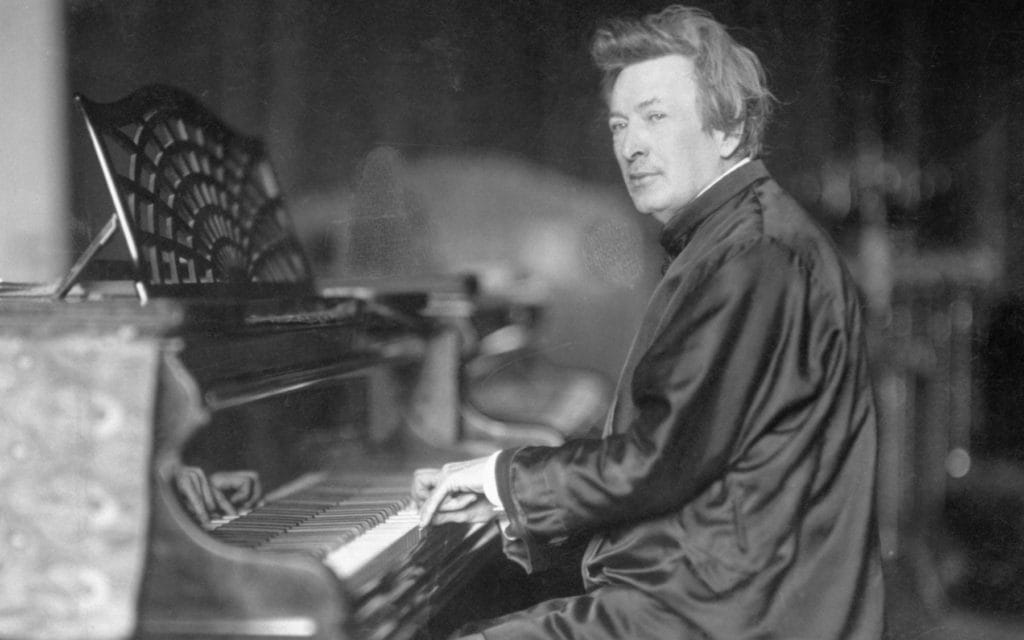
There are practically ten years between the seven Elegien and the Sonatina In diem nativitatis Christi MCMXVII, the latter having been composed on 22 December 1917 and dedicated to his son Benvenuto. Without entering into Rattalino’s psychoanalytic reading of the piece, it is undeniable that we are faced with a score in which the religious impulse—experienced by the Empoli‑born Busoni as a child and later lost and repudiated as an adult—helps to clarify compositional motivations that are fundamentally traceable to preparatory study for the future Doktor Faust, most precisely at the moment when the chorus, at the end of the second Prelude, intones the Credo. Bearing this in mind, the listener can better perceive the transitional phases from the opening Allegretto to the Calmo and finally to the Moderatamente vivace, following Busoni’s own injunction—as Roman Vlad rightly recalled—to play in a manner that is “almost transfigured.” What strikes in Delucchi’s reading is the elegance that permeates the entire arch of the page, with the rise of that cell of the Credo evoked in a crystalline, rarefied manner, even as the discourse’s pacing is never pushed to extremes.
The final piece presented by the La Spezia‑born pianist is the Toccata; the very framework of the genre implies a distinctly virtuosic projection, which in Busoni is rare, given his ability to camouflage the technical difficulties inherent in his writing. Added to this are the problems arising from the central Fantasy that follows the opening Prelude, in which the theme entrusted to the Duchess of Parma in Doktor Faust appears twice — a passage hard to tackle because of its fragmentary structure and the continual transformation of the motivic material. Here Delucchi opts for an interpretive line that privileges continuity, avoiding an excessive emphasis on the contrasts between the different sections derived from the five‑note cell, which is repeatedly presented in varied forms. The concluding Chaconne is approached by our pianist with notable structural awareness. The ostinato bass, far from being merely reiterated, is progressively transformed through a play of expansions and contractions that Delucchi renders with great clarity. The superimposition of poly‑chordal blocks, which could easily degenerate into an indistinct mass, instead retains a surprising readability thanks to rigorous control of dynamics and articulation. The final climax, where the writing takes on an almost organ‑like dimension, is delivered without rhetorical emphasis but with a constructive solidity that brings out its internal logic.
In conclusion, it is easy to understand how this recording stands out for a rare balance between analytical rigor and sonic sensitivity. Delucchi demonstrates not only the technical means necessary to tackle an extremely complex score, but also a clear interpretive vision founded on a deep understanding of Busoni’s thought (it should not be forgotten that he favours difficult, if not impossible, authors such as Alkan and Godowsky, which he has courageously presented in concert). The result is a reading that avoids both the aestheticization of sound and a purely intellectual reduction (in this case the risk is great), restoring these pages to their nature as an “open laboratory” in which tradition and modernity confront one another without ever being definitively resolved.
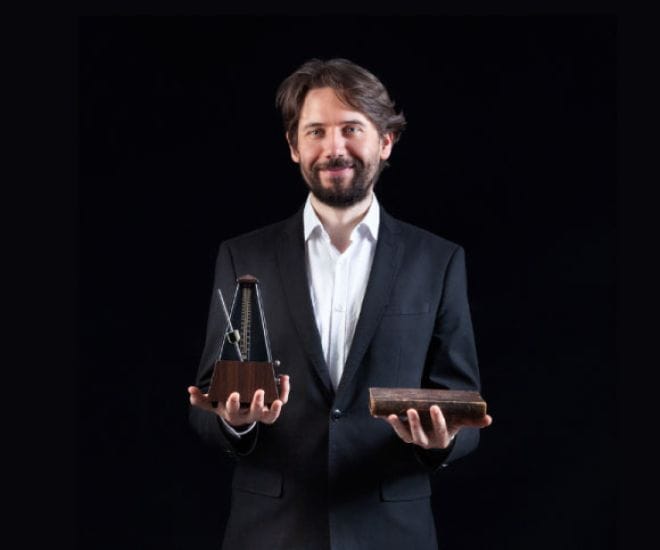
Reliable, as usual, is the sound capture by Gabriele Zanetti using the Steinway Model D employed by Delucchi for the recording. The dynamics are of excellent workmanship: natural, quick, and with an appreciable naturalness of timbre. The reconstruction of the soundstage places the instrument at a fair depth (by now we can speak of the “Da Vinci Sound”), without the sound losing breadth or height. The tonal balance is focused without smearing in the mid‑high and low registers; the level of detail delineates the instrument, yielding a three‑dimensional perception of the piano and allowing for a listening experience that is not fatiguing.
Andrea Bedetti
Ferruccio Busoni — Elegien; Sonatina IV; Toccata
Emanuele Delucchi (piano)
CD Da Vinci Classics C01146
Artistic rating 4,5/5
Technical rating 4/5