Disc of the month for September 2026
What does it mean, today, to speak of Australian music? The question might seem idle, particularly in an age when the circulation of ideas, styles and compositional techniques has made it increasingly difficult to ascribe a work to a clearly defined national identity. Yet, listening to A Listening Air, the recently released Da Vinci Classics CD, part of the Da Vinci Élus series, which the Affinity Quartet has devoted to four contemporary Australian composers, one realises that the question remains entirely legitimate, provided, of course, that the answer is not sought in some presumed uniformity of musical language or in a picturesque sonic portrayal of the continent.
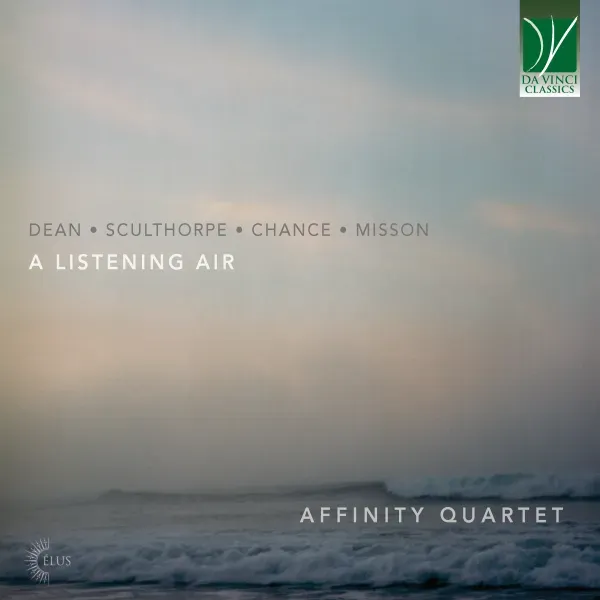
The four composers featured here — Alice Chance, Thomas Misson, Peter Sculthorpe and Brett Dean — belong to different generations and embrace markedly diverse approaches to quartet writing. Nevertheless, their works share a need to engage with a space, whether physical or mental, in which nature, memory, myth, culture and political unease ultimately interact. In this sense, the title A Listening Air takes on a significance that extends far beyond a simple reference to air as a natural atmosphere. Rather, it evokes the air surrounding the act of listening, carrying sound while simultaneously preserving the traces of what a community has experienced, suppressed or transformed.
What makes this project particularly compelling is the presence of the Affinity Quartet, an ensemble capable not only of meeting the formidable technical demands of the four scores, but, above all, of bringing unity to a musical journey that could easily have amounted to little more than an anthology of contemporary Australian music. Instead, the recording possesses a distinct dramaturgical coherence, as the ensemble succeeds in transforming the diversity of musical languages into different ways of interrogating sound and its relationship with the surrounding environment.

The programme opens with Alice Chance’s Gifts from a Thieving Bluebird, composed in 2024 for the Affinity Quartet itself and conceived as an ideal companion piece to Franz Schubert’s String Quartet in D minor, D. 810, the celebrated Death and the Maiden. Its literary inspiration, however, comes from Madame d’Aulnoy’s L’Oiseau bleu, a fairy tale in which a prince transformed into a bird brings stolen gifts to his beloved as tokens of his love.
It would be a mistake, however, to look for a musical retelling of the story or any form of ornithological tone painting in the score. Rather, the bird becomes the symbol of a metamorphosis that carries with it fascination, desire and menace, while the music continually changes its character, moving from rapid, brilliant figurations to passages in which the musical texture grows darker and more introspective. There is a theatrical dimension to the work that the Affinity Quartet conveys with remarkable effectiveness, thanks to its exceptionally controlled dynamic flexibility and its ability to make even the most abrupt transitions sound entirely natural.
What particularly struck me was the way virtuosity is never presented as an end in itself. The rhythmic outbursts, sudden flashes of timbral brilliance and intricate interplay among the four voices combine to create an unstable narrative in which beauty always retains an element of ambiguity. In the more lyrical passages, moreover, the ensemble avoids any lapse into sentimentality, sustaining an underlying tension in its melodic phrasing that evokes, without imitating, the Schubertian world with which the work seeks to establish an ideal affinity.

With Thomas Misson’s Infinite Affinities, we move from fairy-tale metamorphosis to a conception based on process and the proliferation of musical material. The composition draws on the so-called Infinity Series devised by the Danish composer Per Nørgård, yet the use of this generative principle does not result in an abstract or overly intellectual work. Instead, Misson employs this material within a musical language that incorporates influences from progressive metal, jazz fusion and ambient music, demonstrating how the string quartet can engage with sonic experiences far removed from the chamber music tradition without losing its distinctive identity.
The music seems to grow from within, like an organism continually developing new branches. Rhythmic cells multiply, lines overlap, and the form emerges from the consequences inherent in the initial materials. The Affinity Quartet tackles this density with impressive clarity, ensuring that even in the most turbulent passages the underlying pulse remains discernible and each voice retains its distinct identity.
Yet it would be reductive to focus solely on the technical quality of the performance. What truly stands out is the four musicians’ ability to give this music a palpable physical weight. Passages driven by an aggressive pulse possess an almost seismic force, while the more rarefied sections are rendered with a delicacy that never interrupts the sense of continuous development. The rigour of the compositional process and the immediacy of the music’s sonic impact thus become one and the same, allowing the listener to perceive the underlying structure without its ever being presented in an overtly didactic manner.

With Peter Sculthorpe’s String Quartet No. 11, Jabiru Dreaming, composed in 1990, we encounter one of the central questions in the history of Australian music during the second half of the twentieth century: the attempt to forge a musical language capable of expressing a relationship with the land, the landscape and Indigenous cultures. This is a complex issue that today demands greater critical awareness than existed when the work was composed, particularly regarding the incorporation of Aboriginal musical materials into the Western classical tradition.
Sculthorpe composed the quartet following a visit to Kakadu National Park. The first movement, Deciso, employs rhythmic patterns associated with the Kakadu region and, according to the composer himself, evokes the gait of the jabiru, a stork native to Australia. The second movement, Liberamente – Estatico, takes as its starting point an Aboriginal chant transcribed during the Baudin expedition of 1802.
Here, too, however, the music does not merely evoke a landscape or superimpose local elements upon the European quartet form. Rather, the very perception of musical time is transformed. In Deciso, the Affinity Quartet lends the underlying pulse a ritualistic character, allowing the accents to emerge from a collective motion in which energy never descends into brutality. The performance is taut and incisive, with a sculptural quality that gives the rhythmic contours an almost corporeal presence.
In Liberamente – Estatico, by contrast, time seems to expand, gradually losing its customary points of reference. The drones, open intervals and melodic contours create a contemplative dimension in which silence assumes an importance equal to that of sound. It is here that the Affinity Quartet achieves one of the interpretative high points of the entire recording. The pianissimos are sustained with extraordinary tension, the intonation remains impeccable, and the breathing of the phrases allows an immense sonic space to unfold. There is nothing decorative or exotic here: what emerges instead is the presence of a place conceived not as a backdrop, but as a principle capable of radically transforming the act of listening.
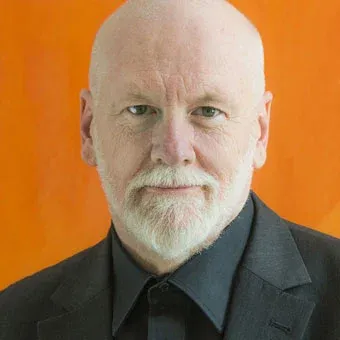
Whereas in Sculthorpe the natural and cultural environment shapes the music’s form, in Brett Dean’s Third String Quartet, significantly entitled Hidden Agendas, the atmosphere takes on a political and psychological dimension. The titles of its five movements — Hubris, Response, Retreat, Self-censorship and On-message — clearly allude to the deterioration of public discourse, polarisation, conformism and the fragility of democratic institutions.
Dean does not, of course, offer a narrative depiction of these phenomena, but instead translates them into the relationships between the four voices. The quartet thus becomes a kind of social organism in which the initial agreement breaks down, the individual parts come into conflict, become isolated and are eventually brought back towards a form of consensus that retains something profoundly ambiguous.
The Australian ensemble, which has enjoyed a close relationship with the composer for many years and is particularly familiar with this score, delivers a performance of extraordinary lucidity. In Hubris, the violence of the musical gestures and the agitation of the exchanges are governed with absolute control, preventing the tension from dissolving into an indistinct mass of sound. In Response, the precision of the entries brings the interplay of reactions and oppositions into sharp focus, while Retreat foregrounds the vulnerability of the individual voices, entrusting silence and lingering resonances with an essential dramatic role.
Particularly impressive is Self-censorship, in which the use of bows without rosin produces muffled sounds, as though the music were forced to withdraw before it could fully articulate its own thoughts. The Affinity Quartet handles these barely audible sonorities with exceptional control of timbre. The concluding On-message does not represent a genuine reconciliation, but rather a kind of imposed order, conveyed with an energy that is as dazzling as it is unsettling.
The most remarkable aspect of the Affinity Quartet’s interpretation, therefore, lies in its ability to continually transform its own sonic identity. In Chance, the timbre becomes fluid and narrative; in Misson, it acquires a percussive, almost electric quality; in Sculthorpe, it expands to evoke a spatial and ritual dimension; and finally, in Dean, it becomes a field of tensions, fractures and realignments. Yet beneath these metamorphoses, the ensemble’s distinctive personality remains unmistakable, founded on remarkable cohesion, meticulous attention to detail and an ability to sustain the tension of the overall formal arc.

A Listening Air thus demonstrates that contemporary Australian music does not need a common musical language to express its identity. Rather, that identity lies in the need to respond to the historical, cultural and environmental conditions of a continent: myth and metamorphosis in Alice Chance, proliferation and stylistic plurality in Thomas Misson, the relationship with the land and with Country in Peter Sculthorpe, and the contaminated air of public discourse in Brett Dean.
The achievement of the Affinity Quartet — whose members certainly deserve to be named: Xian Chen and Nicholas Waters on violin, Josef Hanna on viola and Mee Na Lojewski on cello — lies in having transformed these four perspectives into a single, coherent act of listening. Their interpretation illuminates the musical structures without constraining them, heightens the music’s spectacular dimension without reducing it to mere display, and demonstrates how, even in the twenty-first century, the string quartet can remain one of the privileged arenas in which music interrogates the world and, in doing so, compels us to listen to it differently.
MusicVoice’s Disc of the Month for September.
The recording engineering, entrusted to Alex Stinson, has also contributed significantly to the success of this discographic project. The dynamic range captures and conveys the wealth of timbres unleashed by these quartet scores with naturalness and precision, thanks to an explosive combination of energy and transient speed. In terms of soundstage, the spatial presentation allows the four instruments to be clearly positioned between the loudspeakers, at a perceptible depth, from which the sound radiates both vertically and laterally.
The tonal balance leaves virtually nothing to criticise, with almost absolute clarity in both the lower-midrange and treble registers, together with more than commendable transparency even in the presence of ppp and fff dynamics. Equally impressive is the level of detail, enhanced by a generous sense of acoustic blackness surrounding the instruments, making for a listening experience that never becomes fatiguing.
Andrea Bedetti
Various Composers – A Listening Air
Affinity Quartet
Da Vinci Élus CD C01196
Artistic rating 5/5
Technical rating 4,5/5