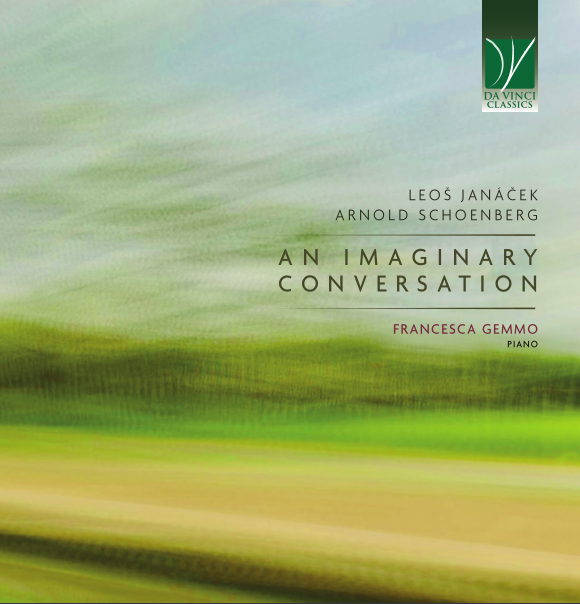
The experience of listening, and the speculative process that inevitably follows from it—at least for those who do not regard the musical act as a mere pastime with which to fill the hours—has increasingly led me to believe that there are recordings in which the juxtaposition of two composers is dictated primarily by repertorial considerations, and others in which the comparison itself becomes musical substance, to the point of transforming the sequence of pieces into a kind of third work: one that does not exist on paper, yet is perfectly perceptible in the act of listening. In my view, this second principle is exemplified by a very recent release on the Da Vinci Classics label, entitled An Imaginary Conversation, a piano project in which the Verona-born composer, performer and teacher Francesca Gemmo has chosen to bring Leoš Janáček and Arnold Schönberg face to face.
This choice is obviously not based on the assumption that one might posit some hidden affinity between two composers who historically had no direct contact, nor does it seek to efface the profound differences that separate them. On the contrary, the strength of the idea behind this recording lies precisely in showing how two almost antithetical visions of music, following independent trajectories, could nevertheless come to interrogate the same crucial issues of modernity: the crisis of inherited form, the structural value of the fragment, the function of memory, and the need to discover a new syntax after the certainties of the nineteenth century had been exhausted.
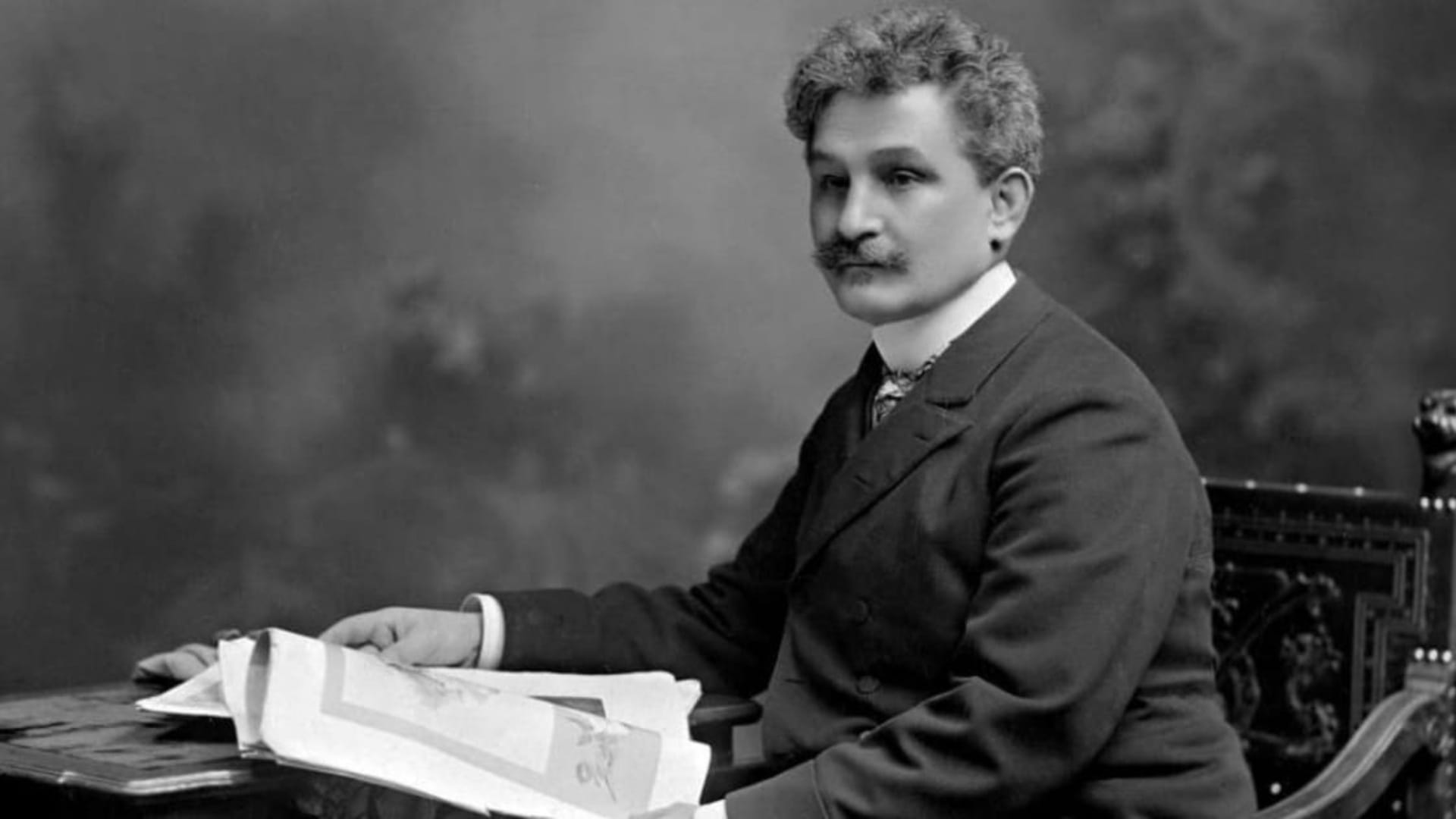
In this piano programme, the Verona-based artist has, so to speak, begun from afar—that is, from a period in which neither of the two composers had yet fully become himself in artistic terms. Janáček’s Zdenka Variations date from 1880, while Schönberg’s three youthful Klavierstücke were written in 1894: two preliminary “stations” in which tradition is still clearly recognisable yet has already begun to reveal disturbing cracks. In Janáček’s case, behind the conventional form of theme and variations there emerge those abrupt changes of register, those contractions of discourse and that instability of accent which would later become essential components of his mature language. In Schönberg’s case, the presence of Brahms operates not merely on the stylistic level, but above all through motivic concentration and the principle of developing variation, which the Viennese composer and theorist would later carry to consequences that were nothing short of radical.
It is already at this point that Francesca Gemmo’s interpretative approach begins to reveal its underlying conception. Hers is not a pianism intent on “backdating” modernity by loading these youthful works with premonitions they do not yet contain. In the Zdenka Variations, she instead allows the lyrical component and the recognisability of the form to breathe, while constantly keeping alert the relationship between continuity and interruption. The sound is never inflated, cantabile never turns into sentimentality; above all, the individual variations are not treated as self-contained tableaux but are absorbed into a progressive transformation of the same material. The result is the impression of a language still obedient to its own rules and yet already traversed by sudden unease.
Something similar occurs in Schönberg’s three pieces of 1894, though naturally through different expressive means. Gemmo wisely avoids hearing them through the ears of the atonality that was still to come. In the first and second pieces she preserves a discursive quality still rooted in late Romanticism, whereas in the Presto the gesture inevitably becomes more nervous, the articulation sharper and the musical substance more angular. It is precisely this third piece that makes one of the central ideas of the entire recording particularly clear: both Janáček and Schönberg begin from tradition but gradually learn to exert pressure upon it from within. To be clear, they do not reject it; rather, they compel it to say something that until then had not yet been said.
From this point onwards, however, the comparison acquires an entirely different intensity. With the three pieces selected from the first book of Po zarostlém chodníčku (On an Overgrown Path), we enter Janáček’s unmistakable world, in which memory is no longer a pacified evocation of the past, but a discontinuous phenomenon: it returns, breaks off, fixes itself obsessively upon minute cells, seems to recognise something only to lose it again almost immediately. The liner notes rightly insist that, in these pages, melody should not be understood simply as a transcription of Czech prosody. Rather, phrase, accent, hesitation and reiteration create the impression of speech without words, of a voice that “speaks” through pianistic form. One should remember how central the word was to the Moravian composer’s artistic and aesthetic conception, not only in semantic terms but also in what might be called its “expressive orthoepy”: a song within another song.
This is why Francesca Gemmo’s interpretation of this triptych is particularly convincing: she neither turns this element into folklore nor reduces it to psychologism. In the first piece of the collection, Naše večery (Our Evenings), she preserves an intimate, inward dimension without dissolving it into an Impressionistic haze: the contours of the phrases remain clearly defined, and the pauses carry almost as much weight as the sounds themselves. In Frýdecká panna Maria (The Virgin of Frýdek), by contrast, she allows the music to unfold through a play of distance and approach, with pedalling used to articulate space rather than merely to veil it. Finally, in Dobrou noc! (Good Night!), rarefaction never becomes immobility: beneath the subdued surface, a persistent tension continues to operate, preventing the farewell from becoming consolatory. To draw an operatic parallel, this path leads inevitably towards the claustrophobic atmospheres of Jenůfa.
It is worth stressing that this constitutes one of the defining features of Francesca Gemmo’s pianism throughout the entire recording: her refusal to aestheticize instability. The sound can be very beautiful, but timbral beauty is never placed at the centre as an autonomous value. Even when the writing invites resonance, Gemmo preserves a clear sense of the internal structures, the caesuras, the changes of register and, above all, the relationship between what happens and what suddenly ceases to happen. Hers is a pianism in which silence does not function merely as a frame around sound, but as a syntactic element in its own right—the silence of an absent word made perceptibly present.
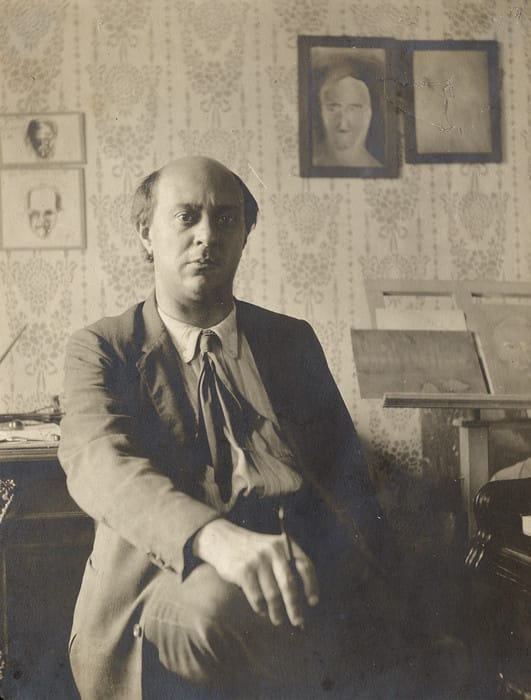
And it is precisely at this point that the arrival of Schönberg’s piano fragments acquires extraordinary effectiveness. If, in Janáček, the fragment is often what remains of memory, in the Viennese composer and theorist it is what precedes a form still waiting to be found, in the wake of his reflections on Brahmsian musical structure. Thus, the fragments composed between approximately 1900 and 1909 document a workshop in the midst of transformation: gestures appear, seem capable of generating development, and are instead suspended; particular sonic configurations acquire consistency for a moment, only to disappear without offering the listener that sense of confirmation which traditional syntax would have made almost inevitable. It is no coincidence that the liner notes aptly observe how incompletion here becomes a genuine “condition of listening”, rather than a mere philological curiosity.
Francesca Gemmo clearly understands that these fragments should not sound like perfectly finished Expressionist miniatures; instead, she preserves their interrogative character. In this way, the phrases are not artificially recomposed through rubato and pedalling, allowing the episodes to remain exposed in their nakedness, almost as though they were materials being observed at the very moment of their birth. From this also derives a certain deliberate austerity in her Schönberg playing, which it would be mistaken to interpret as coldness: rather, it reflects a refusal to fill interpretatively the spaces that the writing itself leaves open.
One can then understand in what sense the imaginary dialogue of the title should not be sought through superficial similarities, since Janáček and Schönberg move in opposite directions. If the former clings to gesture, rhythm, the almost bodily inflection of the phrase and the psychological violence of repetition, the latter subjects the material to an ever-greater degree of concentration, stripping it of the hierarchical relationships upon which tonality had for centuries built its ability to organise musical time. And yet, precisely by following such different paths, both composers ultimately transform discontinuity into a formal principle. Where it is no longer possible to rely on the reassuring continuity of traditional discourse, every attack, every pause and every return assumes a new responsibility.
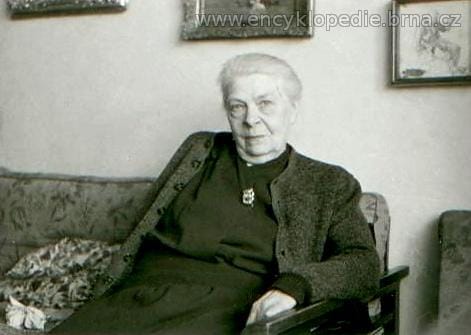
If one bears this in mind, then the Sonata Z ulice, 1.X.1905 inevitably emerges as the emotional centre of the programme. Associated with the death of František Pavlík during the demonstrations in Brno on 1 October 1905 in support of the establishment of a Czech university, the work has come down to us in mutilated form, since Janáček destroyed the third movement and later also the autograph of the first two, which were fortunately preserved thanks to the pianist Ludmila Tučková. What remains, therefore, are Predtucha (Presentiment) and Smrt (Death), two movements in which a public event is internalised until it is transformed into an implacable psychological pressure.
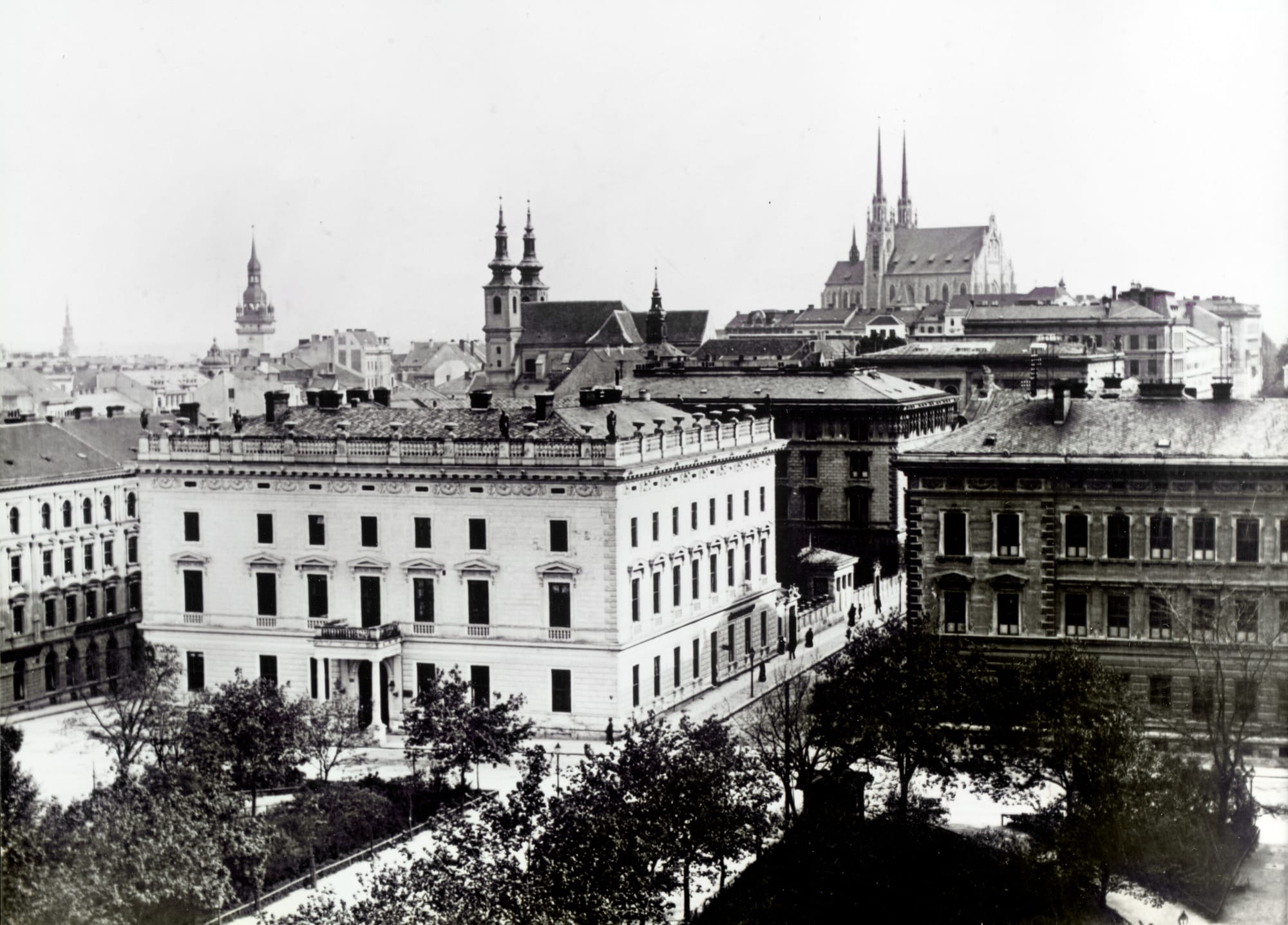
Gemmo approaches Predtucha while avoiding two opposite risks: softening its lyrical episodes on the one hand and turning its dramatic dislocations into outward displays of violence on the other. Instead, she builds the conflict effectively from within. The different materials seem to obstruct one another, as though melodic continuity had repeatedly to carve out a space for itself against something determined to break it apart, while the more agitated passages gain force precisely because they are never rushed. The chords therefore retain weight, and the accents cut into the texture without making it crudely percussive. Yet it is perhaps in Smrt that her interpretative approach achieves one of the most significant results of the entire recording. The Verona-born pianist and composer does not seek a romantically expansive lament. Repetition is allowed to exert its full force through sheer fixity, until it produces a sensation of time almost brought to a standstill, with events seeming to consume themselves around a nucleus that cannot be transcended. Here Janáček’s piano writing reveals its complete estrangement from the nineteenth-century tradition of grand instrumental eloquence: it does not persuade, it does not develop, it does not resolve. It insists. And that very insistence becomes form.
After this compositional and listening experience, Schönberg’s Drei Klavierstücke, Op. 11, no longer appear as a sudden and alienating entrance into another universe, but rather as the mirror response to the same crisis. This is, in my view, one of the greatest merits of the programme as a whole. Op. 11 is not presented as a textbook manifesto of atonality, nor as the document of a linguistic revolution viewed retrospectively; rather, it should be heard for what it is: music in which coherence can no longer be guaranteed by tonal grammar and must therefore be transferred to the relationships between intervals, rhythms, registers, densities, dynamics and colours.
In the first Stück, Gemmo still allows the sense of a formal arc to remain perceptible, without ever neutralising its tensions. The phrasing proceeds through processes of condensation and rarefaction, as though the music were continually seeking an equilibrium only to place it immediately back in question. In the second, the celebrated ostinato assumes an almost hypnotic function, yet the interpreter avoids reducing it to a mere background element: its reiteration becomes a disturbing presence, a psychological split—a kind of projected Doppelgänger—an element that immobilises time precisely while what unfolds above it attempts to escape repetition. The third Stück is naturally the point at which every equilibrium becomes still more precarious. Here Gemmo’s reading demonstrates how important it has been, throughout the entire project, not to confuse Expressionism with disorder. The violence of the contrasts, the shifts of register, the sudden dynamic changes and the fragmentation of gesture are all governed with lucidity. One never has the impression of a piano abandoned to the uncontrolled explosion of the instant, but rather of a musical substance that has replaced traditional syntax with an even more exacting discipline. Indeed, part of Schönberg’s paradox lies precisely here: at the very moment when the music seems to emancipate itself from rules, every relationship becomes more necessary, more inescapable—a lung desperately searching for air to breathe.
At this point, the comparison with Janáček can be recomposed. Francesca Gemmo herself identifies two different cultural poles in the two composers: on the one hand, Schönberg’s Austro-German tradition, with its primacy of construction and counterpoint; on the other, Janáček’s Slavic world, in which melody and rhythm become immediate vehicles of expression. The booklet effectively recalls Franco Pulcini’s formulation, which opposes the two composers as the “abstract” and the “figurative”. Yet, in listening to the recording as a whole, one comes to understand how this very opposition ultimately generates a surprisingly unsettling common ground. If Schönberg fragments because he can no longer rely on the hierarchies of the inherited musical language, Janáček, for his part, repeats obsessively because memory and speech seem incapable of proceeding according to a linear continuity—a creative imperative that would later become a constant feature of his formidable musical theatre.
And if the former tends towards the abstraction of relationships while the latter gravitates towards the physicality of accent, it is equally true that both reject ornament, both concentrate discourse until it becomes necessary, and both assign to the smallest gesture a function that can no longer be delegated to pre-existing conventions. These are two different ways of discovering that, at the dawn of the twentieth century, form is no longer a vessel into which content can simply be placed, but something that must be continuously reconstructed from the very energy of musical events themselves, as the nineteenth-century line is forcibly transformed into the fragmented circle of the twentieth century.
It is precisely on this ground that Francesca Gemmo’s interpretation finds its deepest justification. Her pianism does not seek to reconcile the two composers by softening their differences; rather, it brings them closer through the very radicalism with which she respects their respective natures. In Janáček, she highlights the weight of accent, the obstinacy of return, memory as a wound inflicted upon continuity; in Schönberg, she privileges the transparency of relationships, the problematic nature of gesture, and the tension between expressive impulse and constructive necessity. What unites the two is a particular attention to the inner temporality of the score and to the quality of the attack, together with a use of the pedal that never confuses resonance with indeterminacy.
This is therefore not an interpretation aimed at sonic hedonism, nor would such an approach be appropriate. Even when the piano acquires breadth and depth, a certain hardness and tactile resistance remain, almost as though the instrument itself were required to oppose the hand rather than submit docilely to its seduction. This reflection takes its cue from a passage in the booklet in which Francesca Gemmo herself describes the writing as at times “anti-pianistic”, suggesting that the very difficult of performance may become an expressive element in its own right. And indeed, the listening experience gives concrete substance to this idea: the piano is not used to smooth away the edges of either musical language, but rather to reveal their materiality and resistance.
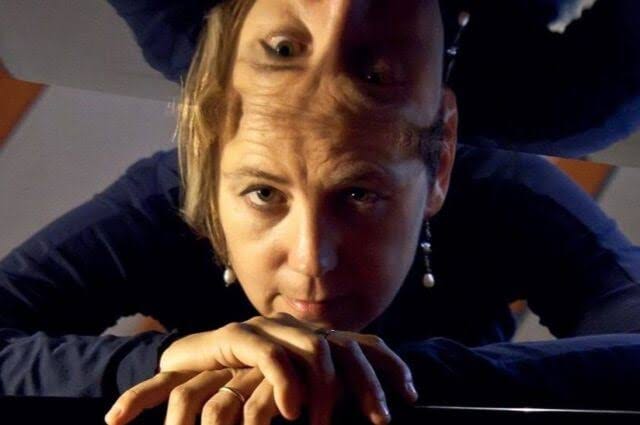
Ultimately, one cannot help but realise how the title An Imaginary Conversation comes to seem less metaphorical than it did before hearing the recording. Schönberg and Janáček do not need to be transformed into interlocutors who actually existed in historical reality; it is enough to listen to what happens when their music is placed face to face. They speak different languages and do not seek common ground: precisely for this reason, the comparison works. Where Janáček transforms recollection into gesture and gesture into obsession, Schönberg transforms the fragment into a problem and the problem into structure. Where the former seems to begin with the human being in order to arrive at form, the latter seems to begin with form in order to rediscover, at its outer limits, the vulnerability and intrinsic frailty of the human being.
Francesca Gemmo has had the merit and the sensitivity to understand that such a project could not be reduced to a simple juxtaposition of repertoire. On the contrary, her interpretation constructs an arc in which what at first still belongs to the nineteenth century is gradually subjected to ever greater pressure, until it reaches the two extreme experiences of the Sonata 1.X.1905 and Op. 11. Two composers who never met in historical reality thus become the protagonists of an encounter that can take place only through the miracle of music. The true subject of this “imaginary conversation”, then, is nothing less than the birth of modernity itself: that moment in which the past, although it continues to remain present, can no longer be inhabited in the same way.
The recording, engineered by Alessandro Camnasio, is of a high standard. The dynamic response is notably swift, with fast transients and sufficient immediacy to move convincingly from the most intimate passages to sudden expansions. Above all, it allows the listener to perceive the different function that resonance assumes in the two composers: more closely associated with memory and psychological depth in Janáček, and more directly involved in the redefinition of intervallic space and colour in Schönberg.
In terms of soundstage, the Schimmel Konzert grand is convincingly reconstructed at the centre of the loudspeakers, with depth that is not particularly pronounced. Its relatively close perspective in relation to the listener, however, never sounds unnatural or incorrect, while the sound itself expands pleasingly both in height and width. The tonal balance displays no significant anomalies, with the upper register clearly recognisable and well differentiated from the middle and lower ranges. Finally, detail has a remarkably tangible, almost tactile quality, ensuring an effortless listening experience thanks also to a generous sense of background blackness, which contributes effectively to the perception of the piano’s three-dimensional presence.
Andrea Bedetti
Leoš Janáček and Arnold Schönberg – An Imaginary Conversation
Francesca Gemmo (piano)
Da Vinci Classics CD C01217
Artistic rating 4,5/5
Technical rating 4/5