There is a contradiction in the history of twentieth-century music which, although only apparent, deserves, in my opinion, closer examination: while a significant part of European musical production sought to dismantle, overcome, or radically transform the foundations of the musical language inherited from the nineteenth century, other composers pursued a form of modernity that felt no need to proclaim its rupture with the past, as was precisely the case with the French composer Francis Poulenc. Having established this, however, we must avoid falling into a particular trap: that of assuming that our composer belonged to the conservative camp; in other words, that he was a nostalgic figure or, worse still, a musician incapable of grasping the significance of the revolutions that were reshaping the musical landscape of his time. His was, rather, a conscious aesthetic choice, founded on the conviction that originality did not necessarily have to be equated with innovation in compositional techniques, after taking a hammer to everything belonging to the past like some latter-day musical Nietzsche, but could instead emerge through their individual use, a different organisation of musical discourse and, above all, a distinctive conception of expressiveness.
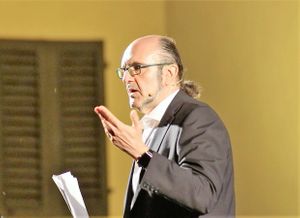
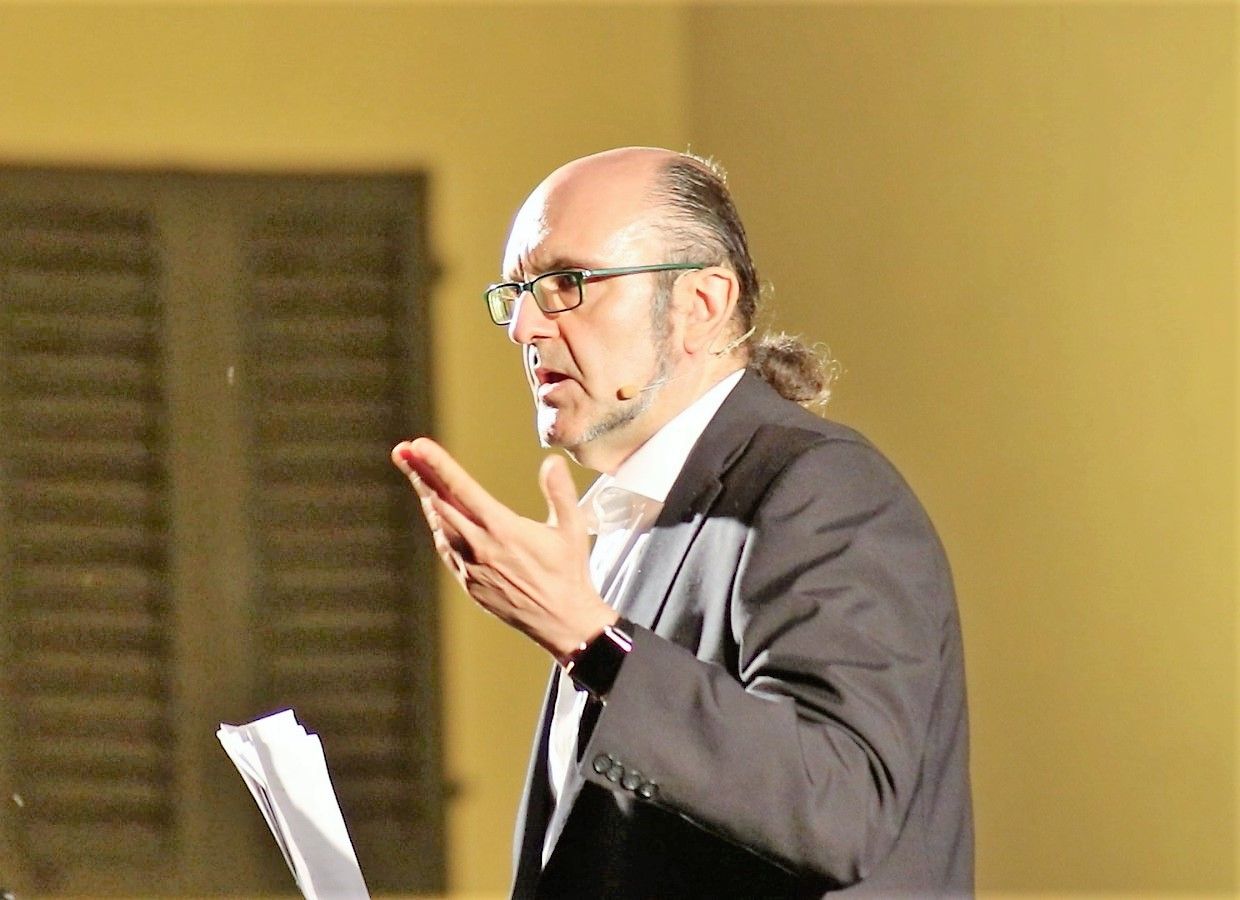
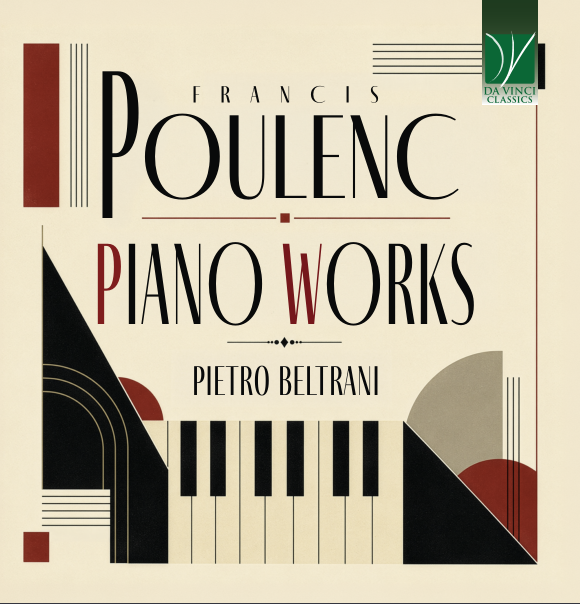
Pietro Beltrani’s latest recording project helps us to understand this position more clearly. In a CD entitled Piano Works, released by Da Vinci Classics, the pianist brings together a selection of Poulenc’s piano compositions spanning a sufficiently broad chronological period to reveal both the essential continuity of his musical language and the transformations that took place in his artistic sensibility. Although this is not a complete recording of Poulenc’s piano works, it offers a representative survey which, from the youthful Mouvements perpétuels to the Improvisation dedicated to Édith Piaf, presents a multifaceted portrait of a composer whose apparent immediacy still risks concealing the complexity of his musical thought.
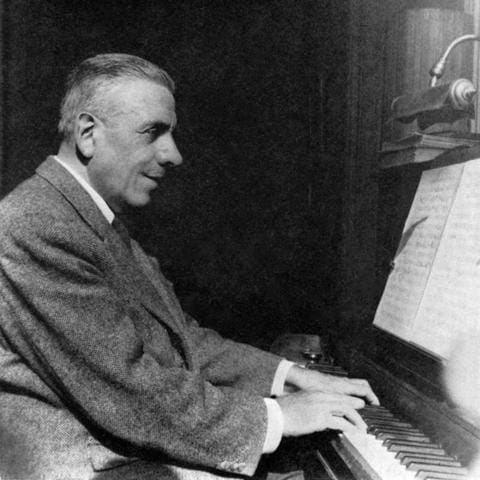
To understand properly the role of this Parisian composer in early twentieth-century French culture, we must first free ourselves from a historiographical perspective that has too often equated musical progress with emancipation from tonality and the progressive dissolution of traditional forms. Such a perspective, undoubtedly useful for understanding certain fundamental developments in musical modernity, nevertheless proves inadequate when attempting to explain the work of composers who did not accept the notion of an inevitable evolutionary succession of musical languages. Born in 1899, Poulenc belonged to a generation already familiar with Debussy, Ravel and Stravinsky, and which witnessed, certainly without enthusiasm or active sympathy, the emergence of the Second Viennese School and its explorations. Rather than regarding the tonal system as historically exhausted, Poulenc therefore continued to recognise in it an extraordinary reservoir of expressive possibilities.
His position, however, did not coincide with that of the more rigorous neoclassicists. His relationship with tradition did not necessarily entail a revival of earlier formal structures, nor a search for contrapuntal order capable of imposing discipline upon musical material. What interested him above all was the immediate accessibility of musical language, the recognisability of melodic gestures and the freedom to move from one expressive register to another. Thus, although tonality remained his principal point of reference, it is equally true that he subjected it to distinctly modern forms of disruption through added notes, altered chords, false relations, modal inflections and unexpected modulations, creating a kind of permanent instability in which the ‘familiar’ and the ‘traditional’ suddenly acquired an unexpected meaning.
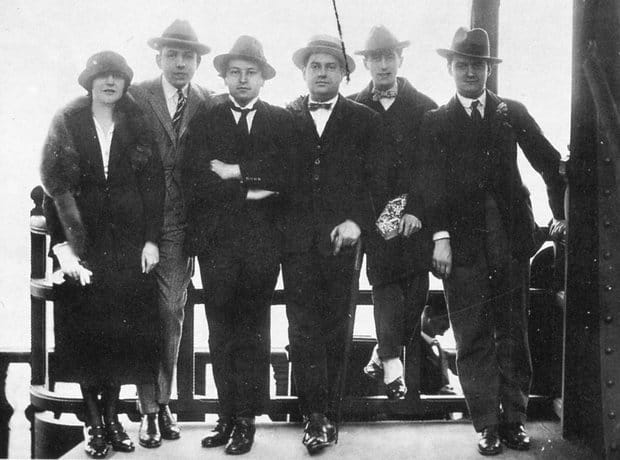
Another fundamental and frequently misunderstood aspect concerns Poulenc’s membership of Les Six, in which his name was associated with those of Milhaud, Honegger, Auric, Durey and Tailleferre. This association must be understood without attributing to the group an aesthetic unity that it never truly possessed, since the musicians who gathered around Jean Cocteau and Erik Satie were markedly different personalities, united chiefly by their rejection of Romantic rhetoric, their impatience with certain aspects of Impressionism and their interest in music capable of re-establishing contact with everyday life. Thus, the world of the circus, the music hall, cabaret, fashionable dances and popular urban song burst into an expressive universe that abandoned the hierarchical and condescending distinction between supposedly elevated musical materials and those traditionally regarded as inferior. Yet it is equally undeniable that it would be misleading to regard Poulenc merely as a representative of the aesthetic associated with Les Six. His artistic personality developed far beyond that experience, retaining its freedom and irony while progressively exploring a more intimate and spiritual dimension that would find particularly significant expression in his religious works, not least in that masterpiece of musical theatre, Dialogues des Carmélites. In this respect, the celebrated and long-debated duality between the worldly, irreverent, Parisian Poulenc and the contemplative, melancholic and devout Poulenc offers a useful interpretative key, provided it is not turned into an artificial division, since these two aspects often coexist within the same composition, sometimes only a few bars apart.
It is precisely this psychological fluidity that makes his piano writing so distinctive. Poulenc does not conceive of the piano as the setting for a grand dialectical confrontation between thematic materials, nor as an instrument intended to construct imposing musical architectures. Instead, his writing proceeds primarily through images, situations, characters and brief musical statements that seem to possess a fully formed identity from the moment they appear. A melodic motif, a rhythmic figure or a harmonic progression may fulfil its expressive purpose in just a few moments; what matters is the precision with which these elements are presented, varied and ultimately abandoned.
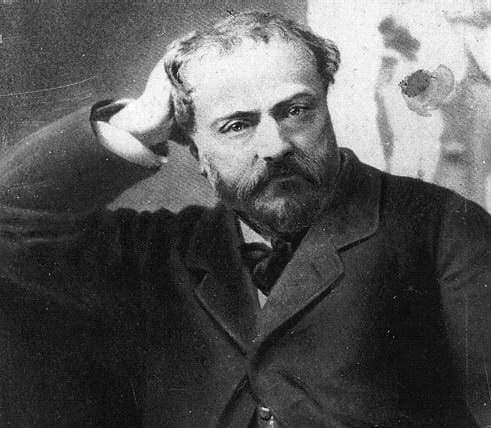
In this respect, Poulenc’s debt to Emmanuel Chabrier, a composer whose remarkable intuitive genius has, in my view, yet to receive the full recognition it deserves, is particularly significant. From Chabrier, Poulenc inherited a taste for brilliance, rhythmic vitality, harmonic unpredictability and a conception of the piano in which elegance could coexist with a certain deliberate audacity. His relationship with Debussy and Ravel, though different, was equally important and indeed inevitable: from the former came a sensitivity to nuance and resonance, from the latter an attention to clarity of design and the balance of sonorities. Poulenc, however, never systematically pursued either the Impressionistic dissolution of musical contours or the almost objective refinement of Ravel’s compositional craftsmanship. His musical language retained an instinctive quality, a naturalness born of the encounter between a profound musical culture and an expressive immediacy never entirely sacrificed to compositional speculation.
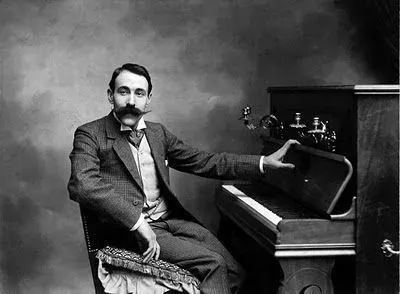
By contrast, the teaching of Ricardo Viñes, the Catalan pianist who had played a decisive role in promoting the new French music, proved fundamental. Through him, Poulenc acquired a conception of touch and pedalling in which clarity of articulation by no means excluded richness of resonance. This is an essential point, since his music is sometimes approached with excessive emphasis on its dry, percussive, almost neoclassical qualities. In reality, Poulenc’s piano writing demands a much subtler balance between clarity of outline and continuity of sound. The sustaining pedal does not serve a merely colouristic function: it helps to establish harmonic connections between elements that the writing presents as fragmented, while articulation must preserve the individuality of each musical gesture.
To all this must be added an element that is perhaps even more important: the profoundly vocal nature of Poulenc’s musical thought. Poulenc was an outstanding composer of mélodies, and his intimate familiarity with the human voice permeates his piano music as well. Many passages seem to spring from an impulse towards singing, from a phrase that breathes with an almost speech-like articulation, while the melodies do not necessarily unfold through elaborate compositional procedures, but acquire intensity through the slightest inflections, hesitations, suspensions and sudden harmonic changes. In this way, the piano becomes an instrument capable of speaking, suggesting, remembering and sometimes even falling silent, as though the emotional discourse had reached a threshold beyond which it could no longer proceed.
With this in mind, the three Mouvements perpétuels of 1918, which open the recording, constitute something of a declaration of intent. Their concision, the simplicity of their musical materials and the almost disarming character of their melodies testify to a deliberate and explicit stripping away of the complexities of late-Romantic pianism. Moreover, the repetition of accompaniment figures does not generate a genuinely perpetual mechanism, but rather a sense of lightness and mobility, continually animated by small deviations, while the unmistakable irony arises not from caricature but from the discrepancy between what the listener expects and what actually happens. Indeed, already here we can recognise one of Poulenc’s fundamental characteristics: his ability to make musical material surprising even when, considered in isolation, it might appear conventional, to say the least.
In the Valse from Album des Six, this tendency becomes explicitly theatrical. Here, the dance retains its recognisable identity but is viewed through a slightly distorting lens. Similarly, in the Presto in B-flat major and the Caprice italien from the suite Napoli, pianistic brilliance is not employed as a display of virtuosity for its own sake. Instead, rapid figurations, sudden changes of register and unexpected accents establish a network of expressive relationships in which surprise matters more than sheer display.
Among the other works included in the programme, the melancholic dimension stands out with particular clarity in Mélancolie, a piece dating from 1940 that ranks among the most eloquent expressions of the mature Poulenc. Here, the musical discourse unfolds through an intense cantabile, supported by harmonies capable of continually altering its emotional temperature. Melancholy, however, never develops into monumental despair, but remains an inner condition, revealed with a sincerity that requires no rhetorical amplification. It is precisely this restraint that makes the piece so deeply affecting.
A similar observation applies to the eight Nocturnes, composed over several years and brought together in a cycle that should not be interpreted according to the conventional Chopinesque model. Indeed, Poulenc does not seek so much to evoke a generic nocturnal atmosphere as to capture psychological states, memories and apparitions. In the first Nocturne, the singing line assumes an intimate, almost confidential quality; in the third, Les cloches de Malines, the interplay of resonances suggests an evocative sense of space; in the fourth, Bal fantôme, the reference to dance takes on an unsettling quality, as though worldly lightness had become the memory of something now irretrievably beyond reach. Finally, the eighth piece, conceived as the conclusion of the cycle, confirms this poetics of memory and expressive concentration.
The Novelettes and Improvisations reveal another characteristic of Poulenc’s musical language: his ability to transform references to other composers into gestures of affectionate appropriation rather than demonstrations of stylistic expertise. In this respect, the third Novelette, based on a theme by Manuel de Falla, retains a recognisable connection with the Spanish composer’s expressive world while incorporating it into an unmistakably personal musical syntax. In Improvisation No. 12, Hommage à Schubert, the tribute itself concerns above all the naturalness of the singing line and that particular ability to shift the emotional horizon suddenly through a simple harmonic inflection. Even more significant is Improvisation No. 15, Hommage à Édith Piaf: here, the distance between art music and chanson seems finally to disappear, since Poulenc recognises in the French singer a form of expressive truth that depends not on the complexity of musical writing, but on the ability to communicate emotion directly. The piece thus becomes a kind of musical confession, in which melodic simplicity reveals a depth incompatible with any superficially worldly interpretation of his aesthetic. Seen in this light, it is not difficult to recognise one of the Parisian composer’s most authentic artistic declarations: music can be modern without renouncing its capacity to speak directly to the listener.
The programme selected by Pietro Beltrani, together with the considerations made thus far, highlights just how demanding it is to perform Poulenc at the piano. The apparent simplicity of his writing can lead performers to underestimate the need for rigorous control of tonal relationships, rhythmic proportions and expressive nuances. Conversely, an overly sentimental reading risks burdening the lyrical pieces with excessive weight, while an excessively brilliant interpretation can reduce the more animated ones to a succession of witty effects. The fundamental challenge, instead, lies in preserving the unity of a musical personality that expresses itself through often contradictory attitudes.
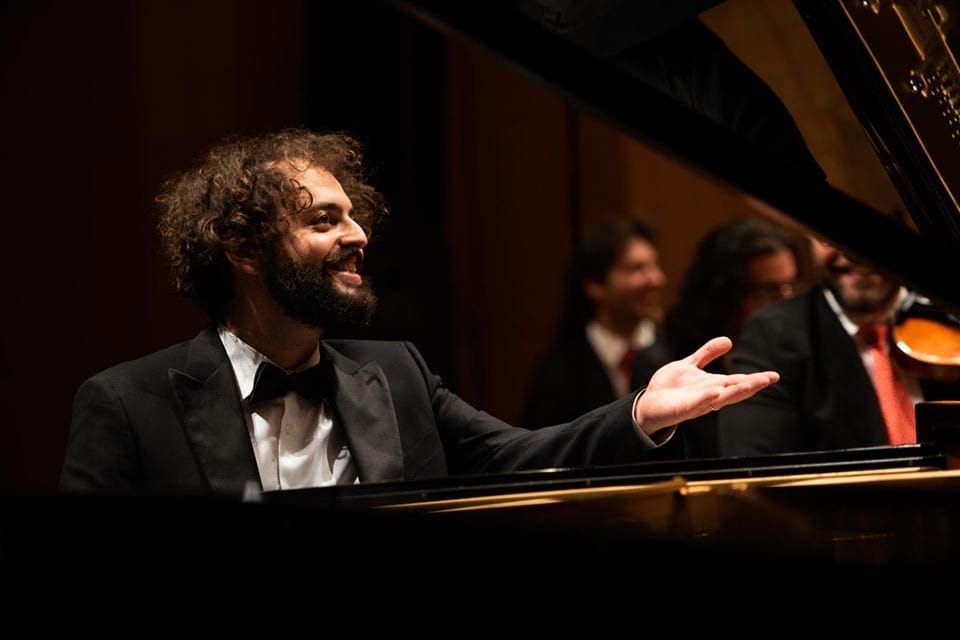
Having listened to the recording, it is possible to say that the pianist from Imola approaches this repertoire by favouring clarity of design and a shaping of the musical discourse that tends to highlight the precision of the writing. In the more brilliant pieces, he reveals an inclination to emphasise rhythmic mobility and sharply defined articulation, avoiding the transformation of speed into a mere exercise in dexterity. In this respect, the Mouvements perpétuels benefit from this approach, since their lightness demands above all a sense of proportion and an ability to lend significance to the smallest variations in the musical material. The Presto and Caprice italien likewise find in the clarity of their contours an element consistent with their extrovert character.
In my view, however, the most interesting aspect of his interpretation lies in his treatment of cantabile. Indeed, in Mélancolie and the more introspective passages of the Nocturnes, the pianist faces the delicate task of establishing a relationship between the continuity of the melodic line and the fluctuations of the accompaniment (Poulenc’s writing demands a careful distinction between what belongs to the surface of the musical discourse and what constitutes its harmonic foundation). Beltrani demonstrates an awareness of this requirement, seeking a differentiation of tonal planes that allows the melody to retain its identity without becoming detached from the overall texture. His interpretation seems guided by a relatively restrained approach to phrasing, in which expressiveness is entrusted more to the definition of musical relationships than to the subjective accentuation of individual episodes: the overall expressive arc matters more than the individual moment. This is a largely convincing choice, particularly because it prevents Poulenc’s melancholy from slipping into a sentimentalism entirely alien to its nature. At the same time, this approach can occasionally leave one wishing for greater freedom in the suspensions and those almost vocal hesitations that constitute one of the most distinctive aspects of his writing. To my mind, however, this is a matter of interpretative orientation rather than a reservation concerning technical accomplishment.
There is another aspect brought to light by the performance of the pianist from Imola, which reminds us of that Poulenc’s piano music does not represent a marginal or merely agreeable chapter in twentieth-century musical production, but rather embodies a different way of understanding modernity, founded on the freedom to draw upon a shared musical language without passively submitting to its conventions. In a century so often described in terms of its ruptures, Poulenc demonstrated that continuity, too, can become a creative act, and that originality need not necessarily be measured by distance from or rejection of earlier models. Ultimately, Poulenc did not need to invent a new musical grammar in order to find an unmistakable voice; it was enough for him to demonstrate that, even through words already familiar to us, it was still possible to say something that no one had ever said before.
The sound engineering, undertaken by Gabriele Zanetti, does full justice to the refined interpretative spirit of the recording. The dynamic response is swift, natural and energetic, while the microdynamics, particularly evident in the subtle inflections and nuances of timbre, are especially impressive. The soundstage presents the piano at a reasonable depth without compromising the definition of the instrument’s contours, allowing the sound to radiate convincingly across both the horizontal and vertical dimensions. The tonal balance, so important to the harmonic construction of Poulenc’s piano writing, is also very good, with the lower-middle and upper registers remaining perfectly distinguishable at all times, never overlapping or obscuring one another. Finally, the level of detail reveals no discernible flaws or shortcomings, while the convincing sense of physical presence makes listening consistently pleasurable and never fatiguing.
Andrea Bedetti
Francis Poulenc – Piano Works
Pietro Beltrani (piano)
Da Vinci Classics CD C01242
Artistic rating 4,5/5
Technical rating 5/5