Disc of November 2026
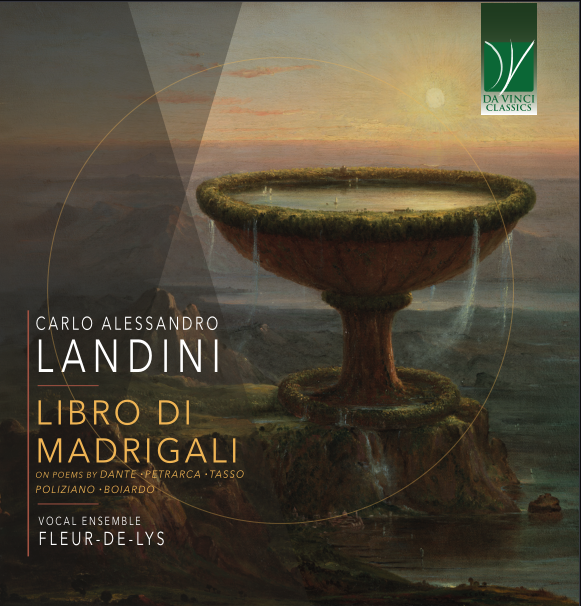
Whenever we prepare to listen to music, we must always bear in mind that there is a fundamental difference between a composer who uses music to express a thought and one who regards music as an autonomous form of thinking. To use music to express a thought means that sound becomes the vehicle for an intellectual content that precedes it, whereas to conceive of music as a form of speculation in its own right means that thought itself takes shape through the relationships between pitches, rhythm, the organization of time, harmonic tension, and the articulation of musical structures. What has always struck me most profoundly in Carlo Alessandro's musical output, inspiring in me a sense of almost reverential admiration for him, is precisely his conception of composition, nourished by a profound familiarity with philosophical reflection. Rather than merely translating abstract ideas into configurations of sound, his music seems constantly to question the very conditions that make musical experience possible. From this perspective, his latest musical undertaking, the Libro di madrigali, recently released by Da Vinci Classics and performed by the Fleur-de-Lys Vocal Ensemble, offers a privileged opportunity to enter a creative universe in which music does not illustrate philosophy, but engages in philosophical inquiry through its own means.
The first consideration, one that risks being seriously underestimated, concerns the very choice of genre. To compose twelve four-part madrigals today, setting texts drawn from the great Italian poetic tradition of the distant past and employing a rigorously contrapuntal language, is to take a stand not only in relation to history, but also against a certain kind of musical "contemporaneity" that might regard the madrigal as something stillborn from the outset. As far as I am concerned, those who belong to this particular brand of "contemporaneity" and proudly champion its cause are free to think whatever they please. At the very least, however, they should bear in mind that this recording project is anything but stillborn. Indeed, I am more than convinced that its purpose is not so much to revive a form belonging to the past, nor to assert a stylistic continuity interrupted by the evolution of Western music, but rather to explore whether a way of organizing musical thought, historically identified with Renaissance civilization, can still generate knowledge and meaning within the horizon of a conception of Contemporaneity with a capital C.
Now, in order to organize musical thought capable of accomplishing such an undertaking, recourse to counterpoint is nothing short of indispensable. Counterpoint is not merely an effective compositional technique encompassing a set of rules governing the simultaneous progression of several melodic lines; it is also, and above all, a particular conception of the relationships between unity and multiplicity, identity and difference, individual freedom and collective necessity. Each voice possesses its own autonomy, yet none can exist independently of the others; each follows a recognizable path, and yet the overall meaning emerges from the interaction of all these individual trajectories. Furthermore, the horizontal dimension of the individual lines generates the vertical dimension of harmonic encounters, while their unfolding in time produces configurations that belong entirely to none of the voices involved.
Considering all this, it is difficult to imagine a more persuasive musical representation of the dialectical relationship between the particular and the universal that permeates so much of European philosophical thought (in the instrumental realm, a comparable result can be achieved only through the string quartet; and the fact that Landini has chosen, in this instance, an SATB ensemble, comprising soprano, alto, tenor and bass, invites us to reflect upon the number four, regarded as sacred in both numerical and alchemical terms within Renaissance Neoplatonic thought, beginning with figures such as Marsilio Ficino and Pico della Mirandola, who belonged to virtually the same historical period as the poets whose works the Milanese composer and philosopher has chosen to set). Landini thus seems to recognize precisely this capacity in counterpoint: the ability to construct a form in which identity is not erased by relationship but finds in that very relationship its own reason for being. His return to polyphony, therefore, does not constitute an archaeological gesture; rather, it amounts to a renewed interrogation of one of the most profound intellectual inventions of Western musical civilization.
In this sense, the Libro di madrigali can be considered alongside the earlier Missa novem vocum, published in 2022 after a lengthy compositional process. Both works share an interest in the constructive possibilities of polyphony but explore them from different perspectives. Whereas the Mass embraces the monumental scale and architectural complexity of nine-part writing, the Libro di madrigali adopts a chamber-like concentration that brings the relationship between the poetic word, the individuality of the parts, and the overall organization of the musical discourse into particularly sharp focus. Indeed, the reduction to four voices does not entail any impoverishment of the musical material; on the contrary, it increases the structural responsibility borne by each part: every line becomes indispensable, every entry alters the balance of the ensemble, and every dissonance acquires a specific weight that is immediately perceptible.
As regards the poetic texts, their selection helps to define a remarkably coherent intellectual trajectory: five madrigals are based on verses by Torquato Tasso, four draw upon Agnolo Poliziano, while Francesco Petrarca, Matteo Maria Boiardo, and Dante Alighieri are each represented by a single text. A reading of these poems reveals that such a distribution is by no means accidental, since the central theme of the cycle is the experience of love, considered not so much in its emotional dimension as in its epistemological contradictions: desire that both confuses and reveals, memory that preserves what has been lost, beauty that promises an impossible permanence, pleasure that coexists with suffering, and distance that transforms imagination into an alternative form of presence. All these themes permeate Italian lyric poetry from the Middle Ages to the late Renaissance and, within the creative universe of the Milanese composer and philosopher, become opportunities to question the very nature of musical time. Indeed, desire exists only in the distance between what is and what might be; memory presupposes a relationship between past and present; and expectation constitutes a projection towards an event that has yet to take place. All these conditions find their equivalents in music, an art that necessarily unfolds through succession, suspension, anticipation, and return.
In light of these considerations, the relationship between poetry and composition acquires a significance different from that generally associated with historical madrigalism. Among the great masters of the sixteenth century, fidelity to the text could take the form of musical figures capable of evoking an image, a movement, or a particular emotional state. Landini is thoroughly familiar with this tradition, yet he avoids turning it into a system of "illustrative correspondences", since the poetic word does not impose a single, unequivocal representation upon the music, but rather stimulates its imaginative activity. In other words, our composer does not necessarily seek to describe what the poet expresses; instead, he endeavours to construct a musical experience capable of engaging with the complexity of the text, at times following its lead, at times questioning its implications, and at others bringing to light meanings that a purely literary reading would leave in the background. Music thus becomes not a commentary on poetry, but a second mode of its existence.
The opening piece of the recording, Cercando va per questo e quel sentiero, based on a sonnet by Tasso, provides an initial key to understanding this perspective. Venus searches for Love, while the poet conceals him within his own breast, thereby becoming the site of an irresolvable contradiction: to harbour desire is to be consumed by it, while to reveal it means exposing oneself to potentially even greater suffering. Thus, the text organizes emotion into a system of oppositions, and Landini's imitative writing seems to find in this movement a correspondence that is essentially structural in nature. The opening piece, lasting just over nine minutes, also exemplifies another fundamental characteristic of Landini's compositional poetics, namely the expansion of musical time. The composer seems uninterested in aphoristic concision, in the rapid formulation of an idea followed by its immediate conclusion. Instead, he prefers to allow musical relationships to mature, tensions gradually to acquire significance, and the listener to recognize the form through the very duration of the listening experience. Such a conception of temporality demands a different kind of receptiveness from that ordinarily required by more fragmented or gesture-driven contemporary music. Indeed, it is not the isolated event that governs the listening experience, but the continuity of relationships.
In the following madrigal, Chi si diletta in giovenile amore, drawn from Poliziano's Rime, the poetic subject shifts towards the transience of beauty and the deceptive promise of youth. The image of the fruit that does not always fulfil the promise of the flower introduces a contrast between appearance and fulfilment, between expectation and reality. Here, too, the intellectual substance of the text seems to find particularly fertile ground in polyphonic writing, above all through the possibility of bringing different melodic trajectories into relationship without reducing them to a single expressive gesture. It is worth recalling that one of the distinctive features of this Libro di madrigali lies precisely in its refusal automatically to equate the musical character with the apparent character of the text. Where the poetry seems to suggest lightness, Landini may introduce harmonic unease; conversely, where suffering predominates, a particular diatonic transparency may emerge. Let there be no misunderstanding: this is not a matter of arbitrarily contradicting the words, but of recognizing that human experience rarely corresponds to a single emotional register. And it is here that the Milanese composer and philosopher reveals himself to be profoundly modern: not because he abandons the system of contrapuntal relationships, but because he subjects it to a sensitivity towards psychological complexity that belongs entirely to our own time.
With Amor piangeva, et io con lui talvolta, based on the opening eight lines of a Petrarchan sonnet, the musical discourse takes on a decidedly more introspective dimension. The poem traces the transition from the suffering of love to a state in which the soul seems to have recovered its spiritual orientation. The initial weeping represents not merely an emotion, but the sign of an existential condition from which the subject seeks to free himself. In this way, contrapuntal imitation, once again particularly significant at the opening of the piece, allows the composer to articulate this transformation without resorting to an excessive dramatization of the emotions. It is interesting to observe how the individual parts, unfolding through predominantly linear procedures, can generate harmonic encounters of considerable complexity, with consonance appearing not necessarily as an original state of repose and reconciliation, but as the provisional outcome of a process. Harmony thus arises from the movement of the voices and preserves, so to speak, the memory of the tensions that have brought it into being. This is one of the respects in which Landini's compositional approach departs most decisively from the conception of counterpoint as a discipline primarily intended to avoid sonic conflict; here, by contrast, conflict is a constitutive element of the form itself.
The fourth madrigal, Andar convienmi alle tartaree porte, sets verses from Poliziano's Fabula di Orfeo. The mythological figure of the artist who descends into the Underworld in an attempt to rescue Eurydice from death introduces a question of extraordinary significance: the power of music to intervene in human destiny. Within Western culture, Orpheus represents one of the most profound embodiments of the musician's identity, since his singing seems capable of suspending the ordinary laws of nature. Yet the myth also contains an awareness of the limits of that power, for music may move, transform, and persuade, but it cannot ultimately abolish the tragic condition of existence. Placed within the context of this cycle, Poliziano's text seems almost to acquire the significance of an indirect declaration of artistic intent. Landini does not claim that music can explain the world or resolve its contradictions; rather, he recognizes its capacity to make those contradictions perceptible through an order different from that of conceptual thought. Counterpoint thus becomes a space in which the necessity of formal construction coexists with the unpredictability of the expressive outcome.
Era de l’età mia nel lieto aprile, once again drawing on Torquato Tasso, introduces the dimension of memory. Here, the evocation of youth is not confined to nostalgia for a vanished season but connects the experience of love with the very emergence of poetic expression. The remembrance of the beloved woman becomes inseparable from the act of singing: beauty gives rise to poetry, while poetry grants beauty a different form of permanence. This relationship of reciprocity finds a compelling analogy in polyphonic language. Just as the voices mutually determine one another, so the poetic subject and the object of his desire participate in the construction of an identity that neither could possess independently. The madrigal's considerable length, exceeding seven minutes, allows this relationship to unfold within a meditative conception of time. In this way, the past is not simply evoked, but seems to undergo a process of continuous reworking, in which musical form can be understood as a model of the workings of memory: not the static preservation of an image, but its transformation through the present.
With I’ mi trovai, fanciulle, un bel mattino, Poliziano returns, bringing with him an apparently more luminous world. The text depicts a spring garden, violets, lilies, the colours of flowers, and the grace of the female figure, all of which might seem to invite a descriptive musical setting rich in pictorial imagery. Landini, however, prevents this dimension, which would lead his creative imagination astray, from taking precedence over the coherence of his musical language. Indeed, in this madrigal, the reference to nature does not give rise to a succession of sonic images but is absorbed into a texture in which the mobility of the individual parts and the variety of harmonic encounters suggest a vitality that is less immediate and more complex. What is particularly interesting is that beauty is not treated as a stable quality, but manifests itself through transformation, through the possibility that every element of the musical discourse may continually alter its relationships with the others. Thus, even a text so closely associated with the imagery of spring ultimately contributes to the overarching reflection developed throughout the cycle: whatever appears to be fully present is, precisely because it exists within time, destined to change, for better or for worse.
A significant expressive shift occurs in Deh ferma, ferma il tuo ribello, Amore, one of the most harmonically troubled madrigals in the collection. In just a few lines, Tasso's text encapsulates a situation of extreme tension: the lover implores Love to restrain the one who is fleeing, taking his heart along with him. This gives rise to a compositional language characterized by particularly intense chromaticism, a weakening of recognizable triadic structures, and a succession of harmonic relationships that make any immediate anticipation of what is to come highly problematic. The resulting metrical flexibility, also noted in the accompanying booklet, further deprives the piece of the reassuring regularity of a uniform pulse. It is precisely here that one of the most profound insights of the Milanese composer and philosopher emerges: counterpoint does not necessarily coincide with stability. On the contrary, it can become a domain of continuous destabilization, since the multiplicity of melodic lines generates harmonic encounters that elude the reassuring certainty of an identifiable tonal centre. The reference to the Renaissance tradition, and particularly to its most radically chromatic phase, does not amount to mere stylistic imitation; rather, it is the very logic of polyphony that is transposed into a harmonic universe shaped by the experience of modernity. The conclusion of the madrigal, with its unexpected harmonic juxtaposition recalling some of Gesualdo's boldest experiments, confirms the extent to which Landini is concerned with questioning the function of the cadence. It is not merely a signal of closure, but an event that retrospectively reorganizes everything that has been heard. Thus, just as an unexpected conclusion can alter the meaning of an entire musical journey, so a final thought can compel us to reconsider the premises of an argument in an entirely different light.
In Amor l’alma m’allaccia, Tasso's metaphor of the chains of love is approached through a compositional texture that, in its opening bars, displays a significant degree of homorhythmic convergence. The relationship between the voices, ordinarily founded upon their independence, thus experiences a moment of more pronounced simultaneity. Particular attention should be paid to the diminished seventh chord associated with the word "allaccia", which, followed by a fermata-marked rest, acquires a distinctive expressive significance: the harmonic tension and the interruption of the musical flow seem to crystallize the meaning of the poetic image. Yet it would be misleading to reduce the entire procedure to a mere instance of "madrigalism", or word-painting. Rather, the expressive power of this passage derives from its integration into the overall logic of the composition, since the suspension does more than illustrate an impediment: it introduces into the listener's experience an arrest of time, a temporary impossibility of moving forward, thereby transforming the image of amorous captivity into a condition that is intrinsically musical.
The ninth madrigal, Io non posso gioire, is of particular interest also because of the relative diatonic clarity of its musical language. Tasso's text presents one of the most characteristic and emblematic contradictions of love poetry: the inability to experience joy in the absence of the beloved and, at the same time, the paradoxical pleasure that arises from suffering. While thought is capable of traversing mountains, fields, seas, and rivers, thereby imaginatively overcoming the distance separating the lover from the object of his affection, imagination simultaneously creates an experience in which torment becomes delight. The musical writing, undoubtedly less harsh than that of other madrigals in the collection, does not dispel this ambiguity. Rather, the transparency of the polyphonic texture makes it possible to perceive with particular clarity the succession of vocal entries, the continuity of the individual lines, and their progressive integration. Furthermore, it is important to observe that the relative simplicity of the harmonic material does not entail a simplification of the underlying thought; instead, it makes the interplay of relationships more readily discernible. The movement of the voices thus seems to suggest that distance may be temporarily overcome not through actual presence, but through that imaginative construction which belongs as much to desire as it does to musical experience.
With Scuoti, meschin, del petto il cieco errore, drawn from Poliziano's Stanze per la giostra, the musical discourse reaches a moment of particular intellectual intensity. In this madrigal, love is denounced as a form of deception, a force capable of alienating the individual from himself and transforming desire into a condition of dependence. It is interesting to note how the chromaticism associated with the word "Amore" acquires, in this context, a significance profoundly different from what might be expected of a conventional expression of sweetness. It is as though Landini, by revealing the instability of the musical language, sought to bring to light the unsettling nature of this emotion, its power to undermine the coherence of individual identity. This is one of the passages in which Landini's philosophy of sound becomes most clearly recognizable: emotional experience is neither classified nor merely represented but interrogated through the creation of problematic harmonic relationships. The result is music in which beauty does not necessarily coincide with pleasantness. In this way, harshness becomes an epistemological quality, since it compels the listener to confront what resists immediate reconciliation. Dissonance, rather than representing a deviation to be corrected, can thus become the very locus in which musical thought attains its greatest intensity.
The penultimate madrigal, Nel grazioso tempo onde natura, based on verses from Boiardo's Orlando innamorato, once again evokes the imagery of spring, but places it under the shadow of its inevitable passing. The joy of nature's reawakening is followed by the arrival of winter, which brings with it the disappearance of pleasure. The text thus establishes a contrast particularly well suited to a musical exploration of time, since blossoming is inseparable from decline, just as the promise of happiness is inseparable from its transience. The frequent changes in metrical organization give the piece a distinctive character compared with those madrigals marked by greater rhythmic stability. Here, too, however, change should not be understood as a mere expressive device, since the musical form seems to recognize transformation as a fundamental law of existence, revealing how every sonic configuration implicitly contains the possibility of its own transcendence.
The collection concludes with Aggi pietà del cor che tu feristi, based on verses from one of Dante's lyric poems. The decision to give the final word to the Supreme Poet undoubtedly carries symbolic significance, although I believe it would be excessive to attribute to it a programmatic meaning that is not explicitly documented. After a musical journey dominated by the contradictions of love, memory, desire, illusion, and loss, the appeal for compassion introduces the possibility of a different kind of relationship with the other. Compassion, indeed, presupposes the recognition of another's suffering; moreover, it does not abolish the distance between individuals, but makes it possible to bridge that distance through a form of understanding. From this perspective, the epilogue appears particularly consistent with a conception of polyphony founded upon the autonomy of the individual parts and their mutual interdependence. Thus, the cycle does not conclude with a theoretical demonstration, but with an appeal addressed to another, almost as if to remind us of that music, even at the highest level of organizational complexity, remains fundamentally an experience of relationship.
In light of everything discussed so far, it seems only too evident that the Libro di madrigali presents interpretative challenges of considerable difficulty. Four-part vocal writing demands, first and foremost, exceptionally rigorous intonational precision, since even the slightest deviation can alter the perception of harmonic encounters. At the same time, the independence of the individual lines requires the singers to preserve a clearly defined melodic identity without compromising the continuity of the overall texture. Consequently, the performance must avoid two opposing risks: turning contrapuntal complexity into a succession of analytically isolated events or flattening it into an undifferentiated mass of sound. In this respect, the Fleur-de-Lys Vocal Ensemble possesses qualities that make it particularly well suited to tackling this repertoire. Founded in Piacenza in 2012 by Giorgio Ubaldi, the ensemble has developed a distinctive familiarity with Landini's music through its involvement in the Missa novem vocum project. This is by no means a minor detail, since such a highly individual musical language demands an understanding of its inner logic that can scarcely be acquired through merely occasional encounters with it. The ensemble featured in this recording comprises soprano Donata Zaghis, contralto Isabella Di Pietro, tenor Paolo Tormene, and bass Filippo Maria Tuccimei. Their diverse musical backgrounds, encompassing both early polyphony and contemporary music, provide an essential foundation for approaching a score situated precisely at the intersection of these two worlds.
What emerges most clearly from their interpretation is the pursuit of a balance between individual timbral identity and overall ensemble cohesion. Rather than seeking a degree of vocal blending that would erase their distinctive characteristics, the singers retain a recognizable individuality that facilitates the perception of the melodic trajectories. Their control of vocal entries and the relative naturalness of their vocal production help preserve the intelligibility of the contrapuntal texture, even when the parts overlap in particularly dense configurations. The fundamental interpretative achievement in an undertaking of this kind, however, remains the ability to make the underlying construction perceptible without turning it into an academic exercise. Anyone with even a passing familiarity with the creative output of the Milanese composer and philosopher knows that his music cannot be approached as a sterile demonstration of contrapuntal craftsmanship. On the contrary, it demands that technical complexity become the foundation of an expressive discourse, and that precision never degenerate into emotional detachment. In this respect, the Fleur-de-Lys ensemble's familiarity with Landini has proved to be a factor of particular significance.
Of course, beyond the merits of the performance itself, there remains the question of the listening process. This is because the Libro di madrigali is not a collection designed to win over the listener immediately through recognizable expressive formulas or the seductive appeal of spectacular effects. Its beauty reveals itself gradually, as the listener learns to follow the interplay of the voices, recognize the transformations of the musical material, and perceive the underlying logic of harmonic tensions. The music offered by Carlo Alessandro Landini—and this applies not only to his latest creative undertaking—requires concentration but does not necessarily demand specialized knowledge. Rather, it calls for a willingness to regard the time devoted to listening as an active experience. And it is precisely here that the philosophical character of this undertaking becomes apparent. If philosophy is also an exercise in attentiveness, an interrogation of relationships, and a willingness to question what initially appears self-evident, then these madrigals possess a genuinely speculative dimension. Although they do not provide conceptual answers, they nevertheless create situations in which the listener is invited to recognize how multiplicity can give rise to unity, how order can accommodate tension, how memory can become transformation, and how beauty can emerge from what initially appears problematic. From this perspective, the past does not serve as a normative model to which one must conform, but rather as a reservoir of possibilities still awaiting exploration. The Milanese composer and philosopher thus demonstrates that the history of music is not simply a succession of musical languages destined to replace one another, since certain inventions in the realm of sound possess a generative capacity that transcends the historical context in which they originated, precisely because they address fundamental questions concerning the organization of sound and human experience.
Thus, at the end of the listening experience, what remains above all is the impression of having journeyed through a musical universe governed by an extraordinarily powerful inner necessity. The twelve madrigals do not seek to astonish through the immediate novelty of their materials, but through the depth of the relationships they succeed in establishing. Their rigour does not inhibit emotion; on the contrary, it constitutes one of the very conditions that make it possible. Likewise, their complexity does not exclude beauty but invites us to recognize it in less familiar forms. Nor should we forget that their belonging to the contemporary world does not erase historical memory but demonstrates its enduring vitality. This is why our composer's music asks not only to be listened to, but also to be thought about. It is in this convergence between perception and reflection, between the autonomy of musical language and the depth of expression, that the work's most authentic value resides. Thanks to his extraordinary capacity to remain untimely, Landini has succeeded in rescuing the madrigal from the status of a mere historical artefact, allowing it to become a living organism, capable of accommodating the contradictions of contemporary sensibility without relinquishing its formal identity. And polyphony, far from appearing as a discipline belonging to a bygone era, once again reveals its extraordinary capacity to give shape to the complexity of human thought.
MusicVoice's Record of the Month – November.
The recording was made by Alberto Callegari's Studio Elfo in Tavernago, in the province of Piacenza, and is of good quality, successfully preserving and enhancing the artistic achievement of the four singers. The dynamic response is excellent: fast, energetic, and capable of conveying a pleasing sense of naturalness. In terms of soundstage reconstruction, the performers are presented in close proximity within the acoustic space, without, however, exhibiting any improper or unnatural projection. The sound expands convincingly in both width and height throughout the listening environment. The tonal balance, while respecting the individual timbral layers, allows the listener to distinguish clearly the individuality of the four performers' middle-to-low and upper vocal registers, as well as the blend of their voices. The reproduction of fine detail conveys a tangible sense of physical substance that permeates the performers' presence, making their three-dimensionality almost palpable.
Andrea Bedetti
Carlo Alessandro Landini – Libro di madrigali
Fleur-de-Lys Vocal Ensemble (Donata Zaghis, soprano - Isabella Di Pietro, contralto - Paolo Tormene, tenor - Filippo Maria Tuccimei, bass)
CD Da Vinci Classics C01245
Artistic rating 5/5
Technical rating 4,5/5