Da Vinci Classics has launched a new recording project that envisages the complete cycle of Franz Schubert’s piano sonatas, performed by the young South Korean pianist Hyewon Chang. Hanging my head in shame, I admit I had never previously heard anything by this East Asian artist and now make due amends, also on the basis of an incontrovertible fact: Edmondo Filippini, the patron of the record label, would never entrust such a complex and problematic undertaking unless he were confident in the technical and artistic qualities of whoever tackles such a sixth‑degree wall.
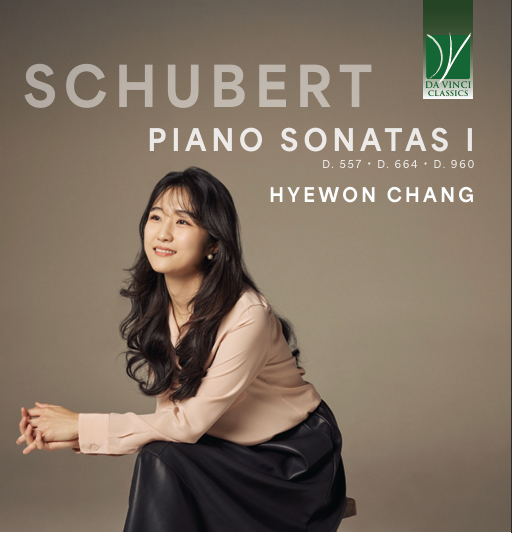
That said, the first disc of the aforementioned complete recordings presents three Sonatas, namely the Sonata in A‑flat major, D. 557; the Sonata in A major, D. 664; and the Sonata in B‑flat major, D. 960. It is therefore a selection that does not follow the conventional path of compositional chronology, partly for purely technical reasons related to the space available for allocating recording time. In any case, through this first disc Hyewon Chang offers, so to speak, a “guided tasting menu” that gives listeners—especially those not at home in the Schubertian sonata universe—an immediate and clear panorama of the composer’s creative evolution. This is because D. 557 still belongs to Schubert’s embryonic and exploratory period in the sonata genre, whereas D. 664, despite its brevity and essentiality, already displays fully acquired formative traits; finally, D. 960 represents the moving and singular concluding seal of that triptych, also comprising D. 958 and D. 959, which led the composer, in the last year of his life and already mortally ill, to produce a page destined for immortality beyond the merely musical. In short, by listening to and assimilating these three Sonatas, which form the playlist of the first CD in the Da Vinci Classics project, one can already discern the path taken by the Viennese genius in relation to a historical before and after—approaching, as it were, the alpha and the omega.
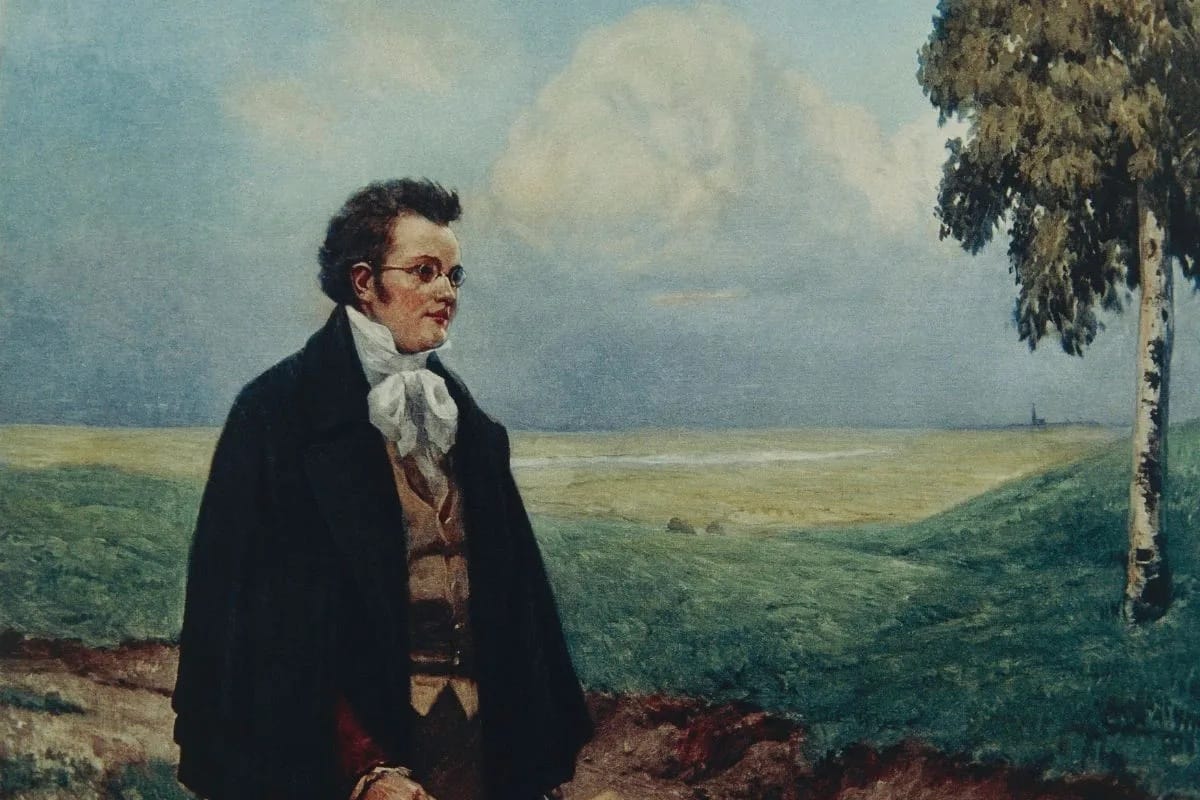
I find the statements in the liner notes to this first disc—editorial notes signed DV, that is, Da Vinci—to be accurate. The first point is that Schubert did not consider himself (nor was he) a virtuoso of the piano, a circumstance that also relates to the kinds of instruments on which he played and composed: namely small pianos lacking a properly extended lower register. Moreover, one must not forget that the musician’s daily priority was survival; professionally, his aim was to secure, often feverishly, the financial means to get by. Consequently, given that he could not present himself as a virtuoso, he was obliged to accompany singers or to act as a sort of “old‑fashioned piano‑bar pianist”, enlivening evenings in the homes of aristocrats or well‑to‑do bourgeois patrons—a prerogative that later gave rise to the celebrated Schubertiades.
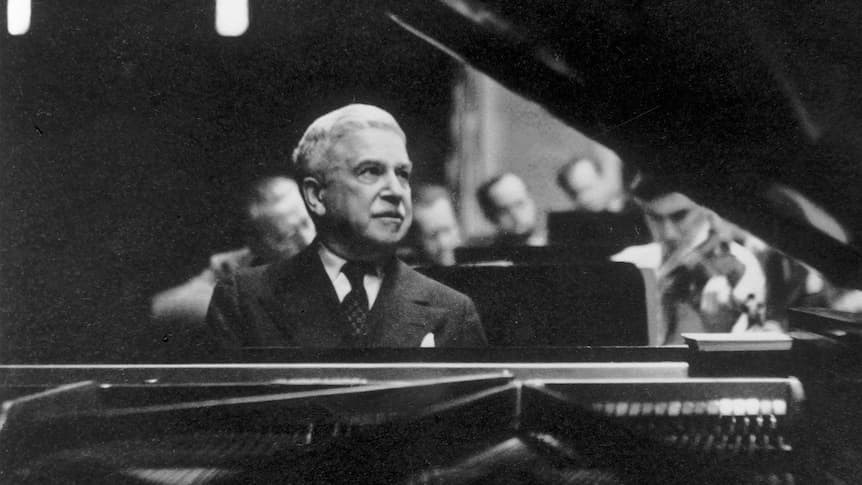
It should also be remembered that, as a performer, Schubert was regarded by critics and by contemporary taste as rather démodé: his touch, his way of handling the keyboard and his approach to performance were still committed to delicacy and a velvety tone. This led him to declare, “I cannot bear the damned hammering indulged in by certain pianists, which pleases neither the ear nor the mind,” a remark aimed squarely at the beloved Beethoven and at rising stars such as Kalkbrenner and Moscheles, who struck the keys like blacksmiths. For these reasons as well (another point to note: the Viennese genius saw only three Sonatas published in his short lifetime—specifically those in A minor, D. 845; D major, D. 850; and G major, D. 894), it is not surprising that throughout the nineteenth century and into the very first decades of the twentieth, his Sonatas were never presented in the concert repertoire; it took Artur Schnabel’s determination to promote this pianistic heritage before they were finally brought to light.
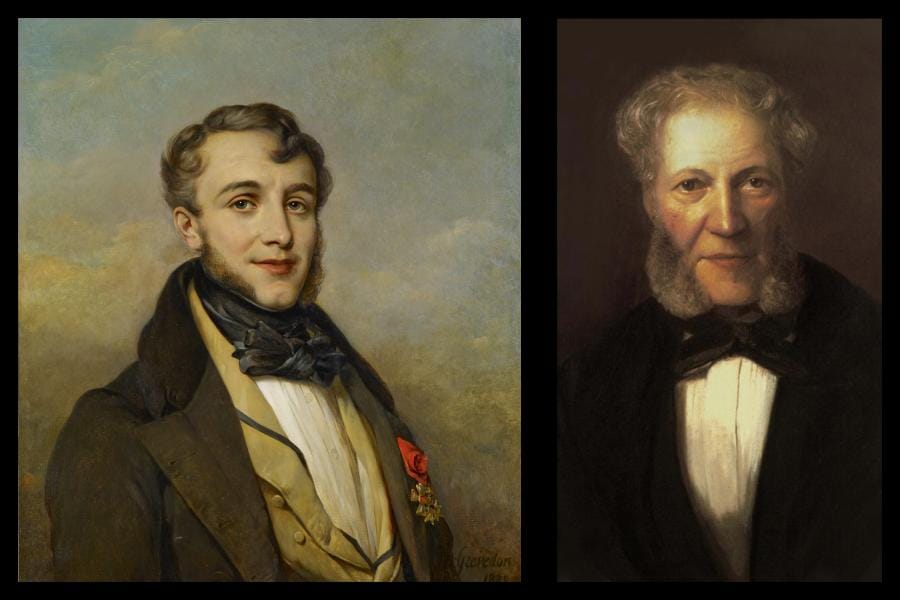
Returning to the CD under discussion, the Schubertian alpha manifests in Hyewon Chang with the Sonata D. 557 — a piece still rarely heard in recitals and concert programmes — which rightly belongs to Schubert’s initial, experimental phase in the sonata genre, set against the great Viennese tradition paradoxically embodied by the non‑Viennese triumvirate of Haydn, Mozart and Beethoven. Understandably, this score gives the twenty‑year‑old Schubert’s compositional imagination a wink towards the venerated Mozartian altar; yet, while its structure bears the imprint of the divine Amadé, its melodic resolution already displays a distinctly Schubertian matrix (the piano must always sing).
Divided into three movements and barely exceeding ten minutes in duration, the piece is approached by the young South Korean pianist with lucid interpretative clarity, evident from the opening Allegro moderato, characterised by a timbral lightness that never slips into showy mannerism but moves within the narrow space between Mozartian verticality and Schubertian horizontality. Within the typical Salzburg‑inspired framework, Hyewon Chang injects phrasing that adheres to the vocal impulse — that singing which the young Viennese composer already had firmly in mind in his creative process.
The coquettish, almost mischievous gait that distinguishes the following Andante is equally well rendered: the initially suspended atmosphere suddenly gives way to a sonic vortex concentrated in the upper‑middle register of the keyboard, before gently congealing back onto the opening theme that closes the movement. The sense of playful dance, the divertissement so beloved by contemporary audiences and at the heart of the final Allegro, is a test that the artist passes without indulging in futile timbral affectations, always preserving that hint of “timbral suspension” which will become the hallmark of the mature, profound Schubert.
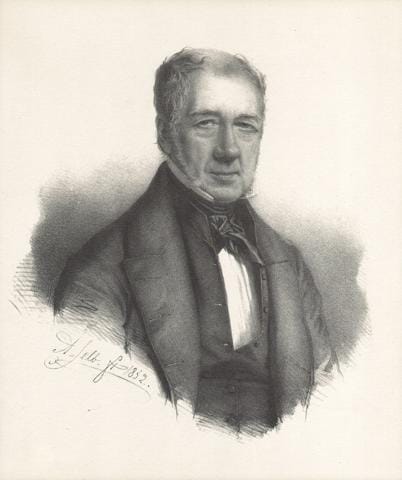
The Sonata D. 664 that follows, while still fully manifesting itself in brevity (do not be misled by its twenty‑two‑minute duration when compared with the space‑temporal expansiveness of the late Sonatas), is a block of marble on which the chisel is further honed, especially considering that two years have passed since D. 557. It may seem scarcely believable, but this score—conceived in the wake of the emotion stirred by Schubert’s acquaintance with a young woman from Steyr, Josephine von Koller, with whom he spent the summer of 1819—enjoyed, from the end of the nineteenth century, a popularity long denied to the other Sonatas; indeed, in terms of renown and appreciation it was matched in the first half of our century only by the Sonata in B‑flat major, D. 960.
From the very first movement, an Allegro moderato, that dream‑like, velvety, at times almost impalpable atmosphere is immediately established—an emotional trait characteristic of Schubertian pianism: the supreme ability to depict, to sketch through pure sound the eruption of feeling, almost always yearned for and never fully realised, whose fulfilment occurs exclusively through the arsenal of personal expectations, sustained by imagination and by reassuring, soothing daydreams. Here our young pianist fares more than admirably in presenting that arsenal, encapsulated above all in the song that forms the heart of the movement (exposition, development, recapitulation), which timbrally and rhythmically evokes a gentle rocking.
This unspoilt, pure, adamantine contemplation is even more clearly focused in the following Andante, and Hyewon Chang’s reading suggests she has assimilated it appropriately, adopting a keyboard approach marked by delicacy, a subtle nostalgic line separating dream from reality, and a caressing tone. Finally, the closing Allegro, as often in Schubert, acts as a ray of sunshine filtering through the mantle of mood‑clouds that preceded it: here the South Korean interpreter is persuasive in shaping a rhythmic articulation that brings out the dance element, which remains anchored in the immanent sphere of its creator.
Finally, the Sonata D. 960. A sublime and wrenching example of an art that was not understood or appreciated in its own time, which spat in the face of the visionary creative dimension of this work. When Schubert completed it and sent it to the publisher Schott, vainly hoping for publication, he had only a month left to live. The publisher’s reply perfectly captures that temporal reality: “If you should happen to compose something less difficult and at the same time brilliant, possibly in an easier key, I would earnestly ask you to send it to me without fail.” Too difficult, too abstruse, too much of everything to be accepted—even by Schott, who had grasped its revolutionary greatness but, from a commercial standpoint, would have gained nothing in terms of sales. With the last of the immortal triad (the other two being D. 958 and D. 959), Schubert, definitively turning his back on the Beethovenian conception, sets out to challenge, through sound, His Majesty Time—both musical time and inner time—in an era that could not yet afford such a luxury.
Hyewon Chang approached this cornerstone of cultivated piano music fully aware that she must not fall into the predictable trap of imposing upon it an imprint as either legacy or admonition — legacy because death overtook its author so suddenly, admonition because Schubert bore no grudge against the world or his age, at least not in any outward, objective sense. Contemplation — a sovereign contemplation — a detached, calm, dream‑like gaze, an immanent nirvana that must be ideally transferred into such a sound, with the performer becoming a kind of Siddhartha observing the flow of the Ganges, that is, of the piano. From the very first movement, the Molto moderato, imagination and evocative freedom must nonetheless be disciplined, with moments of silence and incisive breaks to be governed relentlessly in order to restore a meta‑temporal suspension. Our interpreter does this fittingly, bearing in mind that the task at hand is no small one; indeed, she concentrates with almost obsessive care on the interventions in the lower register, where the left hand becomes a door to be kept open so as to allow the flow of emotional transformation, vibrating with the sonic material.
On the subject of an open door: if the first movement ushers the listener into an intimate, enchanted space/time, the movement that follows, the Andante sostenuto, brings them face to face with an open‑heart surgical operation. Before their eyes they can see the cardiac muscle beating, prompting the question of how it can keep doing so for decades, for an entire life. The same happens in this Sonata, where the second movement is its beating heart, leading the listener to wonder what Schubert was thinking as he composed it, what his life had been, encapsulated in this span of less than ten minutes. Such concentration is rare in the whole history of music, and Hyewon Chang manages to disentangle this pulsation, this heartbeat, delivering a performance at once candid and crystalline: she scatters the magic of semitones, slows where necessary with the aid of a sensitive, sympathetic ABS (the bass register is always attentive, solicitous, at times even rocking).
What follows, the Scherzo: Allegro vivace con delicatezza – Trio, appears at first sight an aporia, a contradiction: vivacity must be offered delicately, as if a punch were delivered with a hand wrapped in foam. Yet the dancing unfoldment, with a rhythm decidedly tinged with an Arabesque flavour, is the Metternichian response — the technical diplomacy that governs and disciplines everything; energy, certainly, but the hand must be, returning to the operating theatre, steady, the scalpel caressing as it cuts. And, like a surgeon, the South Korean artist turns the keyboard into a patient whose feedback is wholly positive.
The final movement, Allegro ma non troppo – Presto, is another allegorical image: a ride in which the horse’s hooves wear shoes made of a milky substance, almost like the rubber used on Formula 1 tyres — speed, but without ever losing grip, that grip which presides over the entire architectural arc of the composition. Again, crystallinity: a divine suspension that transmutes into physical matter, an impetuosity that is certainly not Beethoven and even less the future TNT of the young Liszt. It is simply Schubert the “the little mushroom”, as his friends nicknamed him when he was intoxicated by the copious wine he swallowed, drunk in a Rimbaud‑like way and his ships saturated with alcohol and sex. Here too, in my view, Chang does not betray the spirit of this movement, rendered du côté de Schubert — that is, with lightness, grace, with those accents and minimal brushstrokes of Biedermeier flavour, and with phrasing that can instantly reshape the melodic line into a continuous, magical, imaginative flow.

The sound capture, carried out by Wei Wang and Scott Chiu, shows no flaws or shortcomings and falls within the range of a good recording, although it does not enter the audiophile pantheon. The dynamics are, above all, clean, free from undue colouration, beginning with the upper register, crystalline (the timbral keystone in Schubert), and the recording also boasts more than sufficient energy. The piano, a Steinway Model D‑274, is reconstructed with a respectable depth in terms of soundstage, even if the sound does not expand in width and height beyond the speakers, without, so to speak, sounding “tubed.” The tonal balance is excellent, with a clear separation between the mid‑low and upper registers, and the level of detail offers a sufficient degree of black to outline the instrument three‑dimensionally.
Andrea Bedetti
Franz Schubert – Piano Sonatas I
Hyewon Chang (piano)
CD Da Vinci Classics C01120
Artistic rating 4,5/5
Technical rating 4/5