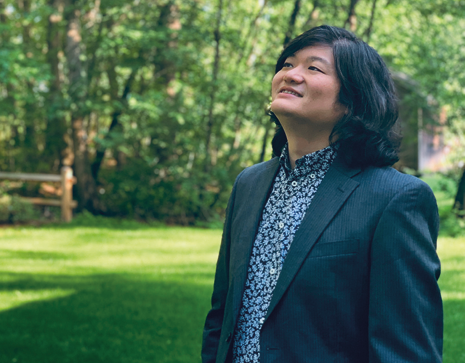
It was inevitable that the 150th anniversary of Maurice Ravel's birth—commemorated last year—would lead to a renewed wave of recordings dedicated to presenting his works anew, particularly those for the piano. Standing out among these is the complete cycle of solo piano works recorded by the Taiwanese-American pianist Hsiang Tu for the Da Vinci Classics label.
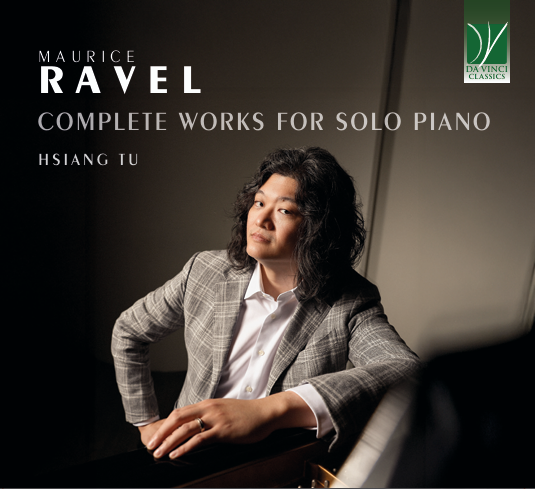
As this artist is primarily known on the other side of the Atlantic, I believe it is appropriate to provide some background before delving into his Ravelian cycle. Born in Taipei, Hsiang Tu moved to North America to complete his musical studies, first at the University of Calgary and later at the prestigious Juilliard School. It was there that he won the Juilliard School Concerto Competition with a performance of Chopin’s Concerto No. 1, launching a concert career that has seen him perform across Europe, Asia, and North America. His repertoire is notably centred on the complete cycles of Claude Debussy and, indeed, Maurice Ravel.
Prior to this Da Vinci Classics release, Hsiang Tu recorded two albums: Bestiary on Ivory (Bridge Records, 2020), featuring piano pieces dedicated to the animal kingdom, and a Chopin album for Da Vinci Classics containing the 24 Preludes Op. 28 and Sonata No. 2 Op. 35. Consequently, his decision to record the French composer’s complete solo piano works represents a natural progression, especially considering that between 2025 and the current year, the pianist has been engaged in an international tour performing this very repertoire.
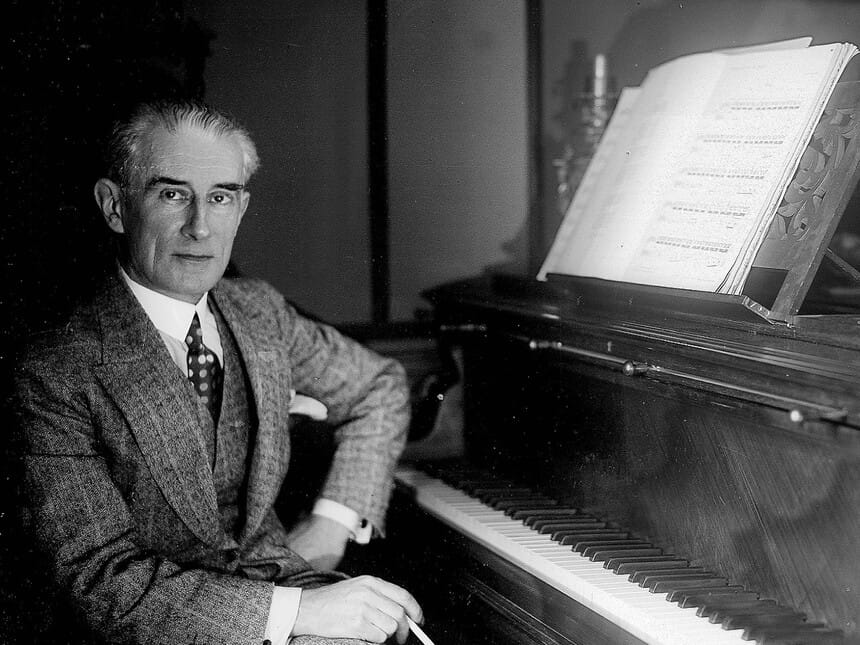
Before approaching the two CDs of this recording project, it is worth establishing—as a baseline—the qualities required to convincingly perform Ravel’s solo piano music. First and foremost, this repertoire demands a fusion of timbral refinement, structural control, and extreme technical precision. It is well known that the French composer conceived the piano as an orchestral instrument. Consequently, an interpreter must possess an immense variety of colours, a millimetric control of weight and attack, the ability to differentiate dynamic layers within complex textures, and a sophisticated, transparent use of the pedal. For instance, in works such as Miroirs or Gaspard de la nuit, timbre must function as a structural element rather than a mere ornament. Furthermore, Ravel’s pianism requires absolute rhythmic rigor, lucidity in handling polyrhythms, and clarity of line even in the densest figurations. This is a vital point: without it, one risks falling into the trap of an erroneously "impressionistic" reading characterized by excessive rubato. On the contrary, Ravel is essentially a "classical" composer who demands sharpness and transparency.
Keeping this "checklist" in mind, my listening was "targeted" toward those compositions best suited to highlight an interpreter's pianistic "palette." This also requires acknowledging a "metamusical" factor: as a product of his era, Ravel drew inspiration from other artistic forms and specific symbolisms, yet without the exaggerated intent found in the music of Erik Satie. Accordingly, from the first CD, I focused on the performances of Gaspard de la nuit and Miroirs, while from the second, I concentrated on Pavane pour une infante défunte, Valses nobles et sentimentales, and Le Tombeau de Couperin.
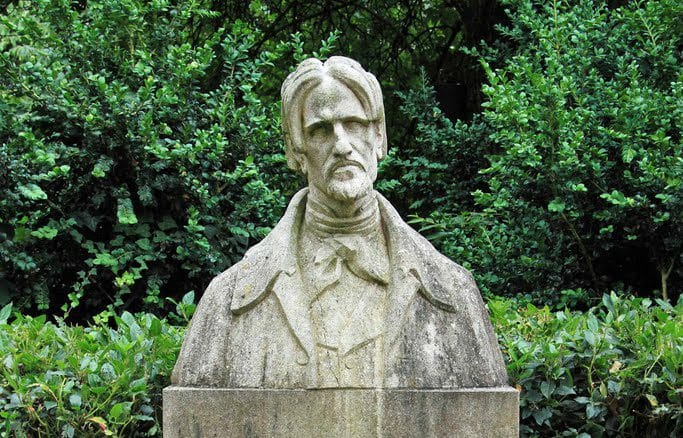
So, to Gaspard de la nuit. Certainly, the subtitle Ravel gave to this 1908 triptych may appear enigmatic, if not outright misleading: "Fantaisies à la manière de Rembrandt et de Callot." Add to this the fact that the composer was an enthusiastic reader of Edgar Allan Poe, and one risks turning this composition—inspired by the prose poems of Aloysius Bertrand—into a Grand Guignol spectacle that would have thrilled John Carpenter or Lucio Fulci. Not only that: to further blur the lines, Ravel himself chose to reproduce the full literary text at the end of each of the three pieces: Ondine, Le Gibet (meaning "The Gallows"), and Scarbo, a sort of descendant of Victor Hugo’s deformed Quasimodo. The horror elements are never an end in themselves; they are merely a valid device to underscore the author’s true intent: to enrich piano literature with works that are nothing short of virtuosic, rivalling Balakirev’s Islamey (1869) and the Lisztian tradition in terms of technical demand.
In the interpretation of Ondine, it is essential to evoke the "liquidity" of the sonic texture—those harmonic atmospheres that literally exude moisture, previously explored in Jeux d’eau. Although he does not achieve an exquisitely "pearly" touch, the Taiwanese-American interpreter succeeds in bringing forth the idea of streams flowing freely and irregularly, governing and disciplining the right hand as it glides across the upper register. With Le Gibet, we enter another dimension—decidedly unsettling, with that obsessive, somber pedal point over which rarefied, almost suspended chords are woven. All of this is aptly rendered by our pianist, whose timbre is firm and decisive yet, at the same time, soft-edged—almost evanescent—perfectly capturing the grim image of the hanged man’s skeleton swaying in a blood-red sunset. And then there is Scarbo, where the keyboard truly transforms into an orchestra to be masterfully led, without ever losing sight of the "horror" that turns into a coarse grotesque to depict the limping gait of the deformed gnome. Hsiang Tu does not shy away; he accepts the challenge and ventures into the treacherous sonic combinations, capturing the lightning-fast shifts, the grimaces, the belches, and the reckless gestures of this Lombrosian creature. Yet he does so, above all, with remarkable timbral clarity, as if to further heighten the three-dimensionality of the scene. It takes physical stamina to tackle this piece, extreme independence of the hands, and absolute mastery of the leaps and trills that overlap like surges of nausea. And our pianist delivers, proving that the challenge does not faze him in the least.
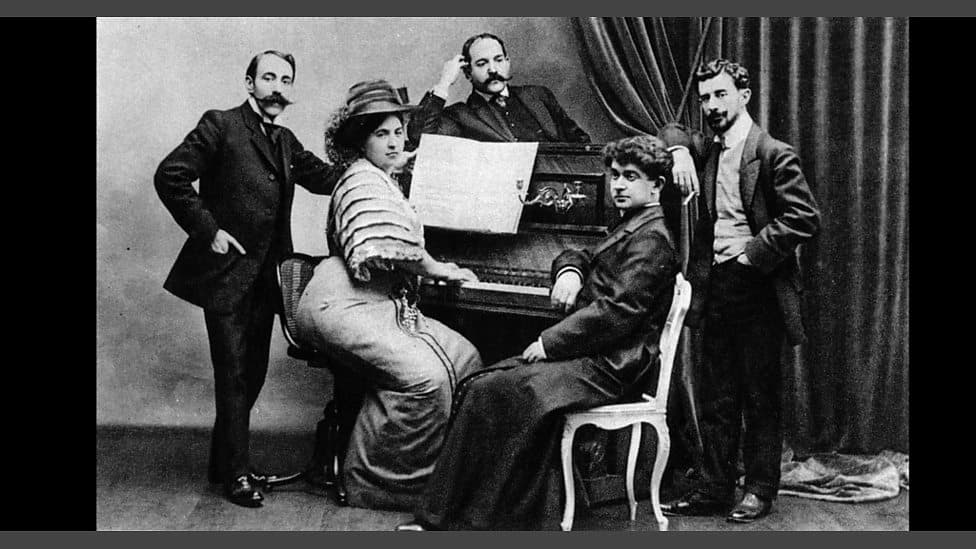
Miroirs, along with the Pavane, Jeux d’eau, and the Sonatine, is the creative output of a period in Ravel’s life—the very early years of the twentieth century—which he lived with a truly manic intensity. Intoxicated by Debussy’s music (he knew Pelléas et Mélisande practically by heart and never missed a single Parisian performance), he became part of a group of artists who met every Saturday night in the studio of Paul Sordes, a painter with a passion for music. This circle included Léon-Paul Fargue, Ricardo Viñes, Michel-Dimitri Calvocoressi, Léon Leclère (better known by the pseudonym Tristan Klingsor), and Maurice Delage. Closer to a sort of makeshift 'pataphysics than a pre-Dadaist vision, this group—playfully dubbed "Les Apaches"—became the beating heart of an "art-as-life" philosophy, a way of seizing life by the throat where every pretext became a creative expression.
Yet, Miroirs represents the opposite: an authentic masterpiece, a precise turning point, and a decisive shift in Ravel’s pianism. Here, the timbral liquidity that had characterized his work until then—fuelled by his infatuation with the Debussian vision—transforms into a classicist conception dominated by a metaphysical perspective. In pictorial terms, this borders on the world of Giorgio de Chirico and Alberto Savinio. Elegance, refined sarcasm, and geometric vistas that would have piqued Lovecraft’s curiosity; sonic masses that teeter on the edge of the abyss—in short, a truly revolutionary pianistic projection, especially in its formal upheaval. It is here that we see the realization of that balance between detachment and sonic sensuality which lies at the core of Ravel’s aesthetics, concentrated primarily in the first two movements of Miroirs: Noctuelles and Oiseaux tristes.
Hsiang Tu is convincing in his ability to resolve this abstractness within a timbral jewel-box that is simultaneously an exercise in reasoning and a sense of the indefinite. Similarly, when Ravel steps back to pay homage to the "amniotic" element that pearls through Une barque sur l’océan, our pianist transforms it into a tapestry of passages where crystallinity takes on flavours bordering on the "softly telluric."
In the fourth movement, Alborada del gracioso, if one listens closely, it is the sense of smell that becomes preeminent. Scents overlap with odours, guiding the performer and the listener through the heart of a Spanish night—a darkness that can be sliced through by inhaling voluptuously, giving life to entirely imaginary spatial volumes (spaces brought to life by the play of the lower-middle register). In this piece, Hsiang Tu proves that, when necessary, a pianist must also take on the role of an "olfactory evaluator" (as those who analyse perfumes for the market are called): fingers like nostrils, fingertips releasing effluvia, and timbral pressures acting as dispensers, varying the intensity and the scent that spreads through the space.
Finally, La vallée des cloches: a triumph of resonance and echoes passing from the right hand to the left—two valleys communicating through the tolling of bells, a demonstration of acoustic physics that exudes sonic art. These are reflective, brooding, solitary bells, yet ever-present in their musical peroration. It is a tempo that tastes of pauses, of a breath that occasionally paralyzes, a dimension that must never be betrayed in performance. Hsiang Tu carves this delicately and mournfully—a privileged bell-ringer with fingers like perfect clappers.
The opening track of the second CD is, fittingly, the Pavane pour une infante défunte, a work that a mature Ravel, by then saturated with cynicism, came close to repudiating with ill-concealed embarrassment. The reason for this rejection was that, to the composer’s ears, the piece now reeked too much of "Gallic languor"—specifically attributable to the melodic influence of Chabrier. While this influence can indeed be confirmed, it is limited to the opening and the thematic recall and certainly does not extend to its déroulement (unfolding), which is defined by harmonic choices that have nothing to do with Chabrier.
In my view, Chabrieresque "sprinklings" aside, Ravel takes the sentiment of a potential sorrow in this piece and subjects it to a process of deconstruction, fascinatedly revealing its obliqueness and transversality through dissonant infusions. Here too, whoever tackles the piece must be quite the tightrope walker, capable of achieving a mutatis mutandis in which, for the sake of stylistic and formal continuity, Chabrier painlessly gives way to that very early timbral experimentation that the novice alchemist Ravel sought to pursue. Hsiang Tu’s interpretation seems to validate the hindsight of a disgruntled Ravel, treating that "Gallic languor" as a mere pretext to highlight, instead, a work in progress looking toward the future.
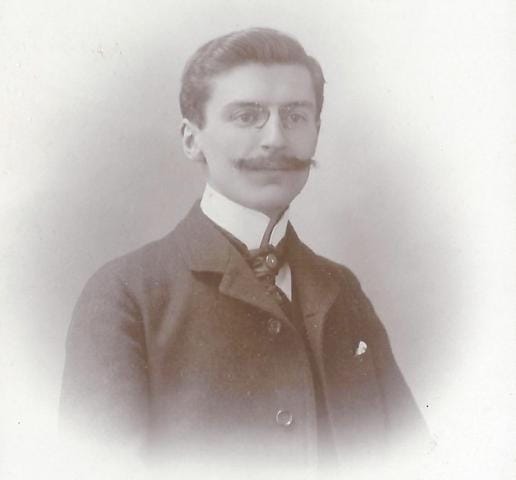
The Valses nobles et sentimentales suffer from a reputation overshadowed by the fame later accorded to their orchestral version. Beyond the disastrous premiere at Paris’s Salle Gaveau on May 9, 1911—where a large portion of the audience walked out before Louis Aubert’s performance had even concluded—this work still endures, at least in its pianistic form, a sort of involuntary malentendu: the misconception that it represents one or even several steps backward compared to, for instance, Gaspard de la nuit. The reality is that its compositional core, which is anything but retrograde, must be drawn out like a mamba from its burrow, whereas in the orchestral version, it presents itself like a compliant lady.
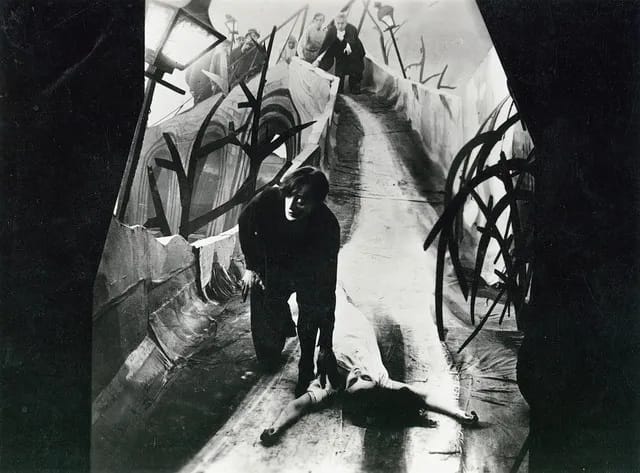
Yet it is precisely through the piano version that the attentive Ravelian listener realizes that behind the deceptively simple writing, that process of deconstruction I mentioned earlier continues to churn away. I would not go so far as to say that De Chirico and Savinio have made way for Braque, but there is no doubt that behind the rhythmic shifts (with the ternary waltz structure as a model) and the timbral and agogic angles, lies a meticulous research into an essentiality which, once tasted, has the flavour of a Neoclassicism that Ravel never abandoned. The equation is simple: this is a work whose polite experimentation never betrays a nostalgia for tradition (the reference to Schubert’s 34 Valses sentimentales is so self-evident it hardly needs mentioning). It all leads to a transfiguration of the established order, with staggered geometric lines—a construction ex novo that unfolds relentlessly across the piece's eight segments. (To transpose this into cinematic terms, think of the famous scene in Wiene’s The Cabinet of Dr. Caligari, as the somnambulist Caesar traverses the hallucinated, Expressionist streets of Holstenwall).
And this is precisely what our "pianistic Caesar" does: he moves through the eight quarters of the musical town of the Valses with a gaze that is by turns glassy, enlightened, dismayed, absorbed, enthusiastic, and contemplative. He employs a timbral palette that immerses itself blissfully in the temporal mutations it must express because, to quote the wise Gurnemanz, "here time becomes space."
The analysis concludes with Le Tombeau de Couperin—essentially, a vision of the harpsichord through the medium of the piano. In these pages, one can clearly perceive the harpsichordist flair of the composer to whom the work is dedicated and whom Ravel so admired. Nevertheless, the entire arc of the piece rests upon the French composer’s rock-solid ability to "orchestrate" for the keyboard, liberating the pianistic material from the literal constraints of the harpsichord. This is achieved through a re-creation of timbral and rhythmic dimensions (note how Hsiang Tu exalts this prerogative in the Fugue), leading the author to detach from the harpsichordist touché and fully integrate it into a pianistic one in the Forlane. If one seeks a masterclass in how our pianist shapes timbral density, listening to this Tombeau proves invaluable; through it, he maintains a careful distance from both excessive sentimentalism and a pernicious, mechanical coldness.
In my opinion, therefore, Hsiang Tu’s complete cycle is largely a success. He is convincing both in his comprehensive grasp of Ravelian aesthetics and in the technical skill and timbral range with which he expresses his interpretative sensitivity.
The sound recording, captured in New York by Shane Carroll and Andreas K. Meyer, shows no weaknesses. While the dynamics are at least sufficient in terms of energy, speed, and naturalness, the reconstruction of the soundstage of the Steinway used for the recording manifests an accentuated depth, which does not prevent a pleasant radiation of sound well beyond the speakers. The tonal balance and detail are also adequate: the former does not betray the separation between the mid-low and high registers, while the latter—though not providing a remarkable sense of "tactile" presence—offers at least a fair degree of three-dimensionality.
Andrea Bedetti
Maurice Ravel – Complete Works for Solo Piano
Hsiang Tu (piano)
2CD Da Vinci Classics C01127
Artistic rating 4,5/5
Technical rating 3,5/5