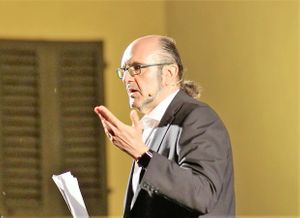
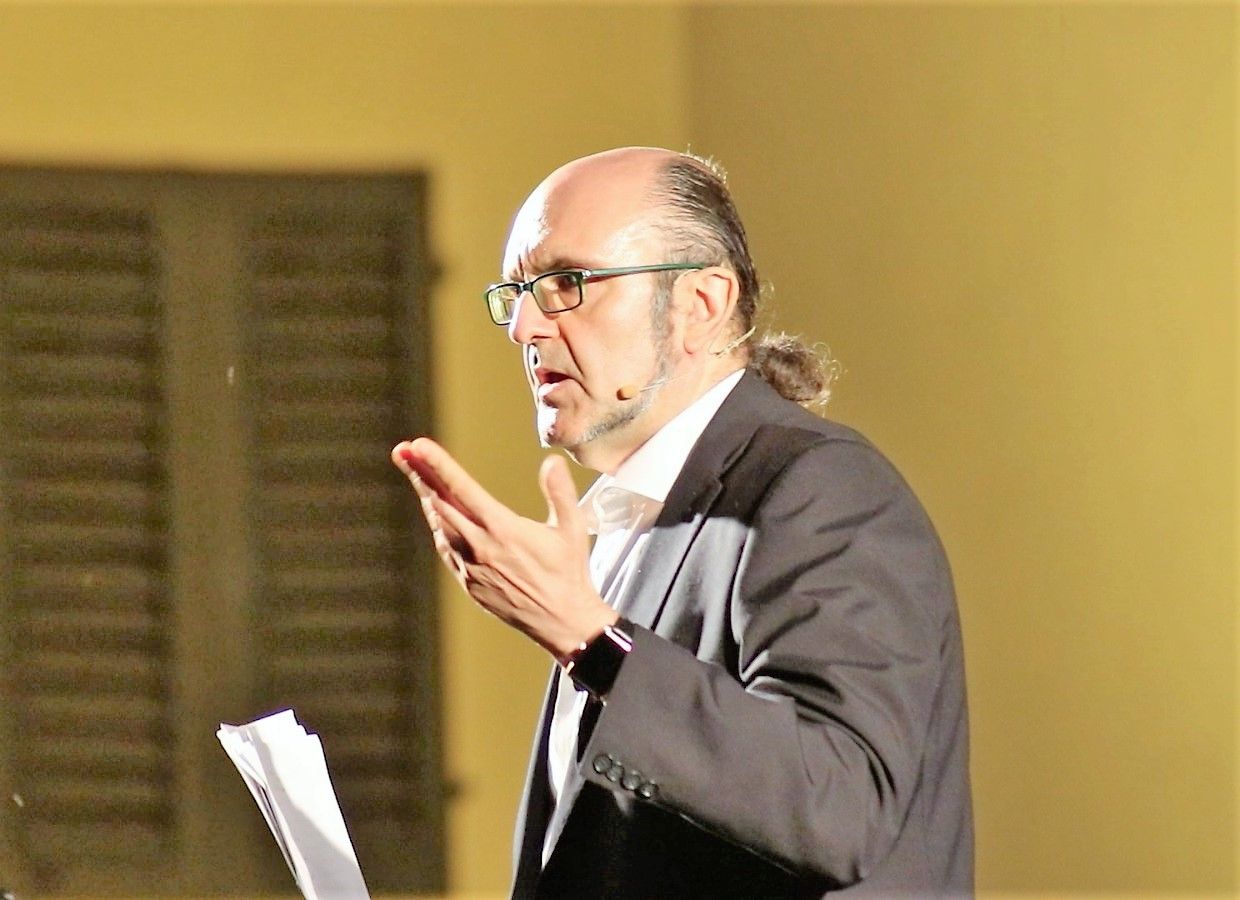
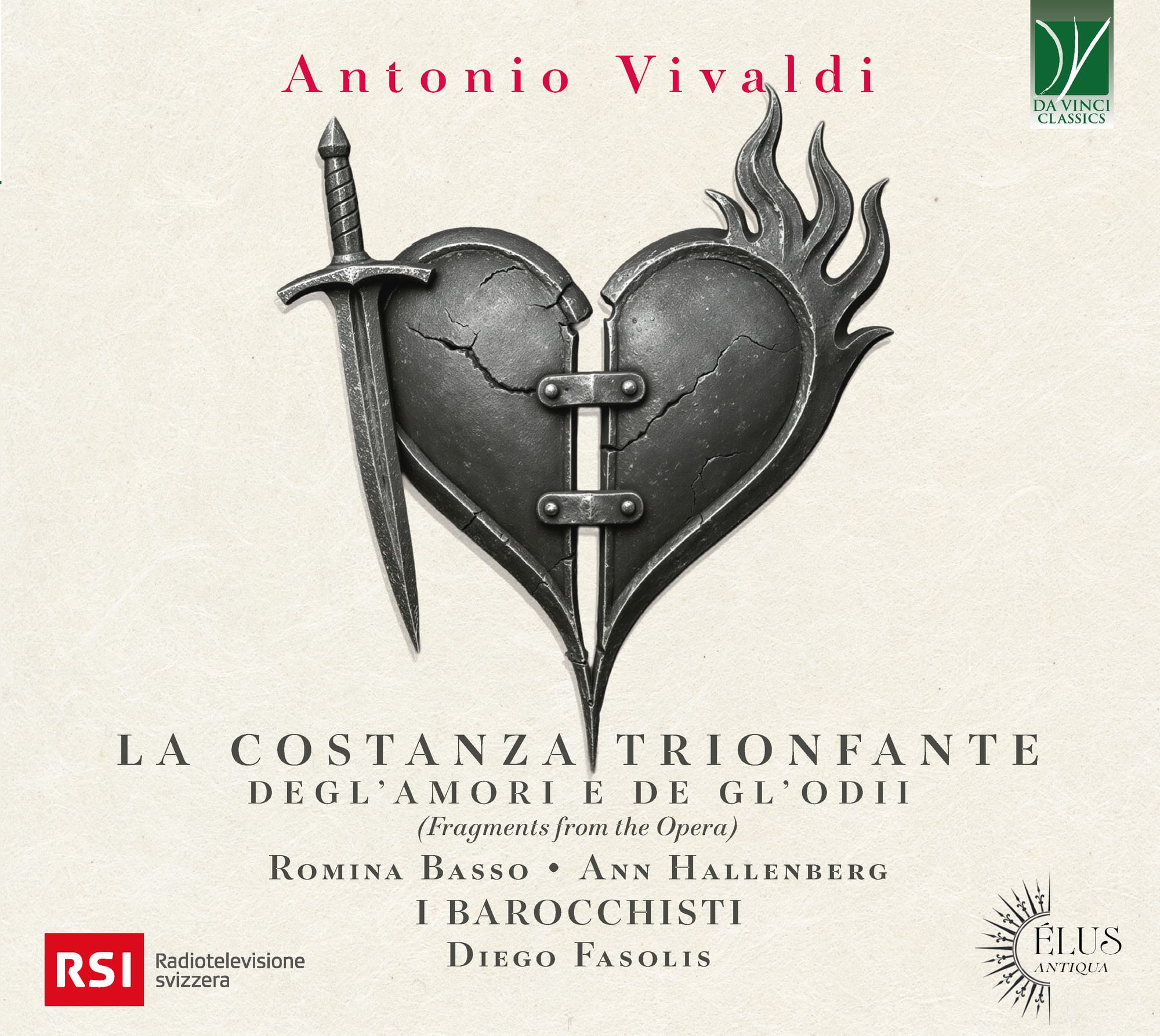
The release by Da Vinci Classics, in the Élus Antiqua series, of a recording of fragments—specifically twenty-one instrumental numbers and arias—from an opera by Antonio Vivaldi, namely La costanza trionfante degl’amori e de gl’odii (1715), performed by the ensemble I Barocchisti under the Swiss musicologist‑conductor Diego Fasolis, with mezzo‑sopranos Romina Basso and Ann Hallenberg, can legitimately be regarded as a true discographic event. The project took shape and substance thanks to the painstaking reconstruction carried out by the French musicologist Frédéric Delaméa, one of the world’s foremost experts on the music and persona of the Prete rosso. Beyond the significance of this recording and the prior, strictly philological work aimed at producing an authoritative and historically accurate edition, this Vivaldian opera also provides a fascinating and indeed essential vantage point for understanding one of the most engaging chapters of European Baroque music: the singular era of Venetian opera houses, when the Serenissima was the continent’s genuine capital for staged and sung music—an age in which Venice, as anyone who has read and admired Carlo Goldoni’s theatrical works will appreciate, was a crucible of social and anthropological behaviours utterly unique in scale and specificity.
If music—above all opera—served as a litmus test for decoding the social behaviours, habits, vices (many) and virtues (few) of the Venetian populace between the late seventeenth and the first half of the eighteenth century, it is indisputable that Antonio Vivaldi’s output—despite Igor Stravinsky’s fixation that the Prete rosso composed operas as if he had a printing press producing the same score—represented the quintessence, the sublime and indispensable apex for “signifying” the very essence and existence of the Serenissima through a narrative of notes, harmonies, voices and characters who did not merely recount other places and other men and women, but ultimately embodied the mirror in which contemporary Venetian society saw itself reflected, with pride or with embarrassment, and often with a complex blend of both.
In Vivaldi’s time Venice, relative to its population, held a double record among the major European cities and capitals: it had by far the greatest number of theatres and the largest number of prostitutes. The latter were at one point even listed and named individually in a little booklet that appeared in the early eighteenth century, of which I keep a cherished copy in my library; beside it, “Madamina, il catalogo è questo”—the catalogue Leporello rattles off to a dismayed and petrified Donna Elvira—reads like the work of naïve debutantes thrown to the wolves. Thus, voluptuous Venice (in Bologna one might have called her “crapulent”) in matters of musical diversion and of lust between the sheets—and here we return to Goldoni’s merciless magnifying glass—was, with its patricians, its merchants and its rabble, possessed by a single obsession: the all‑round divertissement that would plug problems and troubles when things went badly, or, when fortune smiled, banish the sluggish, Oblomovian boredom.
But, returning to music, the desire to be amused by plots and arias, by orchestral intermezzi and the period’s scenic devices did not mean that those who flocked to the theatre, jostling at the box office, would accept whatever was put before them. Far from it: the Venetian public was exceedingly demanding and did not hand out applause and ovations lightly; enjoyment was welcome, but it had to be earned, by Jove. Thus impresarios, composers, singers, orchestral players, costumiers and stagehands—everyone in the employ of the various theatres, “alla moda” to echo the perfidious and perfect title of Benedetto Marcello’s famous pamphlet—competed, in that genuine golden age of lagoon opera, to satisfy the exquisitely refined tastes of the contemporary audience.
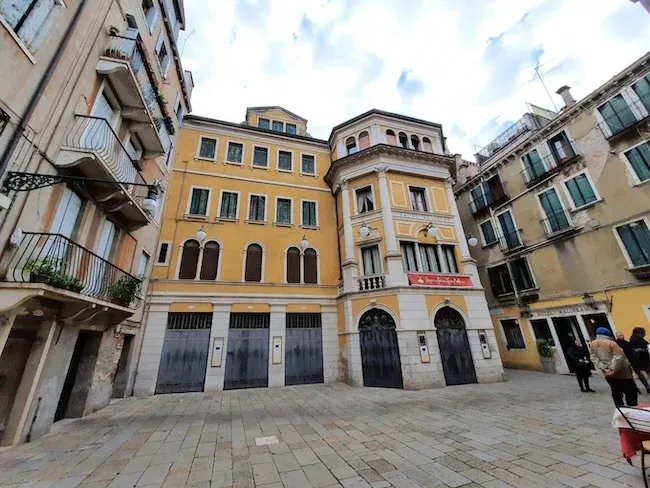
A particularly appetizing chapter opens here, one that Frédéric Delaméa sketches exemplary in his meticulous liner notes to the recording, where he recounts the “war” waged by Venice’s principal theatres at the time of the staging of La costanza trionfante degl’amori e de gl’odii. The most famous and illustrious house was undoubtedly San Giovanni Grisostomo, controlled by the powerful Grimani family, whose audience was drawn mainly from the most prominent names of the patriciate. Yet in that very year another theatrical reality, rich in history and tradition, re‑emerged after a period of closure: the Teatro San Moisè, near Piazza San Marco, which set out expressly to undermine the prestige and supremacy of San Giovanni Grisostomo. I leave to readers who wish to explore this rivalry—fought with competing titles, stagings, singers and strategies—the delightful portrait Delaméa provides; the text is also available on the Da Vinci website (https://davinci-edition.com/product/ce1178/).
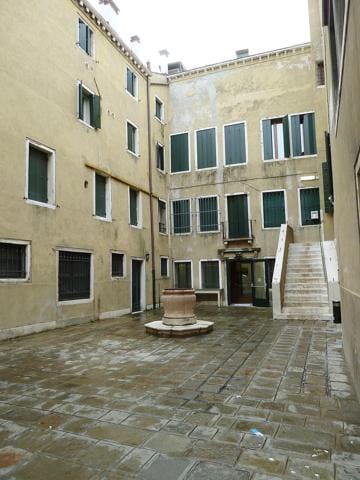
Beyond the impresarial quarrels that raged in that period and throughout Venetian musical history, the importance of this Vivaldian work remains clear. In 1715 the Prete rosso was thirty‑seven, a phase of life in which success smiled upon him unconditionally across Europe, thanks above all to his instrumental output—chiefly the collections L’estro armonico and La stravaganza—which exalted both his reputation as a composer of extraordinary genius and his standing as an exceptional violinist. That success undoubtedly reinforced his long association with the Ospedale della Pietà, where he worked as a pedagogue and as the author of sacred works of considerable impact and emotional force. Yet it was above all in the operatic theatre that Vivaldi sought to assert himself most forcefully, aware that in the lagoon city fame was won more on the theatrical stage than in orchestral or chamber contexts. Thus the collaboration that developed between the Teatro San Moisè, owned by Alvise Giustinian and astutely managed by impresarios Pietro Denzio and Giovanni Orsatto, and the creative vein of the Prete rosso, in his role as principal composer, proved nothing short of triumphant.
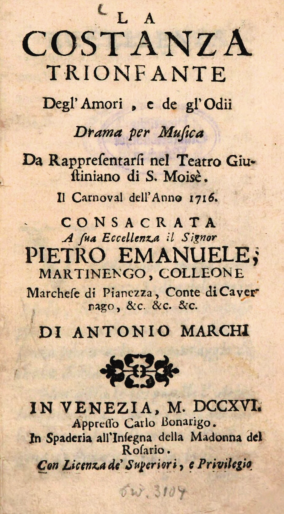
Going into specifics, the opera La costanza trionfante degl’amori e degl’odii, first staged in January 1716, became the cornerstone that launched this enterprise. Yet in such cases the musical component alone could not suffice unless it was paired with an equally strong and convincing libretto. Here again the foresight of Pietro Denzio and Giovanni Orsatto paid off: the text was entrusted to Antonio Marchi, a librettist and poet who had previously collaborated with Tomaso Albinoni, Antonio Pollarolo and Giovanni Maria Ruggieri. Marchi possessed two distinct gifts: an ironic self‑awareness he could brilliantly transpose into verse, and a clear understanding of theatrical mechanics. These qualities, together with the extraordinary engagement offered by Vivaldi’s music, contributed decisively to the dramatic clarity and the rich palette of emotional contrasts that permeate the work.
As often happened—at least when genius turned into wit—Marchi’s libretto knew how to tease and entertain contemporary audiences not only through a fluid succession of scenes, a skilful use of disguises and role reversals, but also through a precise and timely deployment of allegorical resonances. Beneath its historical subject—one of the many episodes in the conflict between Rome and Parthia in the 1st century AD, with Armenia as the prize—there lay clear allusions to the political issues of the day, allowing Venetian audiences to recognize what was unfolding within the Serenissima and among the other European powers through the deeds and struggles of the opera’s characters.
The plot is simple: Artabano, king of the Parthians, defeats the Armenian king Tigrane and abducts Queen Doriclea, with whom he falls hopelessly in love. The opera recounts the protagonists’ martial and amorous adventures until the happy ending foreshadowed by the title: after many trials and twists, the royal couple are reunited and the defeated tyrant is magnanimously forgiven, showing, on an artistic level, how “constancy” can triumph over the loves and hates of the perfidious Artabano. Naturally, Marchi’s narrative skill and his ability to weave plots and correlations into the dramatic action allowed the poet‑librettist to enrich the drama with additional characters who serve the story: two secondary couples, the first formed by the royal princess Eumena, in love with Olderico, prince of Armenia, and the second involving Getilde, also a princess, in love with the upright Farnace, Tigrane’s favourite. All of this is reinforced by the inevitable stratagems that thicken the coups de théâtre: a repertoire of disguises, secret identities and mysterious letters.
So far, the libretto is sound but let it be clear that the opera’s spectacular success must be credited above all to the music Vivaldi ingeniously composed to illuminate the text’s very fabric. Although only a portion of the arias has come down to us, these fragments plainly demonstrate how far the Prete rosso had advanced in shaping the sonic art at the height of his creative maturity. The Venetian composer and violinist was able to turn colour into form, with sound becoming pliant clay deftly modelled by inventive impulse and put at the service of the successive theatrical atmospheres, moving with the utmost naturalness from moments in which the strings merely whisper—evoking states of intimacy or tenderness—to others where high tension courses through arias that burst with a driving rhythmic thrust sustained by impeccable harmonic brilliance.
Thanks to this opera, beyond its beauty, its emotional pull, and the perfect union of word and sound, what one hears—when La costanza trionfante is projected and fixed within its proper historical and artistic context—are above all the first stirrings of a modernity destined, over the ensuing decades, to seize the whole development of the operatic genre. This is why the work rightly occupies a central place in Vivaldi’s operatic corpus: it embodies the assertion of an idea founded on dramatic immediacy capable of challenging and surpassing the stylistic and musical conventions of the time, privileging the exploration of the psychological sphere rather than the mere measured and reiterated stylistic formulas inherited from the past. With La costanza trionfante Vivaldi showed perfectly that experimentation and the proposal of something new do not necessarily mean opposing tradition but knowing how to update it in step with fashions and the times, making it his own by addressing those social, cultural and anthropological needs that the man of the High Baroque already felt to be urgent and indispensable.
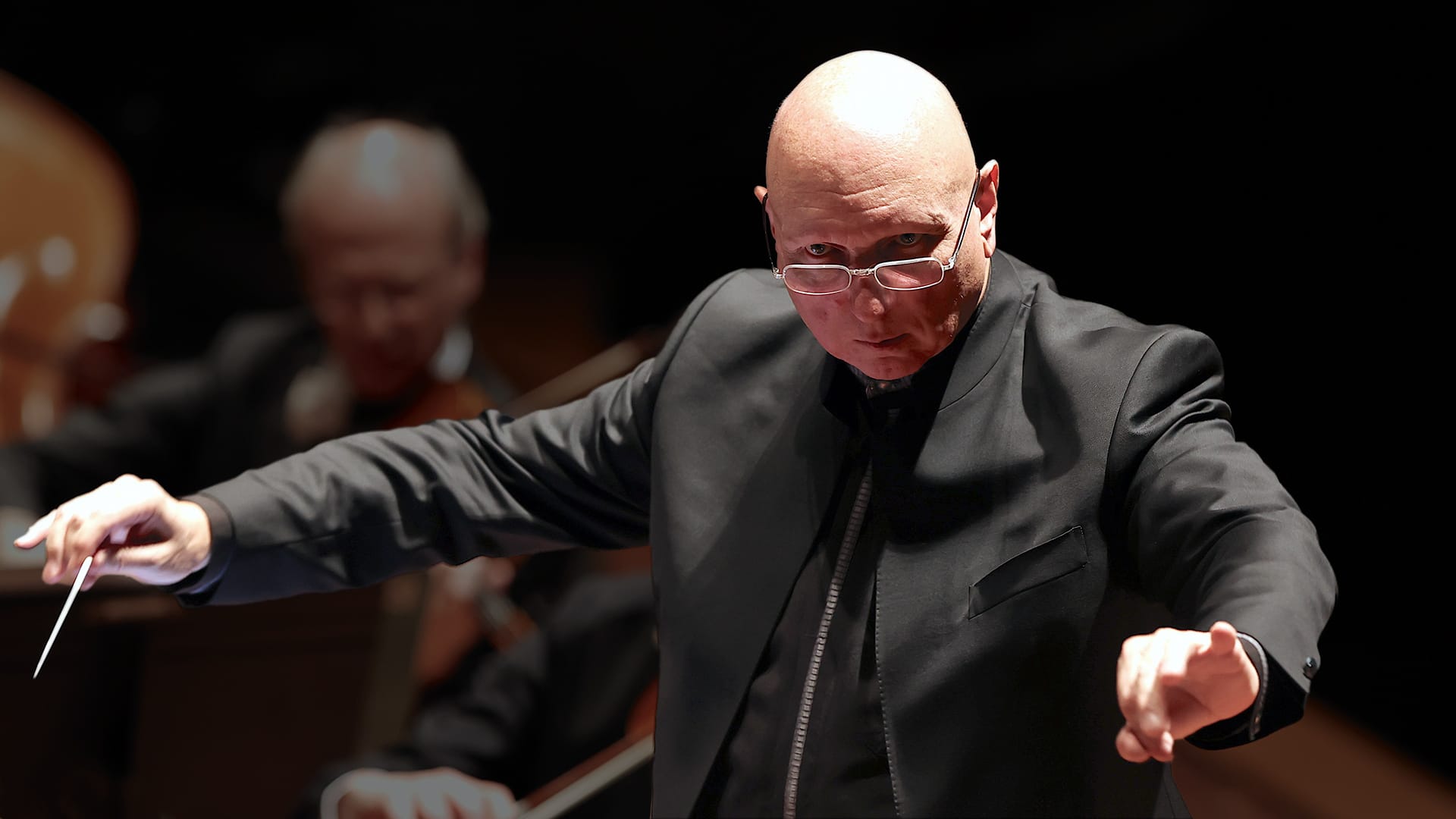
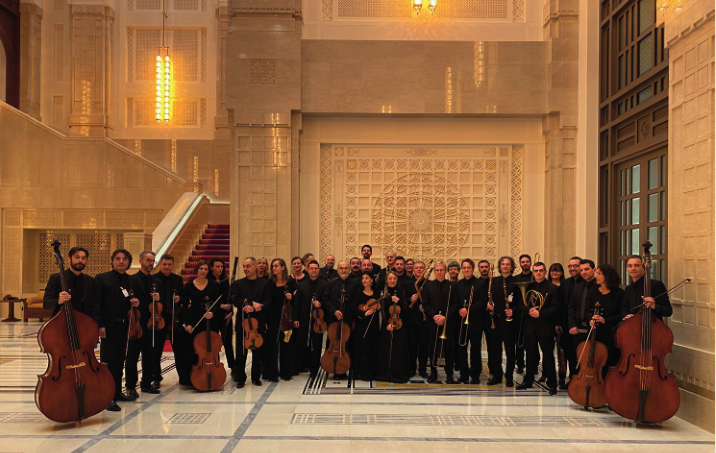
Beyond the musicological and historical aspects of the work, the project’s value is further enriched by the interpretive reading and performance delivered by Diego Fasolis, the two mezzo‑sopranos and the ensemble I Barocchisti. Considering what has been achieved so far, the Swiss conductor with this latest recording confirms himself as one of the most reliable and compelling international interpreters and advocates of Vivaldi’s operatic and instrumental repertoire. It has already been noted that La costanza trionfante, the fruit of the Prete rosso’s full creative and stylistic maturity, is sustained throughout by a continuous current of electricity that makes it palpitate and quiver, a testimony to an era undergoing radical change not only artistically. Fasolis grasps this quality perfectly and understands that conveying it is the foundational element of his entire conception; hence his vibrant conducting, supported by a rhythmic sense that not only runs through every vein of the score but is also highly adaptable, shifting precisely when the narrative weight calls for different perspectives and angles. This approach allows not only for the psychological depth embodied by the Gorizian Romina Basso and the Swedish Ann Hallenberg in their respective roles, but also for the instrumental sphere to be fully engaged — for Vivaldi the instruments cannot and should not be treated as mere, albeit necessary, accompaniment, but rather as a moto perpetuo into which everything else perfectly fits. The ensemble’s technical quality is striking and offers the listener moments of absolute emotion and total immersion, beginning with the brief but densely packed Sinfonia that pulses with an extraordinarily undulating rhythmic alternation.
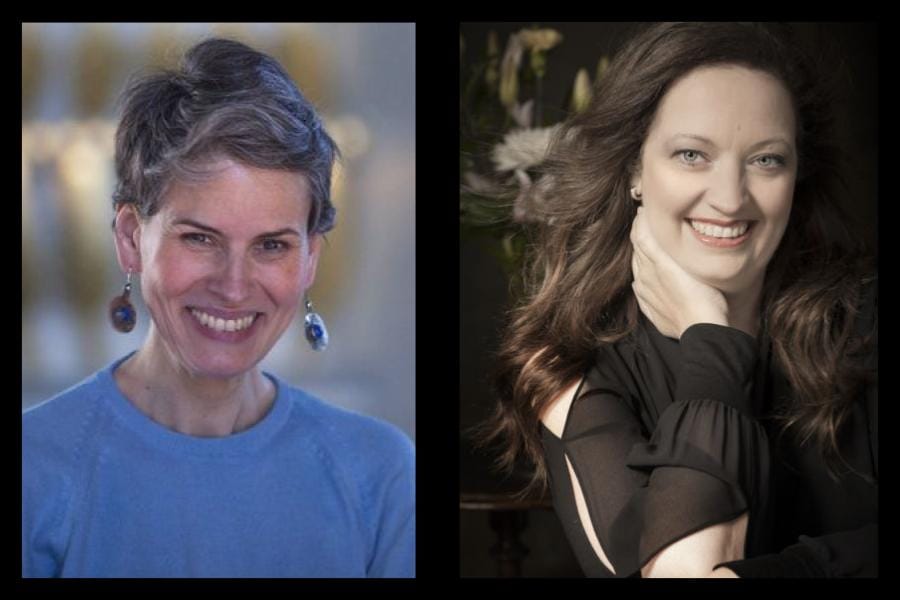
Based on what has been outlined so far, it is evident that the vocal contribution is of paramount importance in delivering the full weight of the narrative depth and the resulting psychological dynamics offered by Marchi’s libretto. The choice of the two mezzo-sopranos could not have been more inspired or apt; Romina Basso and Ann Hallenberg complement each other perfectly, beginning with their respective timbres and registers, despite both being mezzo-sopranos. Indeed, while the former adopts a 'lunar' quality—her voice more amber-toned and capable of unearthing subtle nuances in the medium-low register—the latter is entirely more 'solar,' dazzling the listener’s ears with soaring high notes, masterfully controlled by a technique that is nothing short of flawless. Furthermore, her Italian is impeccable (one need only listen to her in the aria Sento ancor quel dolce labbro, which is truly spine-tingling for the sheer range of nuances, inflections, and emotional shifts she brings to her singing). Their duet (a pity there is only one!), Fra le braccia alla mia vita, propelled by the orchestra’s driving urgency, is exhilarating. It allows the listener to grasp the distinct vocal calibration that they each carry forward individually in their respective arias, navigating between shadowy and luminous atmospheres, as if wandering through an ideally Arcadian woodland.
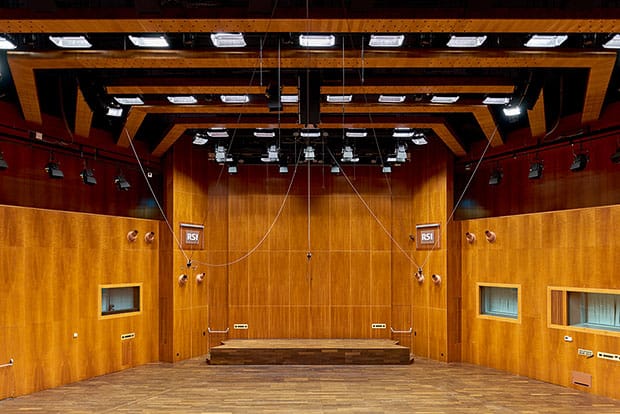
The sound was captured by Ulrich Ruscher at the Auditorium Stelio Molo in Lugano and, in terms of quality, it aligns with the artistic standard. First and foremost, one is impressed by the speed of the dynamics, together with solid energy and an appreciable naturalness, the latter therefore free from any undue coloration. The soundstage places the orchestral ensemble at an appropriate depth, allowing the two mezzo‑sopranos’ voices to sit slightly forward without creating a spatial void between instruments and singers. Moreover, the sound has the ability to radiate convincingly in height and breadth beyond the speakers, producing a granite‑solid, well‑focused image. The tonal balance shows no shortcomings: the orchestra’s middle‑low and high registers, as well as the voices, remain always clearly distinct and never overlapped. Finally, the level of detail is exceptionally tactile, with a distinct physical presence of both the singers and the orchestral sections, projecting a convincing three‑dimensionality to the sonic event.
Andrea Bedetti
Antonio Vivaldi — La costanza trionfante degl’amori e de gl’odii
Romina Basso · Ann Hallenberg (mezzosopranos) · I Barocchisti · Diego Fasolis (conductor)
CD Da Vinci Classics CE1178
Artistic rating 5/5
Technical rating 4,5/5